SpaceX and xAI: Musk Merges Rockets and Brains into One Mega-Structure
Elon Musk is staging a sweeping reshuffle: SpaceX is in talks to merge with xAI. If the deal goes through, it would create a giant that pairs the physical muscle of rockets with the computing power of Grok. SpaceX would gain access to cutting-edge neural networks for design work, while xAI would gain access to Starlink's vast data and resources. Musk has long hinted that his companies are pieces of one puzzle, but combining the two most valuable private players on the market is an all-in bet. It could shift the balance of power in Silicon Valley, turning scattered startups into a single, monolithic ecosystem.
AI-processed from Bloomberg Tech; edited by Hamidun News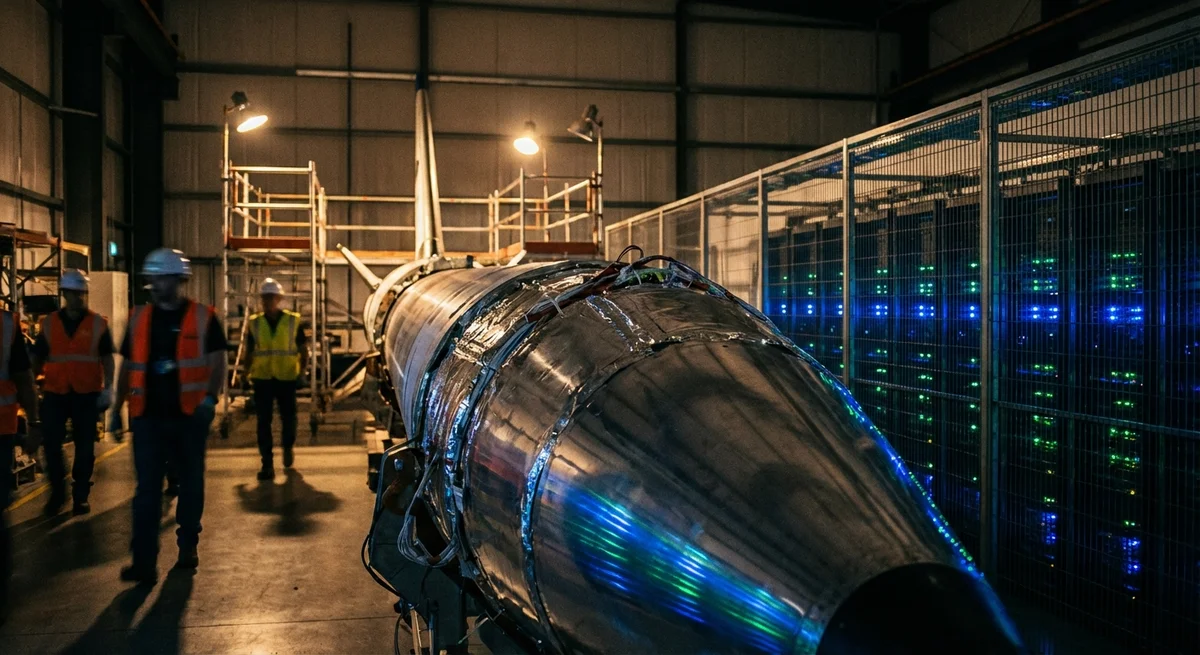
Elon Musk has decided to reshuffle the deck of global tech business once again. While the world debates new GPT versions and the latest Starship launches, the billionaire has come up with something more ambitious: a merger of SpaceX and xAI. This is not just moving papers from one folder to another, but an attempt to build the most powerful technology pairing of the decade. His companies used to operate like allied states; now they may become a single empire, where the line between software and hardware disappears for good.
To grasp the scale of the move, recall how Musk built his assets. SpaceX stopped being just a rocket company long ago; it is a global internet provider and a logistics giant. xAI is a brash newcomer trying to catch up with OpenAI, using data from the social network X to train its Grok. Until now, these two worlds overlapped only indirectly, mostly through their founder and the occasional engineer moving between them. Now the talk is of a full corporate symbiosis that could shake up competitors' positions in both industries.
Why does SpaceX need this? The answer lies in the complexity of modern engineering problems. Designing colonies on Mars and managing constellations of thousands of Starlink satellites demands computing power and algorithms that go beyond classical programming. Folding xAI into SpaceX would give engineers direct access to advanced machine learning models. That would let them automate extremely complex processes, from aerodynamics simulation to predicting equipment failures in real time. In a business where every second of flight costs millions, AI is not a luxury but a critical engine component.
xAI, for its part, would get what it sorely lacks in the race against Google and Microsoft: physical infrastructure and an enormous stream of data. Starlink generates terabytes of information on atmospheric conditions, object movement and global traffic. That data is pure gold for training next-generation neural networks. In addition, SpaceX's valuation, which has already topped $200 billion, would give xAI a financial cushion, letting it stop worrying about venture investors and build giant data centers. Musk is effectively creating a closed loop: rockets launch satellites, satellites collect data, data trains AI, and AI builds better rockets.
Of course, a deal like this will raise plenty of questions among regulators and minority shareholders. Musk has faced criticism more than once for using the resources of one company to develop another. Remember Tesla's purchase of SolarCity. Critics will surely see an attempt to artificially inflate xAI's valuation on the back of SpaceX's steady success. For Musk himself, though, it is a logical step toward a single intelligence that will manage not only text in a chat window but real objects in physical space. He has never hidden that his goal is a multiplanetary civilization, and that requires very smart machines.
The industry is already joking that we will soon see autonomous ships arguing with controllers in Grok's sarcastic tone. Seriously, though, merging two giants like this sets a precedent with no equivalent in modern history. We are used to software giants and industrial corporations existing separately. Musk is building a hybrid that can write code and forge steel at the same time. It is a direct challenge to the classical division of labor, in which AI lives in the cloud and rockets live at the spaceport. Now they will live in the same office.
Bottom line: Musk is moving decisively away from separate businesses toward a single ecosystem. If the deal goes through, xAI will stop being "just another chatbot" and become an operating system for space exploration. Is the market ready for a company with this much concentrated power and technology?
- Nov 1, 202616 models tested on 7 search tools: Exa averaged 10.5 out of 14, SearXNG about 3
- Nov 1, 2026OpenAI Rewrites GPT Behavior Rules: Five Values and a Chain of Command
- Oct 29, 2026Gemini 4 Carbon tops independent rankings, but only cyber defenders can use it
- Oct 29, 2026Study: A Single Random Failure Makes AI Agents Abandon a Working Tool 11.6% of the Time
Test Frontier LLMs & Autonomous Agents in One Workspace
Run Claude Opus 5.5, GPT-6, Gemini 3.1, and DeepSeek side-by-side in Nomad AI (nomadnet.ai) — unified model routing, deep research, and multimodal workflows under one subscription.
The AI world, distilled — once a week
Seven stories that actually mattered, hand-picked. No noise, no reposts, no press releases.
Done! Check your inbox for a confirmation.