SpaceX and xAI: Musk Sends AI to Space in a $1.25 Trillion Deal
Elon Musk is rewriting the rules again, merging SpaceX and xAI in a megadeal valued at $1.25 trillion. The goal is ambitious: move AI computing off an overheated Earth and into orbit. Ground-based data centers consume too much energy and need complex cooling, which is fueling protests. Musk's answer is to use the cold and the room that space offers. While skeptics hunt for a catch in the valuation, Google is already testing a similar project, Suncatcher. This is not just a merger but an attempt to build the infrastructure of the future, in which limitless solar power becomes the main advantage for neural networks.
AI-processed from The Verge; edited by Hamidun News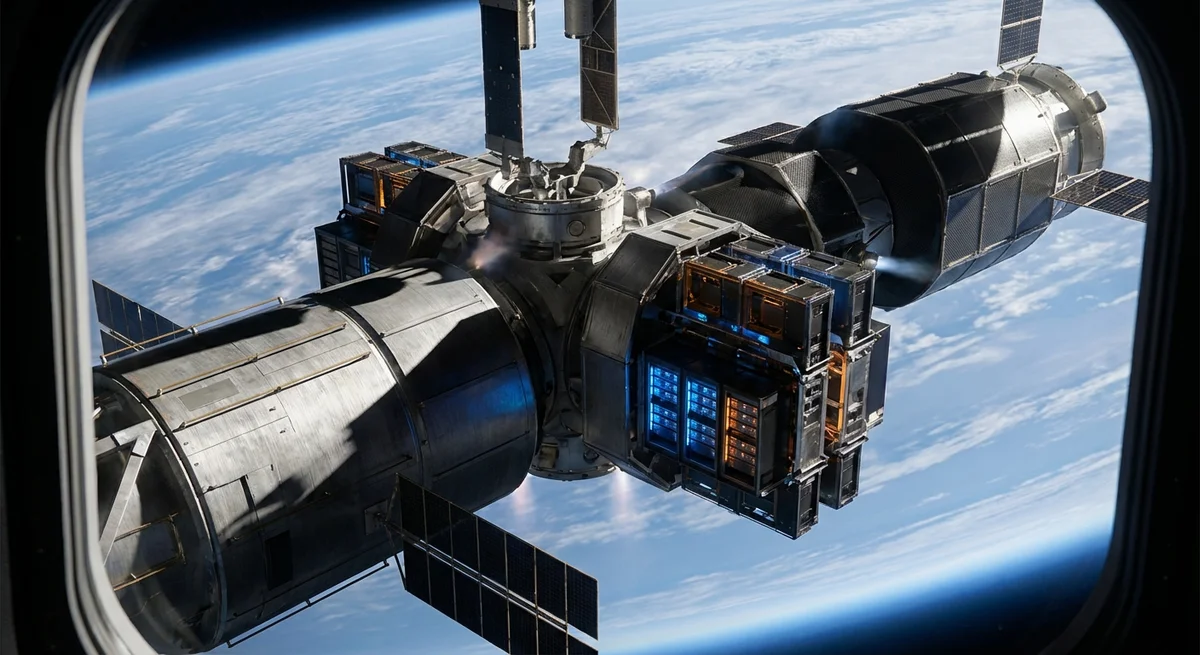
Elon Musk has decided that Earth has become too cramped and too hot for his artificial intelligence ambitions. The merger of SpaceX and xAI into a $1.25 trillion structure is not just shuffling shares from one pocket to another. It is a loud statement that the future of the silicon mind lies far beyond the atmosphere. While the industry argues over H100 GPU supplies, Musk plans to launch them into orbit, turning his rockets into trucks that haul computing power into the vacuum.
The problem Musk is trying to solve is obvious to anyone who follows the electricity bills of the big tech giants. Modern language models demand monstrous amounts of energy and cooling water. Ground-based data centers are quickly becoming a political and environmental problem. City residents increasingly oppose the construction of giant hangars that consume the resources of entire regions. Musk, who spent years building Falcon 9 and Starship to colonize Mars, has found a use for his technology much closer than the Red Planet: he proposes moving the AI's "brains" to a place with no neighbors and where it is always cold.
Why is this happening now?
First, xAI needs to catch up with OpenAI and Anthropic, and that takes computing capacity, which is becoming scarce on Earth because of power grid limits. Second, SpaceX already has the Starlink constellation, which provides global connectivity. Adding server nodes directly to the satellites looks like a logical extension of that infrastructure. If data does not have to be sent down to Earth for intermediate processing, latency may fall and the overall efficiency of the system may rise. Of course, the question of cosmic radiation and of servicing electronics in a vacuum remains open, but when did such trifles ever stop Elon on the road to a trillion-dollar valuation?
Musk is not alone in his space fantasies, though his scale, as always, is striking. Google has been developing Suncatcher for some time, studying how to use solar energy in space for the same purposes. However, the $1.25 trillion valuation of the deal suggests that Musk intends to monopolize this market before it officially exists. It is a classic move for a serial entrepreneur: create a problem in the form of a computing shortage on Earth, then immediately offer the only possible solution, however crazy it looks at first glance.
For the whole AI industry, this means the start of a new arms race in which physics and logistics matter more than pure code. If companies once measured themselves by the number of parameters in their models, they will soon compare orbit altitude and the solar panel area of their satellite farms. It also challenges cloud giants such as AWS and Microsoft Azure. Why rent a server from a ground-based provider when you can send a request straight to xAI's orbital cluster, which runs on free solar energy and pays no land taxes?
Skeptics, naturally, already point out that cooling in a vacuum is no easy task because there is no convection, and putting each kilogram of cargo into orbit still costs a fortune. But given that Starship promises to cut delivery costs radically, Musk's math may add up. If the plan works, we will witness the birth of the first truly extraterrestrial intelligence, one whose existence will not depend on Earth's resources.
The key question: will space save AI, or is this another attempt by Musk to inflate the valuation bubble of his companies by merging them into a single opaque megastructure?
- Nov 1, 202616 models tested on 7 search tools: Exa averaged 10.5 out of 14, SearXNG about 3
- Nov 1, 2026OpenAI Rewrites GPT Behavior Rules: Five Values and a Chain of Command
- Oct 29, 2026Gemini 4 Carbon tops independent rankings, but only cyber defenders can use it
- Oct 29, 2026Study: A Single Random Failure Makes AI Agents Abandon a Working Tool 11.6% of the Time
Test Frontier LLMs & Autonomous Agents in One Workspace
Run Claude Opus 5.5, GPT-6, Gemini 3.1, and DeepSeek side-by-side in Nomad AI (nomadnet.ai) — unified model routing, deep research, and multimodal workflows under one subscription.
The AI world, distilled — once a week
Seven stories that actually mattered, hand-picked. No noise, no reposts, no press releases.
Done! Check your inbox for a confirmation.