Musk's empire: why SpaceX wants to absorb xAI and Tesla
Elon Musk appears to be pulling his main assets into a single fist. According to Reuters and Bloomberg, SpaceX is discussing a merger with xAI and, down the line, with Tesla. The official rationale is an ambitious project to launch data centers into orbit. SpaceX is preparing for an IPO in June, and such synergy could sharply raise the company's valuation. If xAI becomes part of SpaceX, we would see the world's first "space intelligence". This is not just a business deal but an attempt to build a closed ecosystem in which AI runs infrastructure beyond Earth, turning Starlink from an internet provider into a global cloud storage service.
AI-processed from The Verge; edited by Hamidun News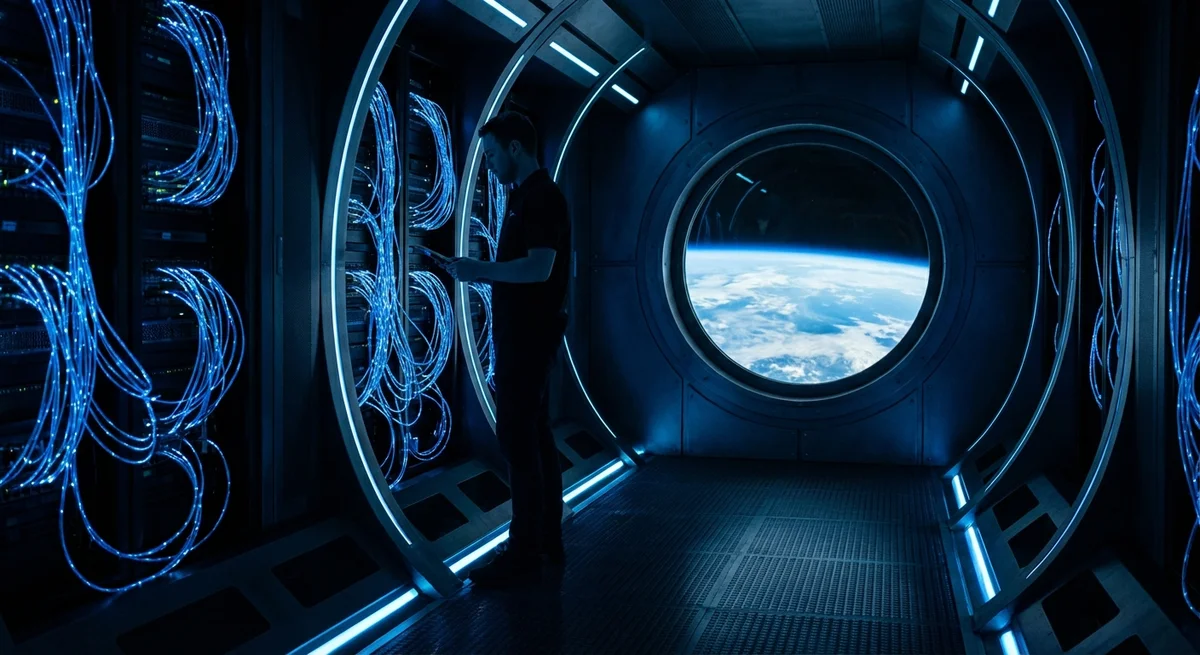
Elon Musk has never played by the rules of classic corporate governance. While other CEOs try to separate their assets to avoid scaring investors with conflicts of interest, Musk seems to have decided to go all in. Rumors of a possible merger of SpaceX with xAI, and eventually with Tesla, are not just a financial reshuffle. They point to an attempt to create a single technological organism in which rockets, electric cars and neural networks work toward one common goal. The billionaire's scattered "toys" are turning into a monolithic structure that could dominate not only on Earth but also in orbit.
Why does SpaceX need xAI right now? The answer lies in its ambitions for orbital data centers. We are used to thinking of Starlink as simply internet for remote regions and the military. But Musk sees something bigger in it: ideal infrastructure for distributed computing. Moving server capacity into orbit could solve the perennial problems of cooling and the cost of land for data centers. However, such data centers need a "brain" able to run them despite signal delays and the specific conditions of space. This is where xAI comes in, with algorithms that could become the operating system for the entire satellite constellation.
The history of mergers in Musk's empire has always been painful for lawyers and shareholders. Recall Tesla's purchase of SolarCity, when Elon was accused of rescuing his own loss-making business with the money of a public company. With SpaceX the situation is fundamentally different. It is a private company, currently at the peak of its power and only preparing to go public. Merging with xAI before the IPO could be a brilliant move: investors would be buying not just a "space hauler" but the main AI infrastructure of the future. That sharply raises the stakes and the company's valuation, making it practically invulnerable to competitors from the traditional aerospace sector.
Tesla looks like the most controversial but logical element of this scheme. On one hand, the company has the huge computing capacity of the Dojo supercomputer and vast experience in robotics. On the other, Tesla is public, and any merger with SpaceX would provoke a storm of outrage from regulators and stock markets. Still, Musk has proved more than once that he cares little about Wall Street's opinion when the "acceleration of the future" is at stake. If Tesla becomes part of this mega-structure, we would get a corporation that controls everything: from chip and software production to logistics and orbital energy. It would be a vertically integrated giant with no precedent in history.
It will be interesting to see how competitors such as Microsoft and Google react. While they build ground-based server farms that consume gigawatts of power, Musk can literally rise above those problems. Integrating xAI into SpaceX systems would allow launches and satellite constellation management to be automated at a level unattainable for traditional software. That turns SpaceX from a transport company into a global IT player. The irony is that Musk has always criticized OpenAI for secrecy and monopolism, yet he may be building the most closed and powerful technological ecosystem in human history.
Ultimately, all this talk of a merger is a signal to the market that the era of narrow specialization is ending. Musk understands that AI without a physical shell and infrastructure is just a chatbot, and rockets without AI are just pieces of metal. By uniting these worlds, he is creating something that is hard even to classify. If the merger happens, SpaceX's June IPO will be the most high-profile event of the decade, and the boundaries between space and artificial intelligence will be erased for good.
Bottom line: Musk has finally stopped hiding that all his companies are parts of one global project. If the merger happens, SpaceX will go public not as a rocket startup but as a monopolist of space computing. Are investors ready for such a concentration of power in one pair of hands?
- Nov 1, 202616 models tested on 7 search tools: Exa averaged 10.5 out of 14, SearXNG about 3
- Nov 1, 2026OpenAI Rewrites GPT Behavior Rules: Five Values and a Chain of Command
- Oct 29, 2026Gemini 4 Carbon tops independent rankings, but only cyber defenders can use it
- Oct 29, 2026Study: A Single Random Failure Makes AI Agents Abandon a Working Tool 11.6% of the Time
Ship AI Faster with Founders, Engineers & Weekly Architecture Reviews
Inside Vibe Club (hamidun.com/club) — weekly live masterminds with Zhemal Khamidun, Tech Radar, full LMS access, and 370+ production Claude Code skills.
The AI world, distilled — once a week
Seven stories that actually mattered, hand-picked. No noise, no reposts, no press releases.
Done! Check your inbox for a confirmation.