Face as Logo: Matthew McConaughey Turns Himself Into a Trademark
Matthew McConaughey decided not to wait for lawmakers and is protecting himself against deepfakes on his own. The actor has filed applications to register his voice, likeness and signature phrases as trademarks. His "Alright, alright, alright" is now not just a meme but a legally protected asset, comparable to the Apple or Nike logo. It is an important shift for the industry. Until now, the debate was about copyright protection for content; now it is about privatizing the human personality itself. If McConaughey's initiative works, Hollywood faces a new era in which stars become corporations in the literal sense. The bottom line: protection from AI now requires a legal upgrade of the very essence of a person.
AI-processed from Habr AI; edited by Hamidun News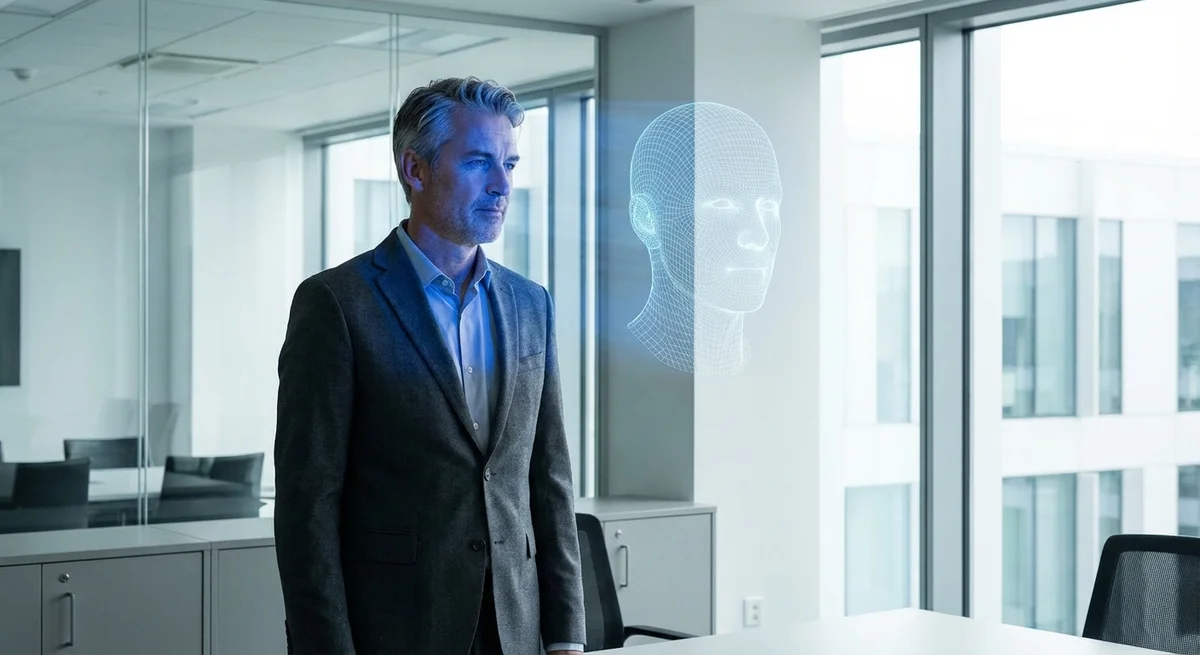
Fame used to be measured in signed autographs; today it is measured in meme clips on TikTok. The more your image is scattered into pixels, the higher your market value. But generative AI has turned this gift into a curse. Neural networks no longer just copy frames from films: they synthesize a "new" actor, using his manner of speech, facial expressions and vocal timbre without any permission. Copyright law, which for decades protected specific film reels and recordings, has proved useless against algorithms that steal the very essence of a personality. Against this backdrop, Matthew McConaughey has made a move that looks like the start of a major legal war.
Instead of chasing every deepfake creator or writing angry posts on social media, McConaughey decided to formalize himself. He has filed applications to register his likeness, his voice and even famous phrases such as "Alright, alright, alright" as trademarks. This is not a mere star's whim but an attempt to move the protection of human identity out of the shaky ground of the "right of publicity" and into the hard, well-understood territory of intellectual property. Use a well-known company's logo without asking, and you will be punished quickly and painfully. McConaughey wants his face to work exactly the same way.
The problem is that modern law is used to dealing with objects: books, songs, code. But a person is not an object. Until now, courts have struggled with cases where AI generates a voice that is "confusingly similar" but not a direct copy of a recording. By registering himself as a brand, McConaughey builds a legal shield that ignores the technical details of how exactly a neural network produced the content. Only the result matters: if it looks like McConaughey and sounds like McConaughey, it infringes the trademark.
This step exposes a deep crisis in the relationship between creators and tech giants. Companies like OpenAI or Meta* train their models on data they consider "publicly available." But if an actor's likeness becomes a registered brand, every pass of a training algorithm over a video featuring him becomes a potential violation of trade secrets or trademark rights. This may force AI developers not just to license content but to pay for the very right of a neural network to "see" certain people during training.
Of course, this coin has a flip side. Turning a personality into a trademark is a road to final dehumanization. If we start treating people as corporate assets, where will the line fall? Will an ordinary person be able to protect themselves the same way, or is it a privilege of those who can afford an army of lawyers? McConaughey is effectively offering a world where every gesture and intonation has a serial number and an owner. It is a logical but frightening answer to the challenge from machines that have learned to imitate humanity too convincingly.
Soon we will see how patent offices respond to this challenge. If McConaughey's applications are approved, a chain reaction will follow. Tom Cruise, Scarlett Johansson and hundreds of other stars will rush to turn their faces into legally protected logos. That will change not only Hollywood but also how neural networks are trained. The "Wild West" era, in which AI could swallow any data with impunity, is rapidly coming to an end, giving way to a world where every "alright" will be invoiced.
The bottom line: McConaughey is setting a precedent for the privatization of personality. Will it become the standard for protection against AI, or turn people into walking corporations?
*Meta has been designated an extremist organization and banned in Russia.
- Nov 2, 2026NC State's AICG Framework Cuts MAE by 50.3% on Math Answer Grading
- Nov 2, 2026Я устроил допрос 6 нейросетям про себя и своё ИП глазами заказчика: как ИИ выдумал мне бизнес на Amazon в США и слил смету из закрытого КП
- Nov 2, 2026TJ Digital: 23% of AI-cited pages open with a direct answer, versus 14% of uncited ones
- Nov 2, 2026Arca gives AI agents finance tasks lasting up to 10 days, but leaves the trades to humans
Test Frontier LLMs & Autonomous Agents in One Workspace
Run Claude Opus 5.5, GPT-6, Gemini 3.1, and DeepSeek side-by-side in Nomad AI (nomadnet.ai) — unified model routing, deep research, and multimodal workflows under one subscription.
The AI world, distilled — once a week
Seven stories that actually mattered, hand-picked. No noise, no reposts, no press releases.
Done! Check your inbox for a confirmation.