TSMC 2nm: The Line for the Future of AI Now Stretches to 2028
TSMC has officially filled its order book for its upcoming 2nm process. AMD plans to go first in 2026, with Google and AWS following in 2027 with their own custom chips. NVIDIA is aiming for 2028 with its Feynman architecture, built on the A16 process. The manufacturing schedule also shows how the AI industry is being carved into spheres of influence. Without access to this capacity, any LLM ambitions will remain purely theoretical. TSMC's monopoly on leading-edge chips is becoming absolute, cutting smaller players off from the technological frontier.
AI-processed from 36Kr (36氪); edited by Hamidun News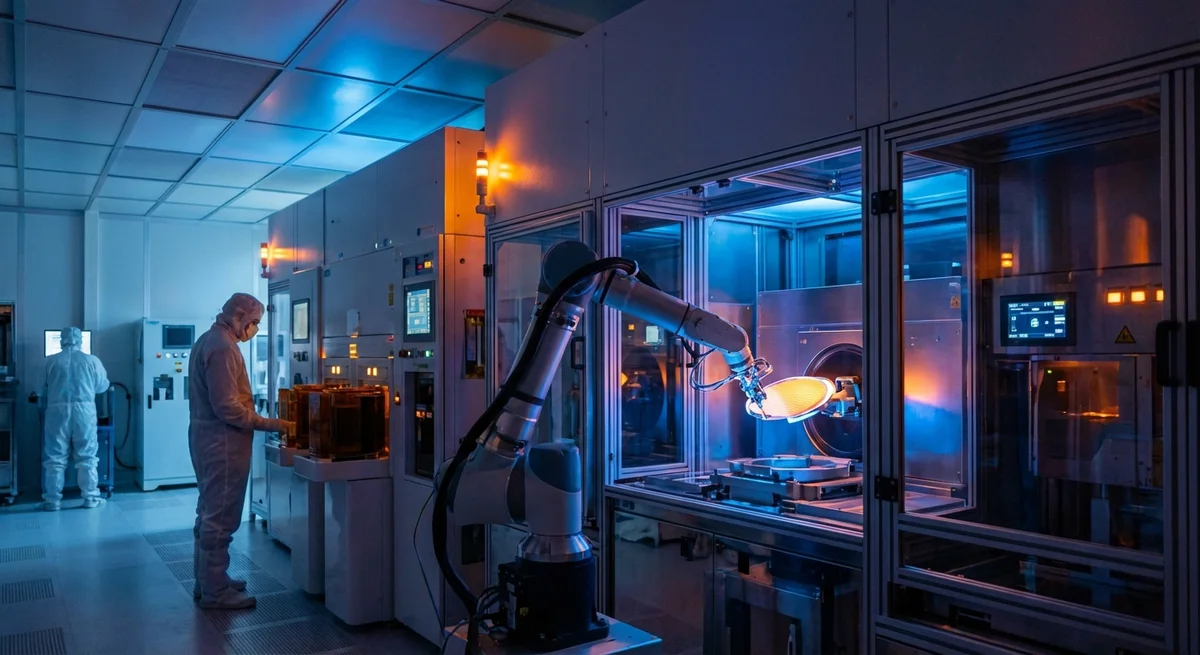
Imagine you want to build the fastest race car in the world, but the only factory capable of casting its engine is booked four years out. That is exactly where the entire tech world now finds itself. While software developers argue over the parameter counts of new models and the finer points of prompt engineering, the real battle for AI dominance is being fought in sterile cleanrooms in Taiwan. TSMC has effectively confirmed its status as the chief gatekeeper of the future: every bit of its 2-nanometer capacity is already fully booked.
If you thought the GPU shortage of the crypto-mining era was a temporary setback, get ready for a new reality. What we're seeing now goes beyond high demand: progress itself is being privatized wholesale.
AMD plans to start producing its 2nm processors as early as 2026. That means its next-generation Zen architecture will get such a leap in power efficiency that competitors will have to work very hard to keep their server products from turning into expensive space heaters. For AMD, it's a chance to cement its position in the data center for good, where every watt counts.
The most interesting part, though, lies in the cloud giants' plans. Google and Amazon Web Services (AWS) have reserved their slots for the second half of 2027. Why would companies that have always focused on software and retail need their own 2-nanometer chips? The answer is mundane: economics. Training neural networks on the scale of GPT-5 or Gemini 2 consumes so much electricity that saving even 15-20% of energy at the transistor level translates into billions of dollars saved every year. For Google, its own 2nm Tensor Processing Units (TPUs) are more than a piece of hardware: they're a way to push the cost of AI compute down to a level competitors can't reach.
NVIDIA, which effectively owns the AI accelerator market today, is playing the long game. Jensen Huang is targeting 2028, when the company plans to release its Feynman architecture. Here we see a move to the even more advanced A16 process. Its headline feature is backside power delivery. In current chips, power and data wiring are tangled together, which creates interference and limits density. Moving power delivery "under the hood" lets engineers pack even more compute into the same volume without turning the chip into plasma. That is critical for future AI accelerators, where compute density is the only parameter that matters for a model's survival.
Why does this matter to the rest of us? We're used to technology getting steadily cheaper, but the era of 2nm and below is an era of insanely expensive hardware. The entry ticket to the club of those with the most powerful AI now costs more than money: it costs time and long-term commitments to Taiwanese engineers. If you haven't secured your place in TSMC's queue today, your startup, or even a large corporation, may find itself sidelined from progress in three to four years. We are entering a period in which compute becomes as tightly rationed a strategic resource as oil or rare-earth metals.
Making matters worse, there are virtually no alternatives. While Intel tries to get its processes in order and Samsung struggles with yields, TSMC remains the only window into the world of ultra-high-performance computing. That leaves the entire AI industry dangerously dependent on a single geographic location. Any upheaval in Taiwan now automatically means progress grinds to a halt for NVIDIA, Apple, and Google all at once. In 2024, technological sovereignty isn't about slogans; it's about having a contract with TSMC that runs years into the future.
The bottom line: TSMC's silicon monopoly has become absolute. Can any competitor offer an alternative before 2027, or have we all officially become hostages of a single island?
- Nov 1, 2026Google taught its StreamVibe video agent to decide when to step in on its own: +10.7%
- Nov 1, 2026OpenAI Rewrites GPT Behavior Rules: Five Values and a Chain of Command
- Nov 1, 2026Voice bots built on LLMs turn to Jev, a fast classifier, for decisions in 200–500 ms
- Nov 1, 2026Google admits AI Mode cuts search revenue, shares fall 15%
Test Frontier LLMs & Autonomous Agents in One Workspace
Run Claude Opus 5.5, GPT-6, Gemini 3.1, and DeepSeek side-by-side in Nomad AI (nomadnet.ai) — unified model routing, deep research, and multimodal workflows under one subscription.
The AI world, distilled — once a week
Seven stories that actually mattered, hand-picked. No noise, no reposts, no press releases.
Done! Check your inbox for a confirmation.