NVIDIA Research: The Foundation Behind the Company's Breakthrough AI Innovations
NVIDIA Research, founded in 2006, plays a key role in advancing AI, graphics and robotics. Its team of 400 experts studies computer architecture, generative AI and other cutting-edge fields, helping define NVIDIA's future technology. The group works on both fundamental and applied research, and its prototypes may eventually make their way into NVIDIA products.
AI-processed from NVIDIA AI Blog; edited by Hamidun News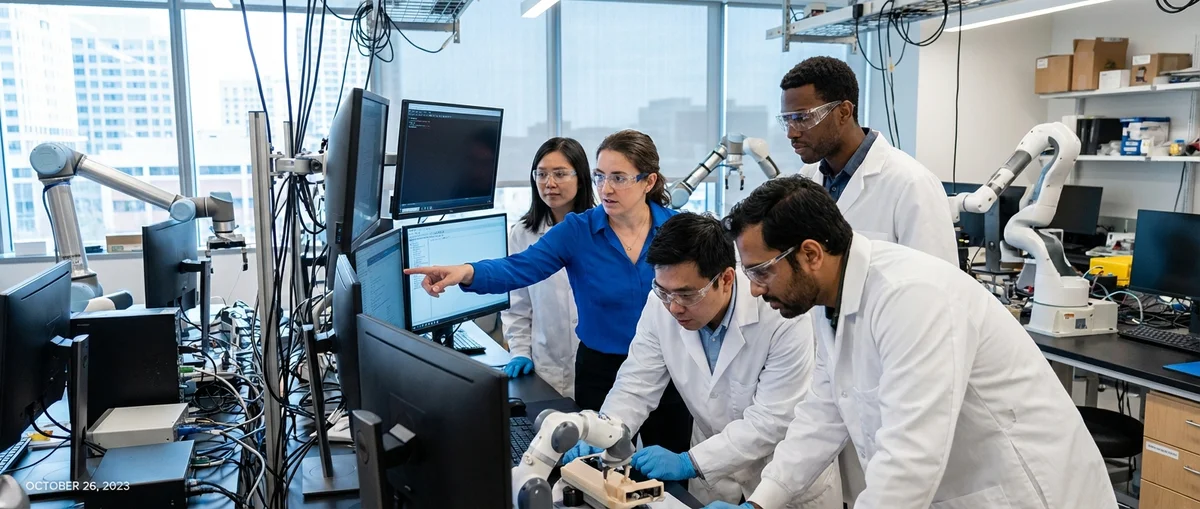
Behind many of NVIDIA's landmark innovations, from the technologies underpinning artificial intelligence to accelerated computing, real-time ray tracing and seamlessly connected data centers, stands the company's research organization. This global team of about 400 experts works in areas such as computer architecture, generative artificial intelligence, graphics and robotics.
NVIDIA Research, founded in 2006, operates as an incubator of ideas where scientists and engineers can freely explore new concepts and build prototypes that may eventually be integrated into NVIDIA products. This research-first approach has helped the company stay at the forefront of technology for many years. The division does both fundamental research aimed at pushing the boundaries of knowledge and applied research focused on solving specific problems and improving existing technologies.
Artificial intelligence is one of NVIDIA Research's key areas. The team actively develops new machine learning algorithms, improves neural network architectures and builds more efficient model training methods. NVIDIA's research in generative AI, in particular, has produced impressive tools for generating images, video and text. These technologies are used in a wide range of fields, from content creation to drug discovery.
Graphics is another important area. NVIDIA Research continually works to improve the quality and realism of computer graphics. The team develops new rendering algorithms, ray tracing methods and virtual reality technologies. This work makes it possible to create more immersive and realistic visuals in games, films and other applications.
NVIDIA Research also contributes to robotics. The team develops new algorithms for robot control, machine vision methods and navigation systems. This research helps build more autonomous and intelligent robots that can perform a wide range of tasks in different environments.
The influence of NVIDIA Research extends well beyond the company itself. Many of the team's studies are published in scientific journals and presented at conferences, which advances science and engineering more broadly. NVIDIA Research also actively collaborates with universities and other research organizations, enabling an exchange of knowledge and experience.
In conclusion, NVIDIA Research is a vital engine of innovation that helps NVIDIA remain a leader in AI, graphics and robotics. Thanks to its research-driven approach and its collaboration with outside partners, it plays a key role in shaping the future of technology. Companies that aim for leadership in a fast-changing technology landscape should invest in their own research divisions and support a culture of innovation.
- Nov 2, 2026DeepSeek Open-Sources Super-agent Prototype: p95 Task Time Drops from 29.5 to 15.7 Minutes
- Nov 2, 2026LLM Agent Built a Gearbox in KOMPAS-3D, but Scored Only 50 out of 100 on the Specification
- Nov 2, 2026Agents ignored the prompt to read memory in 7 of 7 sessions: an analysis of 13 thousand logs
- Nov 2, 2026Karpathy Built HackerTube, a Catalog of 6,454 Videos, in Two Hours with Claude Code
Test Frontier LLMs & Autonomous Agents in One Workspace
Run Claude Opus 5.5, GPT-6, Gemini 3.1, and DeepSeek side-by-side in Nomad AI (nomadnet.ai) — unified model routing, deep research, and multimodal workflows under one subscription.
The AI world, distilled — once a week
Seven stories that actually mattered, hand-picked. No noise, no reposts, no press releases.
Done! Check your inbox for a confirmation.