Stanford Online Posts Lecture 8 of AA274A on Robot Sensors and Computer Vision
Stanford Online has posted lecture 8 of the AA274A Principles of Robotic Autonomy course on YouTube. The recording is from fall 2019. Professor Marco Pavone covers robot sensors and introduces computer vision. Pavone teaches at Stanford, leads autonomous vehicle research at NVIDIA, and previously worked at NASA JPL. Stanford itself warns that the course materials have changed since then. The course has a free textbook, Principles of Robot Autonomy, and a current website with the schedule. • Lecture 8 of AA274A, recorded in 2019 • Topic: robot sensors and the basics of computer vision • The textbook at porabook.com is available for free
AI-processed from YouTube: Stanford Online; edited by Hamidun News
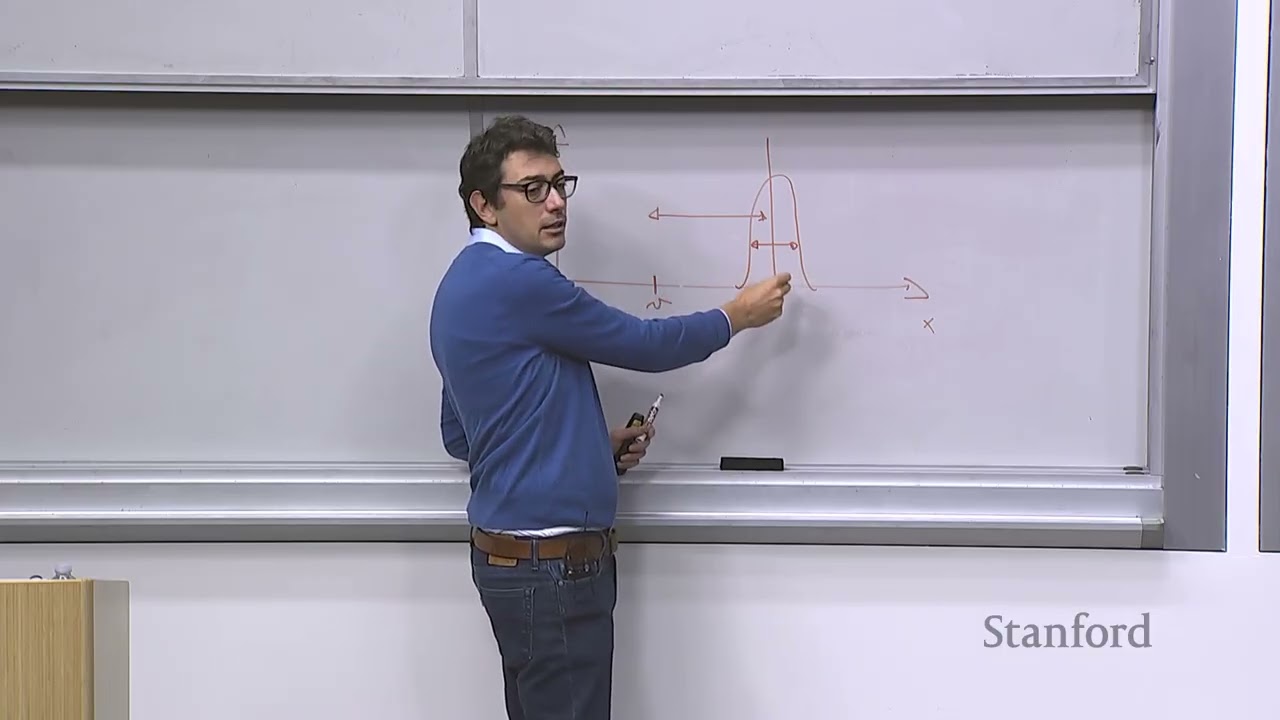
Stanford Online has posted lecture 8 of the AA274A Principles of Robotic Autonomy course on YouTube. The recording was made in fall 2019. Marco Pavone teaches it, and the topic is robot sensors and an introduction to computer vision. There are no new results or models here. This is teaching material, and its value is as a basic foundation for people entering robotics.
What the lecture covers
The title points to two blocks. The first is about sensors: how a robot gets data about the world and about its own state. In courses at this level, this usually includes cameras, lidar, radar, ultrasonic rangefinders, inertial sensors, odometry, and satellite navigation. They are compared by range, resolution, update rate, noise, and cost. The second block is an introduction to computer vision: how to turn an array of pixels into information usable for navigation and decision-making.
The description has no detailed timestamped outline. The details above are therefore based on the lecture's title and the typical structure of such a course, not on a summary of specific slides.
Who teaches the course
Marco Pavone is an Associate Professor in Stanford's Department of Aeronautics and Astronautics and Senior Director of Autonomous Vehicle Research at NVIDIA. Before joining the university, he worked as a Research Technologist in the robotics section of NASA's Jet Propulsion Laboratory.
This background matters for the topic of sensors. A self-driving car on a city street and a spacecraft work under different constraints on power, reliability, and environmental conditions. In both cases, choosing sensors is a trade-off between physics, cost, and safety requirements.
What to keep in mind before watching
Stanford itself notes that the lecture was recorded in the 2019 version of the course, and that the course structure, assignments, and materials may have changed. The links in the description lead to the latest version of the course, so they may not match what the video shows.
There is also a limitation of substance. In 2019, vision transformers had not yet become the standard, and large multimodal models had not entered roboticists' everyday toolkit. If the lecture relies on the classical foundations, it remains useful. Sensor physics, noise, calibration, and camera geometry age slowly. You will have to find an overview of modern neural-network approaches to vision separately.
Key details of the material:
- Course: AA274A Principles of Robotic Autonomy
- Episode: lecture 8, Robotic Sensors and Introduction to Computer Vision
- Version: fall 2019
- Lecturer: Marco Pavone, Stanford and NVIDIA
- Textbook: Principles of Robot Autonomy, porabook.com, free
- Current syllabus: stanfordasl.github.io/PoRA-I
How to use the material
It makes sense to watch the lecture as an introduction. Start with the recording to understand the logic of moving from sensors to vision. Then check it against the current course schedule to see what has changed in the presentation. After that, read the corresponding chapters of the free textbook: text is better for reviewing formulas and definitions.
Engineers and product teams working with robots, drones, or autonomous vehicles can use it to test their own stack for a grasp of the basics. Which sensors are in the system, and why those in particular? What are their blind spots? How does noise affect downstream vision models? If there are no clear answers to these questions, the lecture fills some of the gaps. For everyone else, it is a good way to refresh the basics before studying newer perception models.
Delegate Deep Research, Coding & Workflows to an AI Agent
Deploy autonomous multi-step execution with NomadNet Agent (agent.nomadnet.ai) — automated web research, data synthesis, code generation, and complex task orchestration.
The AI world, distilled — once a week
Seven stories that actually mattered, hand-picked. No noise, no reposts, no press releases.
Done! Check your inbox for a confirmation.