Nvidia and the "China question": Jensen Huang defends supporting DeepSeek
Jensen Huang is in an awkward spot. US lawmakers have accused Nvidia of helping China's DeepSeek build efficient neural networks through its technical support. Huang's answer was terse: Nvidia supports "every developer" who uses its software. It is a classic balancing act. On one side are US export restrictions; on the other is the desire to keep dominating a market where Chinese engineers work wonders with optimization. In effect, Nvidia is admitting that its CUDA ecosystem matters more than geopolitics. For the industry, the signal is that tech giants will cling to the global market until regulators finally cut off the oxygen.
AI-processed from Bloomberg Tech; edited by Hamidun News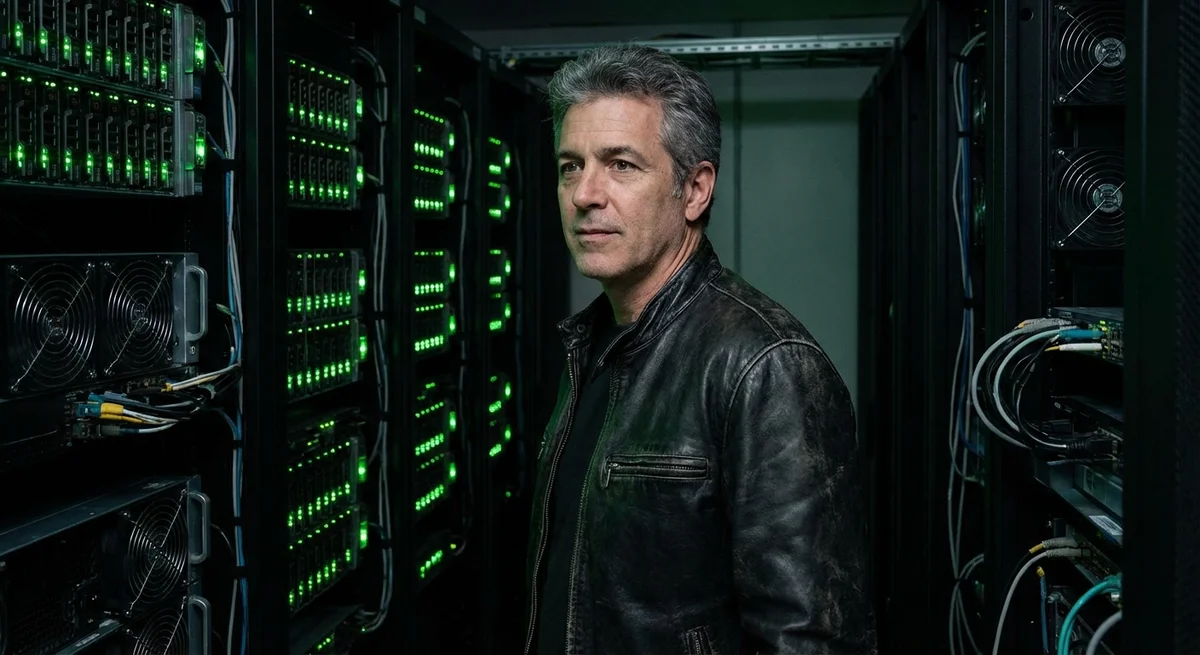
While the whole world was discussing how China's DeepSeek managed to train a powerful model for peanuts, Washington started looking for someone to blame. As usual, the main suspect turned out to be Nvidia. Jensen Huang, the man in the perpetual leather jacket, now has to explain in public why his engineers helped a geopolitical rival optimize code. His answer reads like a manifesto of technological neutrality: we support absolutely everyone who writes on our software. This is not mere politeness but a fundamental survival principle for a company that wants to remain the industry standard.
The situation looks almost comic if you don't know the context. First the US imposes harsh sanctions, banning the sale of top-end H100 chips to China. Then the Chinese release DeepSeek, which works suspiciously well even on cut-down or older accelerators. American politicians immediately make a logical leap: if the hardware is restricted, Nvidia must have helped with the software. Senators are indignant, since technical support is also a technology export, sometimes more valuable than the boxes of transistors themselves.
Jensen Huang is playing a long and very risky game. For him, Nvidia stopped being merely a silicon factory long ago. It is, above all, the CUDA software platform. If you cut off support for a huge layer of Chinese developers, they will not stop coding. They will simply move to other architectures and build an alternative ecosystem that, within five years, could threaten US dominance. For Huang, losing software influence in China is a mortal long-term threat to the business.
What is interesting is how exactly DeepSeek became the trigger for this conflict. The company showed clearly that raw computing power is not the only road to success. Efficient algorithms make it possible to get around the hardware restrictions the White House built so carefully. And if Nvidia's engineers really did help in this process, they effectively taught the Chinese how to make American sanctions useless. It is ironic that the world's most valuable company is helping to undermine its own government's restrictions in order to keep its users loyal.
Now Nvidia is a tightrope walker on a thin wire. It has to report to regulators and keep its market at the same time. Huang understands perfectly well that technological progress cannot be locked inside the borders of one state or ideology. If a developer uses the Nvidia stack, he automatically becomes part of the Nvidia empire, regardless of his time zone or the passport in his pocket. However, political pressure in the US is growing, and Huang's "neutrality" irritates those who are used to seeing the world in black and white.
The problem is that DeepSeek has set a precedent. It proved that world-class models can be built even amid a chip shortage. That undercuts the argument of those who believe the H100 export ban will solve every problem. Now it is not only hardware that will come under scrutiny, but also every line of code, every consultation and every patch Nvidia sends to its customers in China. Jensen will have to work hard to prove that his "support for everyone" does not contradict national interests.
The key question: Can Nvidia keep its status as the "neutral Switzerland" of AI, or will Washington force Huang to pick a side?
- Nov 2, 2026TensorFold 1.2.0 boosts Qwen3.8-27B throughput on M3 Ultra by 44.2% at 16 streams
- Nov 1, 2026Local models lose to Opus and Codex: 0.21 on a MacBook versus 1.00 for Codex
- Nov 1, 2026Habr author fine-tunes YOLOv8l on dental X-rays and pushes mAP50 to 0.642
- Nov 1, 2026Voice bots built on LLMs turn to Jev, a fast classifier, for decisions in 200–500 ms
Test Frontier LLMs & Autonomous Agents in One Workspace
Run Claude Opus 5.5, GPT-6, Gemini 3.1, and DeepSeek side-by-side in Nomad AI (nomadnet.ai) — unified model routing, deep research, and multimodal workflows under one subscription.
The AI world, distilled — once a week
Seven stories that actually mattered, hand-picked. No noise, no reposts, no press releases.
Done! Check your inbox for a confirmation.