OpenAI and SoftBank Are Building Giant Data Centers for AI
OpenAI and SoftBank Group have announced a partnership with SB Energy to build data centers for AI. The first project is a 1.2 GW campus in Texas, part of the Stargate initiative. The goal is to secure the computing capacity for OpenAI's future work.
AI-processed from OpenAI Blog; edited by Hamidun News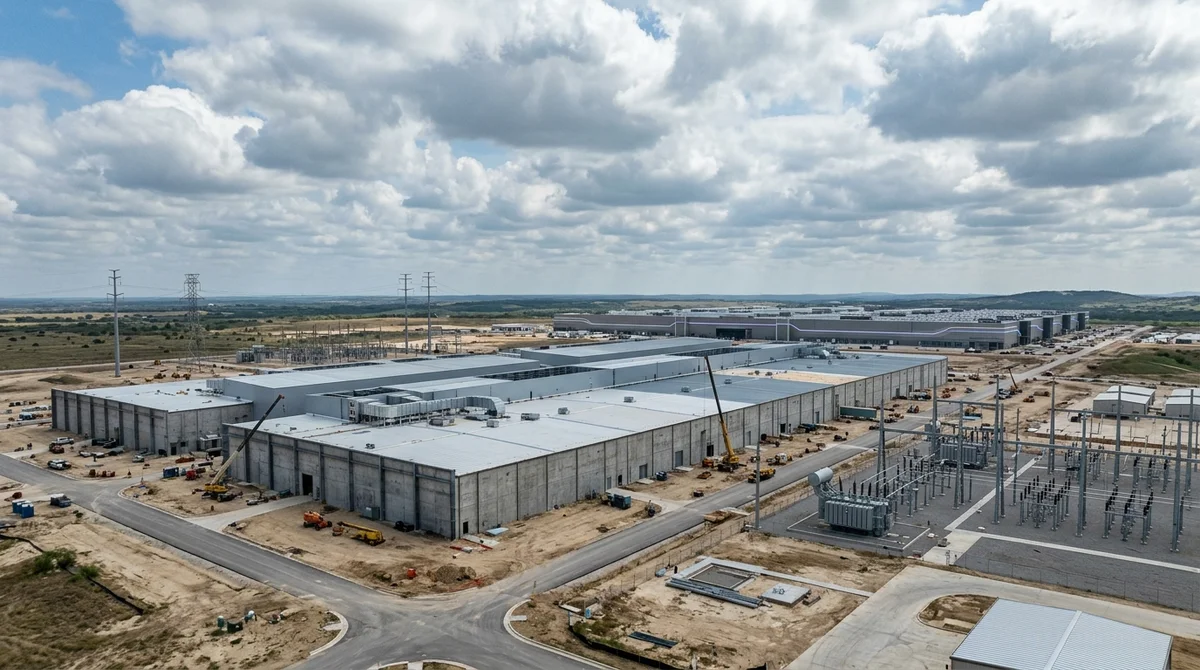
A major shift is taking shape in artificial intelligence: OpenAI, the maker of the much-hyped ChatGPT, is joining forces with Japanese conglomerate SoftBank Group, or more precisely its energy arm SB Energy, to build large-scale data centers meant to meet the growing demand for AI computing power. The first major project will be a 1.2-gigawatt campus in Texas, which will be part of an ambitious initiative codenamed Stargate.
The OpenAI-SoftBank partnership is not just news of yet another construction project. It is a strategic move that reflects how heavily AI companies now depend on enormous computing resources. Training and running modern neural networks, especially complex ones such as GPT-4 and future models, takes colossal amounts of energy and compute. Existing data centers often cannot keep up with these needs, which is becoming a serious obstacle to further AI development.
Little is known so far about Stargate, but it likely involves specialized infrastructure optimized for AI workloads. That could include advanced cooling systems, high-speed networking and specialized processors such as GPUs and TPUs designed specifically for machine learning. The choice of Texas for the first campus is no accident either: the state offers favorable conditions for energy projects, including access to renewable energy sources.
The implications of this partnership are huge. First, it signals OpenAI's serious intent regarding the long-term development of AI. The company is not just building models; it is also investing in the infrastructure needed to support them. Second, it may set a precedent for other major players in the AI industry, who may also start thinking about building their own data centers. Third, it raises the question of AI's environmental sustainability. Huge data centers consume a lot of energy, and it matters that this energy comes from renewable sources.
For users, this means that OpenAI may be able to offer more powerful and sophisticated AI services in the future. More computing capacity will make it possible to build more accurate, reliable and capable models that can handle a wider range of tasks. However, it may also push up the price of AI services, since companies will have to recoup the cost of building and operating data centers.
In conclusion, the OpenAI-SoftBank partnership is an important step toward sustainable, scalable infrastructure for AI. It will not only give OpenAI the computing resources it needs, but may also reshape the AI industry as a whole by pushing other companies to invest in their own infrastructure. The future of AI depends not only on algorithms, but also on the computing power behind them.
- Nov 2, 2026Arca gives AI agents finance tasks lasting up to 10 days, but leaves the trades to humans
- Nov 2, 2026Meta's Muse assistant keeps dossiers on loved ones and gets root on Ubuntu by default
- Nov 1, 2026Local models lose to Opus and Codex: 0.21 on a MacBook versus 1.00 for Codex
- Nov 1, 2026Kimi scores 96.2% on a 1C database analytics test and emerges as a fallback if Claude access is blocked
Test Frontier LLMs & Autonomous Agents in One Workspace
Run Claude Opus 5.5, GPT-6, Gemini 3.1, and DeepSeek side-by-side in Nomad AI (nomadnet.ai) — unified model routing, deep research, and multimodal workflows under one subscription.
The AI world, distilled — once a week
Seven stories that actually mattered, hand-picked. No noise, no reposts, no press releases.
Done! Check your inbox for a confirmation.