US Imposes 25% Tariff on Nvidia H200 Chips Bound for China
The US has imposed a 25% tariff on exports of Nvidia H200 chips to China. The decision, made by the Trump administration, aims to limit China's access to advanced artificial intelligence technology and could significantly affect the global semiconductor market. Washington frames the move as part of a broader effort to slow Chinese AI development while preserving its own technological lead. The tariff raises the cost of the chips for Chinese companies, but it also puts pressure on Nvidia, for which China is one of the largest markets.
AI-processed from TechCrunch; edited by Hamidun News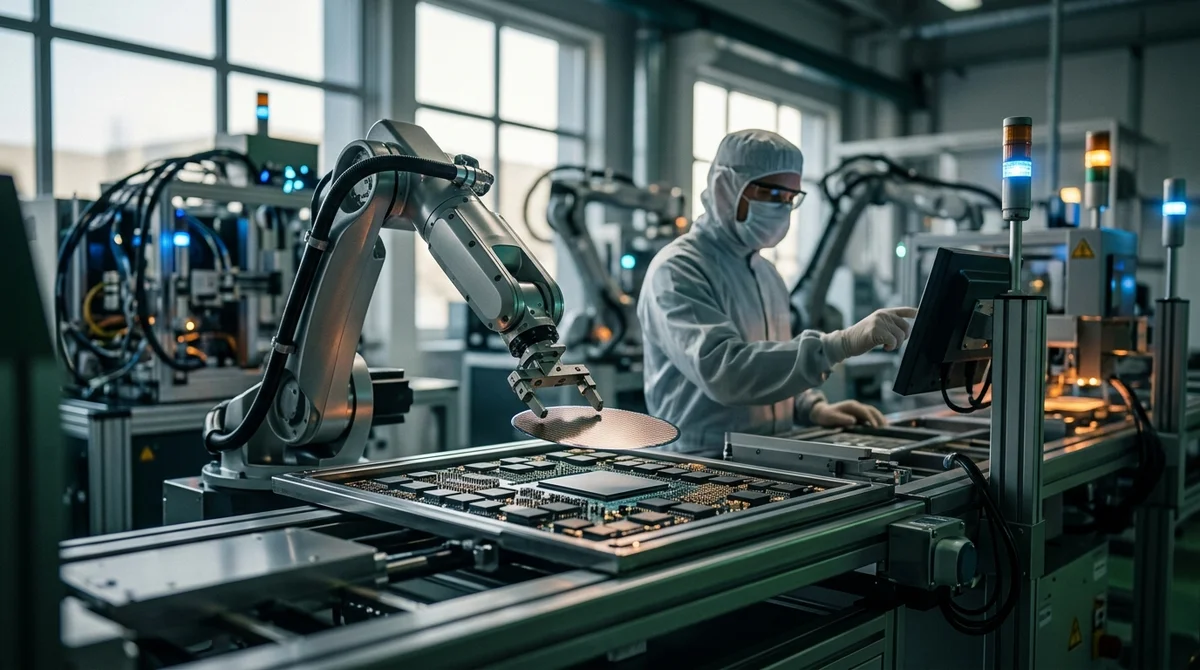
The US administration has dealt another blow to China's technology sector by imposing a 25% tariff on exports of Nvidia's high-performance H200 chips. The measure, formalized under a policy that began during Trump's presidency, covers specific semiconductors and carries far-reaching consequences for global competition in artificial intelligence.
The decision stems from growing geopolitical tension between the US and China. Both countries are vying for leadership in AI, and access to advanced computing resources such as Nvidia H200 chips plays a key role in that race. By restricting exports of these chips, the US aims to slow the development of Chinese AI and preserve its technological advantage.
The Nvidia H200 is one of the most powerful accelerators in the world for artificial intelligence and machine learning workloads. Data centers use it to train large language models, develop autonomous systems and run other resource-intensive applications. The 25% tariff significantly raises the cost of these chips for Chinese companies, making them less competitive on the global market.
Chinese companies will not be the only ones to feel the consequences; Nvidia will too. China is one of the largest markets for semiconductors, and losing access to it could seriously hurt the company's financial results. It may also push Chinese companies to develop their own alternative solutions, which would intensify competition in the market over the long term.
For users, this means a potential slowdown in AI development in China and, possibly, higher prices for related services and products. At the same time, it may spur innovation in other countries seeking to fill the vacated niche. Ultimately, the tariff on Nvidia H200 chips is a complex, multifaceted step that will significantly shape the global AI landscape.
In short, the 25% tariff on Nvidia H200 chips supplied to China is a significant event that highlights the growing role of technology in geopolitical rivalry. The move will likely redistribute power in the AI market and will require companies to adapt to new conditions.
- Nov 2, 2026NVIDIA releases Nemotron 3.5 Bolt E4B: 4 GB and 133 tokens per second on an RTX 5070
- Nov 2, 2026Cosmos generated training video for drones: detector mAP@50–95 up 10.3%
- Nov 2, 2026Anthropic needs to grow revenue 32% a year to cover $850 billion in contracts
- Nov 2, 2026TensorFold 1.2.0 boosts Qwen3.8-27B throughput on M3 Ultra by 44.2% at 16 streams
Test Frontier LLMs & Autonomous Agents in One Workspace
Run Claude Opus 5.5, GPT-6, Gemini 3.1, and DeepSeek side-by-side in Nomad AI (nomadnet.ai) — unified model routing, deep research, and multimodal workflows under one subscription.
The AI world, distilled — once a week
Seven stories that actually mattered, hand-picked. No noise, no reposts, no press releases.
Done! Check your inbox for a confirmation.