AI and Copyright: Theft or Innovation?
Around 800 creative professionals have launched a campaign called "Stealing Isn't Innovation," protesting the use of their work to train AI without consent. They argue that the practice violates their copyright and that they deserve fair compensation.
AI-processed from 3DNews AI; edited by Hamidun News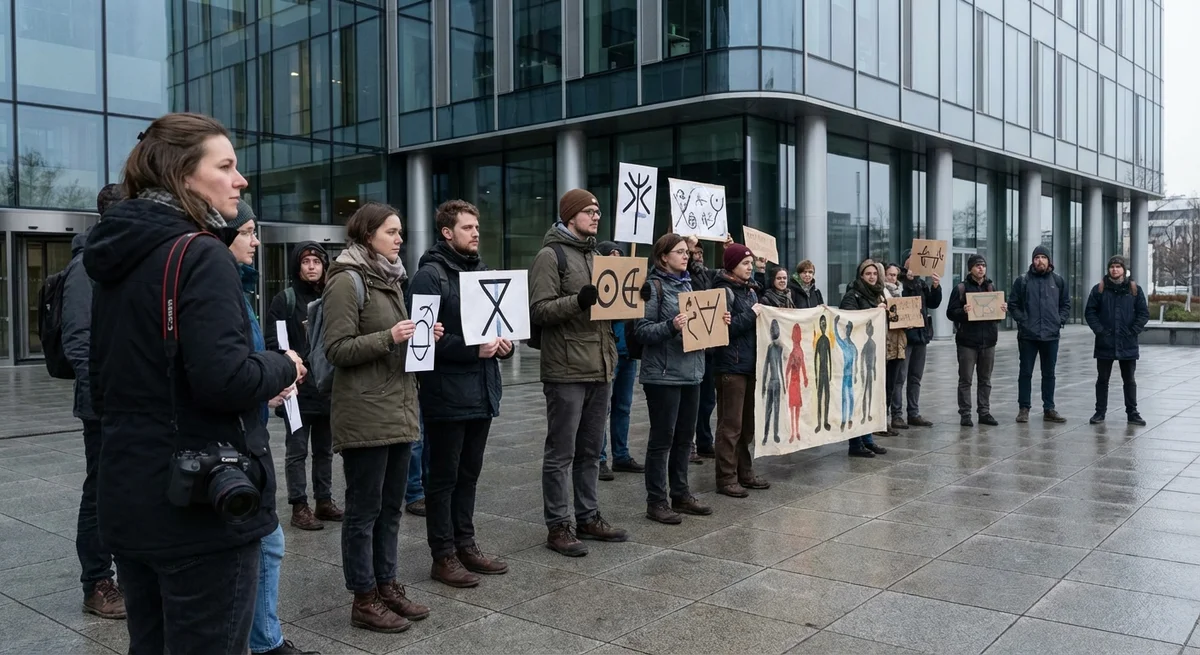
A new conflict is flaring up in the AI world: around 800 artists, writers, actors, and musicians have joined forces in a campaign called "Stealing Isn't Innovation." Their goal is to push back against the unauthorized use of their creative work to train neural networks. Campaign participants say that the major AI companies building generative models are simply "stealing" intellectual property on a massive scale to enrich their algorithms.
The problem is that many modern AI models can generate text, images, music, and even video, and they are trained on huge datasets scraped from the internet. Those datasets often include copyrighted works such as books, paintings, and music. AI companies rarely get explicit consent from rights holders to use this material. Instead, they invoke the concept of "fair use" or argue that AI training is a transformative use that does not infringe copyright.
The creative community flatly rejects that argument. Its members say that using their work to train AI without permission or compensation directly violates their copyright and deprives them of the ability to earn income from what they create. In their view, AI companies should either license the content or develop alternative training methods that don't require unauthorized copying.
The campaign has serious implications for the entire AI industry. If the creative community wins in court or persuades lawmakers to adopt stricter rules on using content for AI training, building new models could become significantly more complex and expensive. AI companies would have to spend more time and resources securing licenses or developing alternative training methods, which could slow the industry's pace of development.
End users could feel the effects too. If AI models become more expensive to develop, that may show up in the price of AI-powered products and services. And if AI companies are forced to use only licensed content, that could limit the diversity and creativity of what the models generate.
Ultimately, the question of whether using content to train AI is "theft" or "innovation" remains open. One thing is clear, though: this is a complex, multifaceted issue that requires careful consideration and a compromise that accounts for the interests of both the creative community and the AI industry. Striking a balance between encouraging innovation and protecting creators' rights is essential to ensure the industry develops in a sustainable and fair way.
- Nov 2, 2026Researchers release AVID dataset: 68.1% of targets have a bounding box side of just 8–16 pixels
- Nov 2, 2026Karpathy Built HackerTube, a Catalog of 6,454 Videos, in Two Hours with Claude Code
- Nov 2, 2026Cosmos generated training video for drones: detector mAP@50–95 up 10.3%
- Nov 2, 2026Karpathy builds a YouTube clone with 6454 videos from Hacker News recommendations in two hours
Test Frontier LLMs & Autonomous Agents in One Workspace
Run Claude Opus 5.5, GPT-6, Gemini 3.1, and DeepSeek side-by-side in Nomad AI (nomadnet.ai) — unified model routing, deep research, and multimodal workflows under one subscription.
The AI world, distilled — once a week
Seven stories that actually mattered, hand-picked. No noise, no reposts, no press releases.
Done! Check your inbox for a confirmation.