Anthropic launches Claude Science Beta: a multi-agent environment for genomics and proteomics
On June 30, 2026, Anthropic opened beta access to Claude Science, a multi-agent workspace for scientific computing in genomics, proteomics and cheminformatics. A coordinating agent assigns tasks to specialist agents, a reviewer agent checks numbers and citations, and every chart comes with its full code and computation history. The platform connects to more than 60 databases and to NVIDIA BioNeMo skills.
AI-processed from MarkTechPost; edited by Hamidun News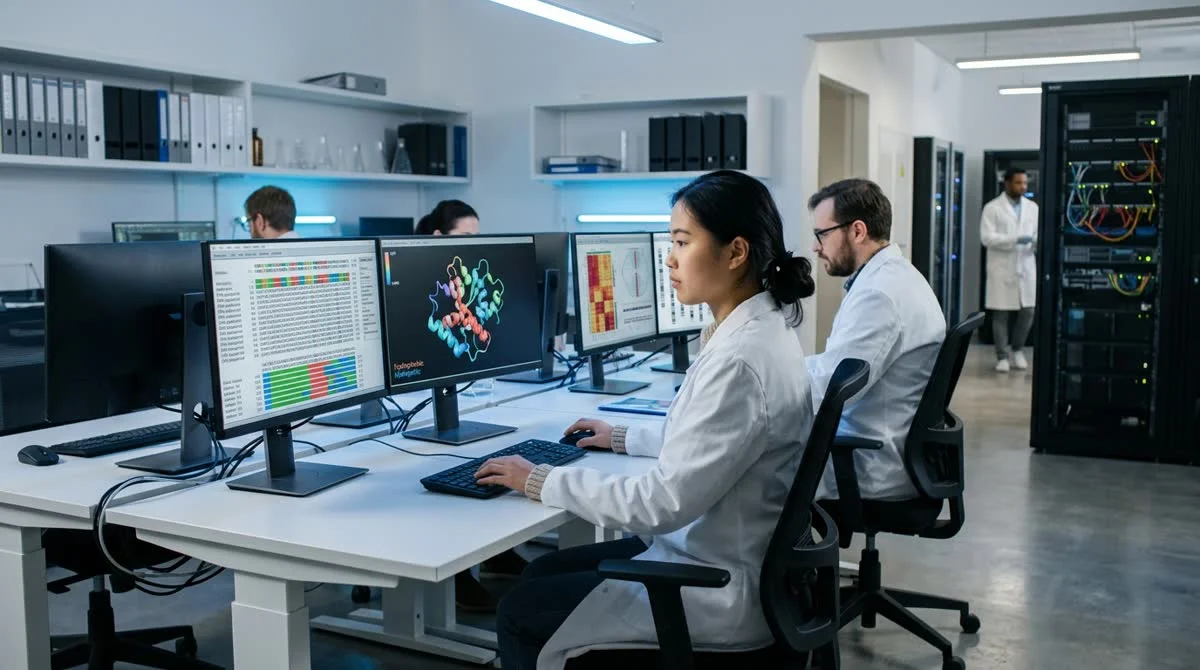
On June 30, 2026, Anthropic opened beta access to Claude Science, a multi-agent platform for reproducible computational research in genomics, proteomics and cheminformatics.
What Claude Science is
The platform is not a standalone language model. It runs on top of existing Claude models and organizes them into a specialized multi-agent workspace for biomedical pipelines.
At its center is a coordinating agent. Given a task, it breaks it into subtasks and delegates them to domain-specific agents for genomics, proteomics or cheminformatics. A separate reviewer agent runs in parallel, checking and correcting numerical data, references and citations before a result leaves the platform.
- Beta launch: June 30, 2026
- Runs on top of existing Claude models; not a separate model
- Coordinating agent plus specialized domain agents
- Separate reviewer agent to check numbers and citations
- Connected to more than 60 scientific databases
- Integration with NVIDIA BioNeMo skills
The target disciplines (genomics, proteomics and cheminformatics) share huge data volumes and multi-step computational pipelines. Reproducibility is critical in such pipelines: every intermediate step affects the final result, and manual documentation quickly falls behind what the computation actually did.
Every generated chart comes with the exact code, a description of the computing environment and the full history of agent messages. Any researcher or reviewer can reproduce the entire path from raw data to the final visualization.
How does Claude Science manage computation?
The platform supports three types of compute resources within a single workflow: the researcher's local machine, a high-performance computing (HPC) cluster over SSH, and the Modal cloud service. Tasks are distributed across these resources automatically, with no manual data transfer.
Biomedical calculations depend on access to current data. The platform connects directly to more than 60 databases and uses NVIDIA BioNeMo skills, specialized models for molecular biology tasks. This lets users build pipelines without manually importing genomic annotations, protein structures or chemical libraries at each stage.
Why a separate reviewer agent?
Language models regularly get details wrong: numbers, units of measurement, gene identifiers, author names. In a scientific context, such an error is not just a stylistic slip but a potentially false conclusion that other papers then cite.
Moving review into its own agent layer makes verification transparent: the researcher sees not only the final result but also what exactly was corrected and why. The public history of agent messages makes auditing easier for journal reviewers.
What this means
Claude Science is Anthropic's first explicit attempt to adapt a multi-agent architecture to reproducible biomedical science. The platform tackles the reproducibility problem with technical means: automatically recording the entire computational chain in a structured, executable form. If the beta proves its value, it could change publication standards for computational results, moving from "methods and materials" to an executable journal with a history of agent decisions.
Frequently asked questions
Which computing environments does Claude Science support?
The platform manages computation on three types of resources: local machines, HPC clusters over SSH and the Modal cloud service, all within a single workflow and without manual switching.
Which databases does the platform work with?
In the beta, Claude Science is connected to more than 60 scientific databases and uses NVIDIA BioNeMo skills, specialized biomedical models for molecular biology tasks.
Key Questions Answered
How does Claude Science manage computation?
The platform supports three types of compute resources within a single workflow: the researcher's local machine, a high-performance computing (HPC) cluster over SSH, and the Modal cloud service. Tasks are distributed across these resources automatically, with no manual data transfer. Biomedical calculations depend on access to current data. The platform connects directly to more than 60 databases and uses NVIDIA BioNeMo skills, specialized models for molecular biology tasks. This lets users build pipelines without manually importing genomic annotations, protein structures o
Why a separate reviewer agent?
Language models regularly get details wrong: numbers, units of measurement, gene identifiers, author names. In a scientific context, such an error is not just a stylistic slip but a potentially false conclusion that other papers then cite. Moving review into its own agent layer makes verification transparent: the researcher sees not only the final result but also what exactly was corrected and why. The public history of agent messages makes auditing easier for journal reviewers.
Which computing environments does Claude Science support?
The platform manages computation on three types of resources: local machines, HPC clusters over SSH and the Modal cloud service, all within a single workflow and without manual switching.
Which databases does the platform work with?
In the beta, Claude Science is connected to more than 60 scientific databases and uses NVIDIA BioNeMo skills, specialized biomedical models for molecular biology tasks.
Build & Ship Production AI Agents Without Boilerplate Code
Start your free 72-hour trial at Hamidun Academy (academy.hamidun.com) — interactive lessons on Claude Code & Cursor, live Tech Radar, and production agent templates.
The AI world, distilled — once a week
Seven stories that actually mattered, hand-picked. No noise, no reposts, no press releases.
Done! Check your inbox for a confirmation.