Google unveils Gemini for Science, a set of AI tools for scientific discovery
Google DeepMind has introduced Gemini for Science, a new set of AI tools for researchers. They help scientists explore hypotheses, validate results at scale and work through the scientific literature faster. The tools are still experimental, and Google is collecting feedback.
AI-processed from @GoogleDeepMind; edited by Hamidun News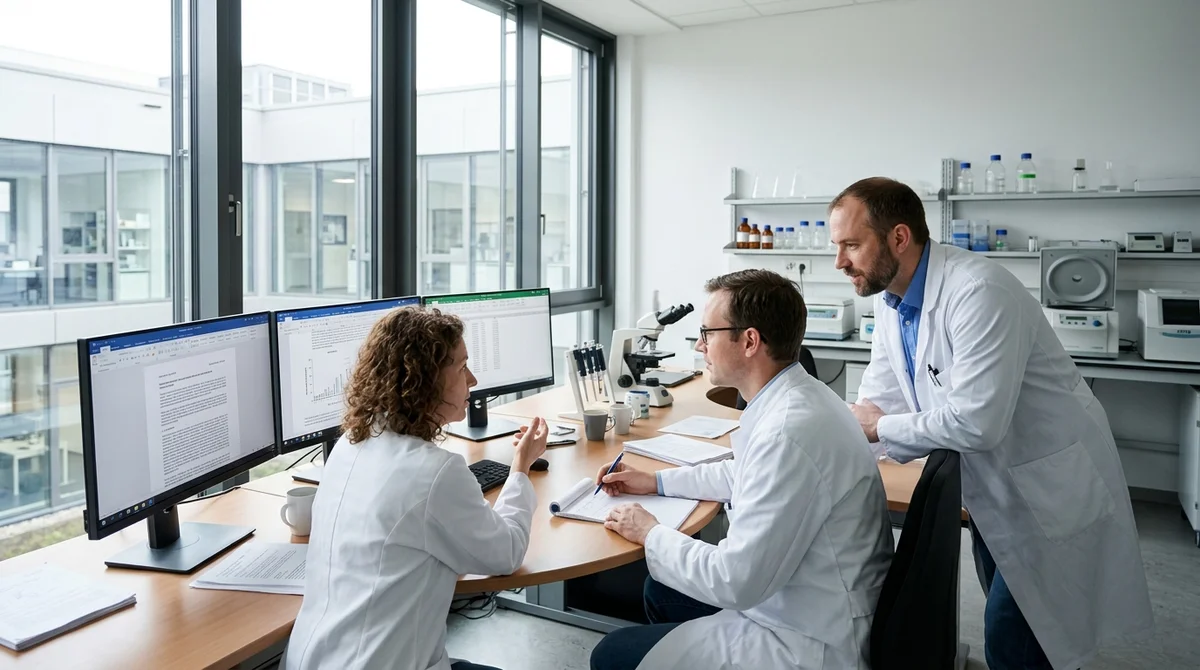
Google DeepMind has introduced Gemini for Science, a new experimental set of Gemini-based tools designed specifically to help scientists speed up discovery.
The problem the tools address
Google DeepMind points to one of the main problems in modern science: researchers spend too much time on routine work instead of creative thinking and analysis. Finding relevant papers in huge databases, reading hundreds of studies to spot connections, validating preliminary results and testing hypotheses all eat up hours that could go toward real discoveries. The new tools aim to give researchers that time back so they can focus on what they do best: formulating hypotheses, running experiments and analyzing results.
What Gemini for Science includes
The set covers several critical stages of the scientific process:
- Exploring and generating new hypotheses based on existing data and results
- Large-scale validation of experiments and the results of scientific papers
- Smart search across the scientific literature (PubMed, arXiv, scientific journals, preprints)
- Fast processing of structured and unstructured data from papers
- Help with interpreting results and identifying new patterns and hidden regularities
Each tool is built with a deep understanding of how real scientific research works and of where exactly AI can help without replacing the researcher in key decisions.
How this changes the approach to science
AI in science is not a replacement for the scientist but a skilled assistant. Gemini for Science lets researchers test far more hypotheses in parallel, without getting stuck in endless information searches or routine validation procedures. For basic science this is critical: the more options you can check quickly, the higher the chance of finding something truly new and unexpected.
The tools should also lower the barrier to entry for young scientists and graduate students, who often lack the experience to quickly see all the relevant work and the hidden links between papers.
"We want to help scientists make their next major breakthrough with AI," says the official
Google DeepMind announcement.
A realistic approach to testing
Google says openly that the tools are still experimental and have limitations. There are bugs, results may contain errors, and AI hallucinations are possible in some cases. The company is actively inviting scientists to a closed beta program precisely to collect feedback on real examples and improve the tools together with the community.
This sets it apart from marketing promises: Google is offering real collaboration, not a finished solution.
What this means
The contest between Google, OpenAI and Anthropic for a place in the scientific community is only beginning. Each company understands that access to scientists is not just a new market but a validation and evolution of AI itself. Scientists are demanding, critical and honest in their feedback.
If Gemini for Science takes hold in labs and research institutes, it will strengthen Google's position in the B2B segment. For scientists themselves this is good news: choice is growing, and competition is forcing everyone to improve faster.
- Nov 1, 2026Google's StreamVibe video agent beats other models by 10.7% on response timing and quality
- Nov 1, 2026OpenAI Rewrites GPT Behavior Rules: Five Values and a Chain of Command
- Nov 1, 2026Voice bots built on LLMs turn to Jev, a fast classifier, for decisions in 200–500 ms
- Nov 1, 2026Google admits AI Mode cuts search revenue, shares fall 15%
Key Questions Answered
What are the key details on The problem the tools address?
Google DeepMind points to one of the main problems in modern science: researchers spend too much time on routine work instead of creative thinking and analysis. Finding relevant papers in huge databases, reading hundreds of studies to spot connections, validating preliminary results and testing hypotheses all eat up hours that could go toward real discoveries. The new tools aim to give researchers that time back so they can focus on what they do best: formulating hypotheses, running experiments and analyzing results.
What Gemini for Science includes?
The set covers several critical stages of the scientific process: Exploring and generating new hypotheses based on existing data and results Large-scale validation of experiments and the results of scientific papers Smart search across the scientific literature (PubMed, arXiv, scientific journals, preprints) Fast processing of structured and unstructured data from papers Help with interpreting results and identifying new patterns and hidden regularities Each tool is built with a deep understanding of how real scientific research works and of where exactly AI can help withou
How this changes the approach to science?
AI in science is not a replacement for the scientist but a skilled assistant. Gemini for Science lets researchers test far more hypotheses in parallel, without getting stuck in endless information searches or routine validation procedures. For basic science this is critical: the more options you can check quickly, the higher the chance of finding something truly new and unexpected. The tools should also lower the barrier to entry for young scientists and graduate students, who often lack the experience to quickly see all the relevant work and the hidden links between papers
Test Frontier LLMs & Autonomous Agents in One Workspace
Run Claude Opus 5.5, GPT-6, Gemini 3.1, and DeepSeek side-by-side in Nomad AI (nomadnet.ai) — unified model routing, deep research, and multimodal workflows under one subscription.
The AI world, distilled — once a week
Seven stories that actually mattered, hand-picked. No noise, no reposts, no press releases.
Done! Check your inbox for a confirmation.