Google DeepMind's Gemini for Science Helps Researchers Make Discoveries
Google DeepMind has released Gemini for Science, a set of AI tools for researchers. The system analyzes scientific data, helps write code and generates hypotheses. It works with biology, chemistry and materials science.
AI-processed from @GoogleDeepMind; edited by Hamidun News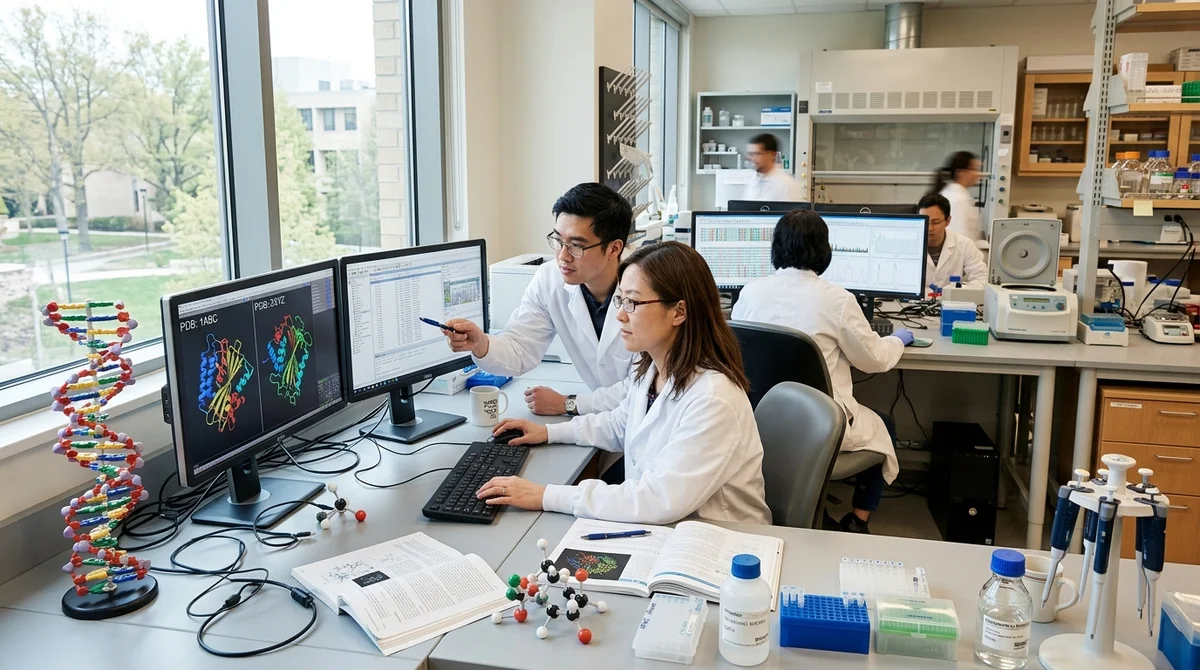
Google DeepMind has unveiled Gemini for Science, a set of tools that help scientists speed up their research. The system runs on the Gemini model and is optimized specifically for scientific tasks.
What the system can do
Gemini for Science helps analyze large volumes of scientific data, write and debug code for experiments, and generate new hypotheses based on existing research.
- Analyzes scientific papers and experimental data
- Helps write and debug code for modeling
- Suggests ideas for further research directions
- Works with biology, chemistry and materials science
- Speeds up the early stages of experimental work
What it is used for
Researchers in a range of fields have already tested the tools. The system helps with protein design, genetic data analysis and the search for new materials for batteries and accumulators. Scientists note that AI noticeably cuts the time spent on routine work.
Why it matters
AI is starting to work not just with text but with scientific context. The system understands the specifics of different disciplines and can suggest ideas that are easy to miss in manual data analysis. That shifts researchers from routine work to creative work.
What this means
Science becomes more accessible and faster. Researchers no longer need to spend months on routine analysis; they can focus on interpreting results and asking new questions. This may lead to a real acceleration of discoveries in medicine, materials science and other critical fields.
- Nov 1, 2026Google's StreamVibe video agent beats other models by 10.7% on response timing and quality
- Nov 1, 2026OpenAI Rewrites GPT Behavior Rules: Five Values and a Chain of Command
- Nov 1, 2026Voice bots built on LLMs turn to Jev, a fast classifier, for decisions in 200–500 ms
- Nov 1, 2026Google admits AI Mode cuts search revenue, shares fall 15%
Key Questions Answered
What the system can do?
Gemini for Science helps analyze large volumes of scientific data, write and debug code for experiments, and generate new hypotheses based on existing research. Analyzes scientific papers and experimental data Helps write and debug code for modeling Suggests ideas for further research directions Works with biology, chemistry and materials science Speeds up the early stages of experimental work
What it is used for?
Researchers in a range of fields have already tested the tools. The system helps with protein design, genetic data analysis and the search for new materials for batteries and accumulators. Scientists note that AI noticeably cuts the time spent on routine work.
Why it matters?
AI is starting to work not just with text but with scientific context. The system understands the specifics of different disciplines and can suggest ideas that are easy to miss in manual data analysis. That shifts researchers from routine work to creative work.
Test Frontier LLMs & Autonomous Agents in One Workspace
Run Claude Opus 5.5, GPT-6, Gemini 3.1, and DeepSeek side-by-side in Nomad AI (nomadnet.ai) — unified model routing, deep research, and multimodal workflows under one subscription.
The AI world, distilled — once a week
Seven stories that actually mattered, hand-picked. No noise, no reposts, no press releases.
Done! Check your inbox for a confirmation.