Computer Vision on the Shelves: Coresight Research Puts a Number on Retail Losses from Shelf Execution Errors
Empty shelves cost retailers billions, and now someone has done the math. Coresight Research, together with Simbe and RELEX Solutions, has published a study showing that computer-vision robots patrolling the sales floor 24/7 reduce shelf execution errors and directly affect margin. Most important, the study builds the first financial model that gives retailers ROI figures before they buy any equipment.
AI-processed from AI News; edited by Hamidun News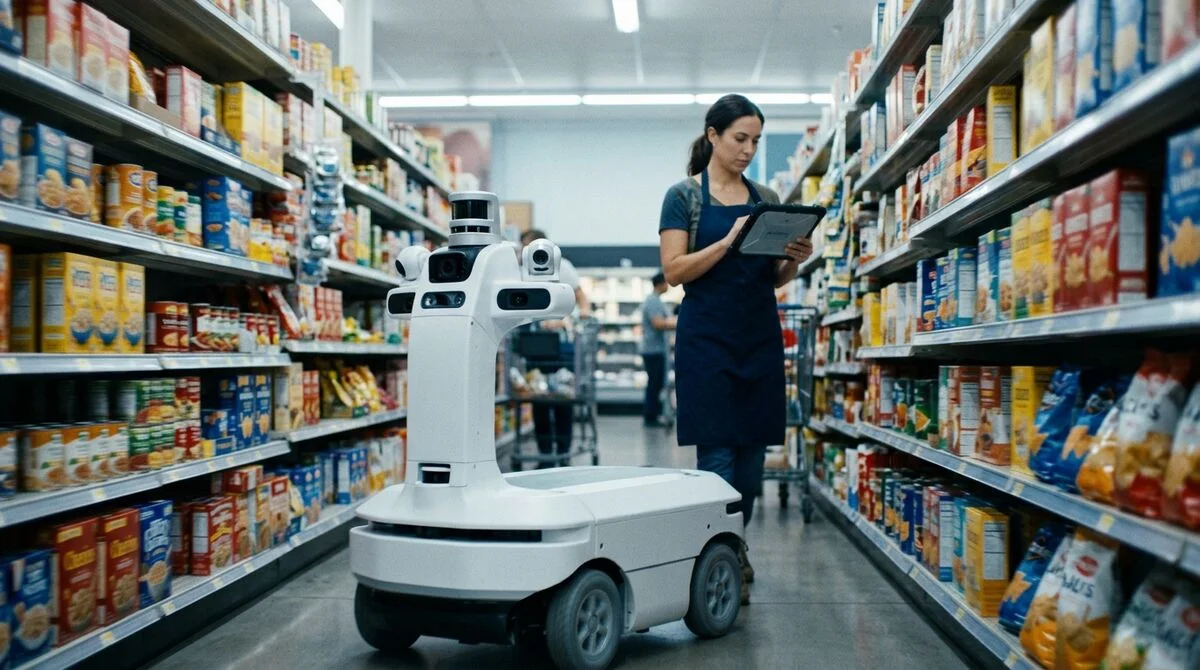
A study by the analyst firm Coresight Research, conducted in partnership with Simbe and RELEX Solutions, is the first to measure the real cost of shelf execution errors in physical retail. It also shows how hardware-based automation of shelf monitoring using computer vision turns into concrete financial returns.
A problem long ignored
Empty shelves and incorrect product placement are not a minor annoyance for shoppers but a chronic, costly failure in physical retail. A shopper who cannot find the product either goes to a competitor, switches to online, or simply gives up on the purchase. Multiply that across thousands of stores and millions of visits and you get a serious hole in the industry's revenue.
Traditional tools fall short. Manual walk-throughs by staff with tablets are slow, expensive and inaccurate: the average store checks the status of each SKU only a few times per shift. In between, problems pile up unnoticed: a shelf runs empty, a price tag shifts, a new product ends up in the wrong place. All of this stays invisible to the management system and directly eats into margin. This hidden leak is what Coresight Research set out to measure and express in money.
What computer vision can do on the sales floor
Simbe's robotic systems patrol the sales floor around the clock, scanning shelves with cameras and sensors. They do not get tired, do not skip sections and record every anomaly in real time. The system tracks:
- the presence or absence of each SKU at its exact shelf location
- compliance of the display with the approved planogram
- correctness of price labels and promotional materials
- stock levels and the likelihood of a shortage before the end of the day
- demand dynamics at specific locations on the sales floor
The collected data flows in real time into the RELEX Solutions inventory management platform. It automatically prioritizes tasks for staff, adjusts supplier orders and produces a management summary, with no need to wait for an end-of-day report.
Why the economics finally add up
Operating margin in grocery retail is 1–3%. At those numbers, any new technology has to prove its payback in money, not in promises to improve the customer experience. That is why this study differs fundamentally from most industry reports: it builds a financial model that lets a chain plug in its own data (traffic, average basket, number of SKUs, frequency of shelf execution errors) and get an ROI forecast before buying any equipment. The investment stops looking like a bet on the future and becomes a manageable decision with a clear payback horizon.
Add the pressure from marketplaces: online platforms show shoppers the status of every product in real time, while a physical store with an empty shelf for the third hour in a row loses not only on convenience but also on trust. A similar trend is visible abroad: major grocery chains in North America and Europe have already moved from isolated pilots to large-scale deployment of robotic monitoring systems.
"The technology solves a specific, measurable problem: errors in the execution of retail processes.
That is what turns it from an experimental tool into production infrastructure," the study's authors note.
What this means
Computer vision in retail has gone from tech hype to an operational tool with transparent economics. The Coresight Research study gives the industry, for the first time, a language for talking to the board: not "we are deploying AI," but "we are recovering specific money from every store." For chains competing under shrinking margins, this changes the nature of the automation conversation, from "why?" to "when do we start?"
Key Questions Answered
What are the key details on A problem long ignored?
Empty shelves and incorrect product placement are not a minor annoyance for shoppers but a chronic, costly failure in physical retail. A shopper who cannot find the product either goes to a competitor, switches to online, or simply gives up on the purchase. Multiply that across thousands of stores and millions of visits and you get a serious hole in the industry's revenue. Traditional tools fall short. Manual walk-throughs by staff with tablets are slow, expensive and inaccurate: the average store checks the status of each SKU only a few times per shift. In between, problem
What computer vision can do on the sales floor?
Simbe's robotic systems patrol the sales floor around the clock, scanning shelves with cameras and sensors. They do not get tired, do not skip sections and record every anomaly in real time. The system tracks: the presence or absence of each SKU at its exact shelf location compliance of the display with the approved planogram correctness of price labels and promotional materials stock levels and the likelihood of a shortage before the end of the day demand dynamics at specific locations on the sales floor The collected data flows in real time into the RELEX Solutions invent
Why the economics finally add up?
Operating margin in grocery retail is 1–3%. At those numbers, any new technology has to prove its payback in money, not in promises to improve the customer experience. That is why this study differs fundamentally from most industry reports: it builds a financial model that lets a chain plug in its own data (traffic, average basket, number of SKUs, frequency of shelf execution errors) and get an ROI forecast before buying any equipment. The investment stops looking like a bet on the future and becomes a manageable decision with a clear payback horizon. Add the pressure from
Ship AI Faster with Founders, Engineers & Weekly Architecture Reviews
Inside Vibe Club (hamidun.com/club) — weekly live masterminds with Zhemal Khamidun, Tech Radar, full LMS access, and 370+ production Claude Code skills.
The AI world, distilled — once a week
Seven stories that actually mattered, hand-picked. No noise, no reposts, no press releases.
Done! Check your inbox for a confirmation.