FIFA gives every 2026 World Cup team access to a single AI agent
At the 2026 World Cup, FIFA is providing every team with a single AI agent for the first time: a tool for analyzing opponents, breaking down tactics and working with data. In theory, it should level the playing field. In practice, wealthy federations have already invested in their own, more advanced systems. The question is who will be a step ahead by the final whistle.
AI-processed from Wired; edited by Hamidun News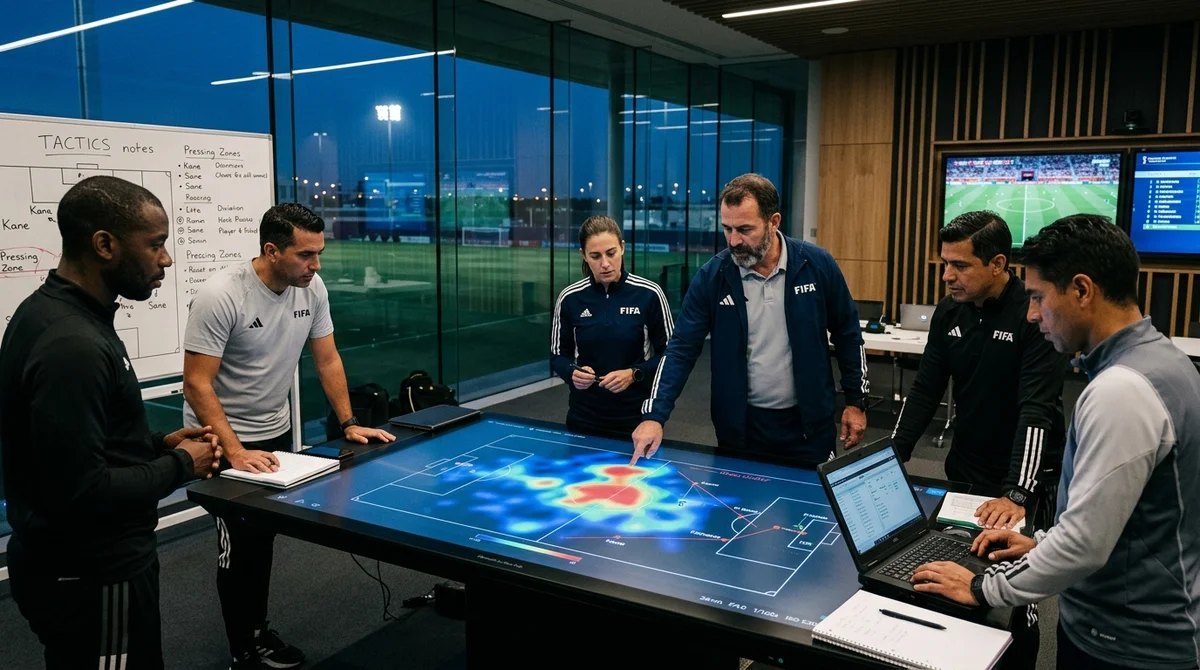
For the first time, FIFA is giving all 48 teams at the 2026 World Cup a single AI agent. The organization wants to narrow the technology gap between rich and less wealthy national teams. But whether equal access to a tool will translate into genuinely equal chances on the pitch is a big question.
What FIFA is offering
FIFA has developed a unified AI tool available to every participating team, regardless of the federation's budget. The agent can analyze match video, build tactical models of opponents and help coaching staff prepare a game plan.
According to FIFA's design, the tool should help teams from Africa, Asia and smaller European countries work with data on par with leading sides such as Germany, France and Brazil, which have spent years investing in sports analytics.
The idea is simple: if everyone has the same tool, the technological advantage disappears and tactics decide the outcome. In practice, it is more complicated. Teams get access to the same software, but the ability to use it, interpret the data and fold the findings into real match preparation depends on analysts and on a culture of working with data inside the federation. Neither can be built within a single tournament.
Inequality has not gone away
The top federations invested in their own platforms long ago. Germany uses internal analytics systems, France works with Stats Perform tools, and England has built its own data infrastructure. For them, FIFA's free agent is only a baseline, on top of which they layer their own tools.
The key difference is not software but people. The staff of leading national teams includes data scientists, video analysts and AI specialists. Smaller federations can hardly afford such employees, even if they get access to the best tool.
- Germany, France, Spain: their own AI platforms plus teams of analysts with years of experience
- Brazil and Argentina: partnerships with major tech companies for data work
- Smaller national teams: rely on the FIFA tool as their main and often only resource
- The gap in annual analytics budgets between top and weaker teams reaches tens of millions of dollars
What AI has changed in football
Modern tools analyze more than goal and shot statistics: they cover movement patterns, a player's decision-making under pressure and the probability of a goalkeeper error on a specific type of shot. Computer-vision cameras record the position of every player every 25 milliseconds.
Coaches receive concrete recommendations: which opposing players should not be given the ball in midfield, how their defense reacts to pressing from the left, and which type of set piece yields the best results. Some decisions that were once made on intuition are now backed by data.
"AI does not replace the coach, but it removes a significant share of
routine analysis from his work," say sports analytics specialists.
For large national teams, this means a new level of detail when preparing for each opponent. For smaller teams, it is potentially a first serious entry into systematic analytics, which was simply out of reach before because of the cost of the tools.
What this means
FIFA is taking the right step by giving all teams a basic AI tool. But the 2026 World Cup will most likely be won, once again, by the team that can combine technology with coaching experience, skilled specialists and a culture of working with data. And that is still a question of money, infrastructure and investment, not just access to software.
- Nov 2, 2026Karpathy builds a YouTube clone with 6454 videos from Hacker News recommendations in two hours
- Nov 2, 2026Karpathy used Claude to build HackerTube from 6,454 videos recommended on Hacker News
- Nov 2, 2026Arca gives AI agents finance tasks lasting up to 10 days, but leaves the trades to humans
- Nov 2, 2026DeepSeek open-sources Super-agent prototype: p95 task completion time of 15.7 minutes vs. 29.5
Key Questions Answered
What FIFA is offering?
FIFA has developed a unified AI tool available to every participating team, regardless of the federation's budget. The agent can analyze match video, build tactical models of opponents and help coaching staff prepare a game plan. According to FIFA's design, the tool should help teams from Africa, Asia and smaller European countries work with data on par with leading sides such as Germany, France and Brazil, which have spent years investing in sports analytics. The idea is simple: if everyone has the same tool, the technological advantage disappears and tactics decide the ou
What are the key details on Inequality has not gone away?
The top federations invested in their own platforms long ago. Germany uses internal analytics systems, France works with Stats Perform tools, and England has built its own data infrastructure. For them, FIFA's free agent is only a baseline, on top of which they layer their own tools. The key difference is not software but people. The staff of leading national teams includes data scientists, video analysts and AI specialists. Smaller federations can hardly afford such employees, even if they get access to the best tool. Germany, France, Spain: their own AI platforms plus tea
What AI has changed in football?
Modern tools analyze more than goal and shot statistics: they cover movement patterns, a player's decision-making under pressure and the probability of a goalkeeper error on a specific type of shot. Computer-vision cameras record the position of every player every 25 milliseconds. Coaches receive concrete recommendations: which opposing players should not be given the ball in midfield, how their defense reacts to pressing from the left, and which type of set piece yields the best results. Some decisions that were once made on intuition are now backed by data. "AI does not r
Test Frontier LLMs & Autonomous Agents in One Workspace
Run Claude Opus 5.5, GPT-6, Gemini 3.1, and DeepSeek side-by-side in Nomad AI (nomadnet.ai) — unified model routing, deep research, and multimodal workflows under one subscription.
The AI world, distilled — once a week
Seven stories that actually mattered, hand-picked. No noise, no reposts, no press releases.
Done! Check your inbox for a confirmation.