Graduates boo AI hype: young people are skeptical about the future
Graduates at the University of Arizona met a call from Google's former CEO to help shape the future of AI with criticism and booing. The younger generation is skeptical of the hype around the technology, worried about being displaced in the job market and about the effect on society. This is a trend, not an exception.
AI-processed from MIT Technology Review; edited by Hamidun News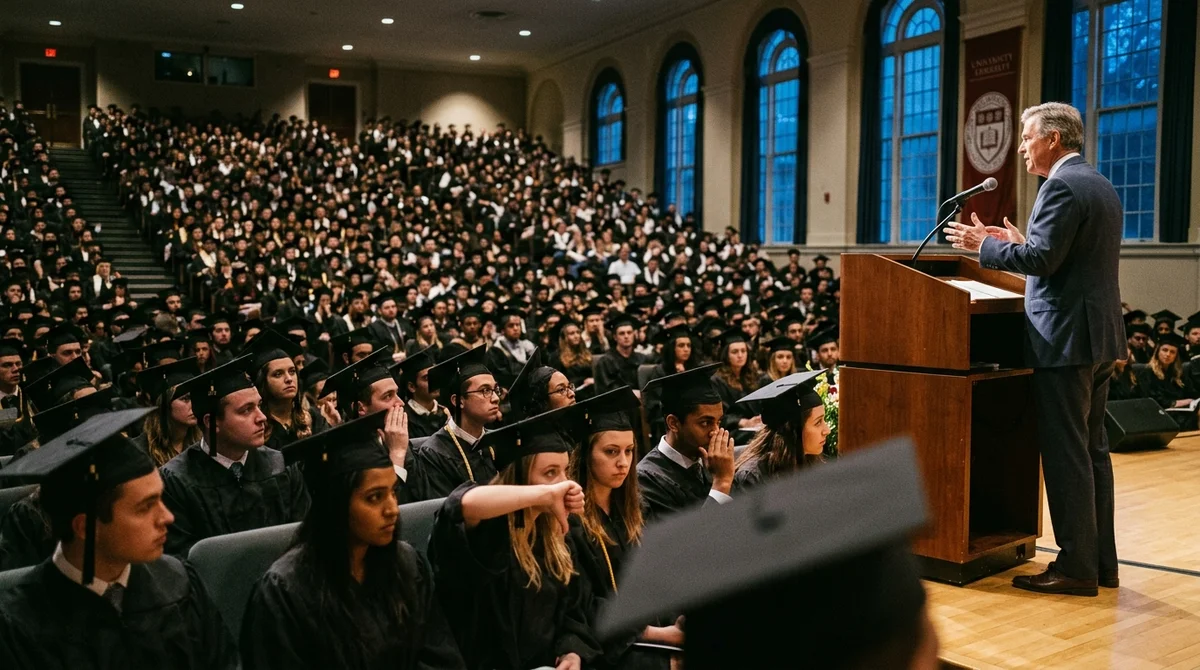
When former Google CEO Eric Schmidt told University of Arizona graduates that their task was to help shape the future of artificial intelligence, he got not applause but a wall of boos and whistles. Instead of enthusiasm, he met direct criticism from a younger generation being asked to become architects of a technology that inspires in them more fear than admiration.
Skepticism instead of excitement
The scene is repeating at commencement ceremonies across the country. For decades, students were told about digital transformation and innovation. But AI was the first technology to be met not with admiration but with open skepticism. Young people simply don't buy the narrative of noble progress. They grew up in an era when every new technology brought not only conveniences but also problems: data leaks, toxic social networks, power concentrated in the hands of a few companies. They're told: help build AI. Their reaction: why?
Real concerns
This isn't just youthful cynicism. The graduates' worries have a very concrete basis:
- Displacement in the job market — AI may replace entry-level professionals faster than they can establish themselves
- Lack of control and transparency — no one explains how and why large models work
- Environmental footprint — data centers for training models consume astronomical amounts of electricity
- Concentration of power — control over the technology sits in the hands of a few corporations
- Social instability — rushed automation without a social safety net for those who are displaced
Graduates see businesses already adopting AI en masse to cut costs. The first wave is always job cuts, not the creation of better jobs.
A generational divide
This is a fundamentally different view from the one at the start of the internet boom. The generation that grew up with the internet has already lived through several technology cycles: blockchain promised a revolution and ended up as speculation, social networks promised to connect people and created information bubbles.
Young people don't deny that AI is useful. But they demand guarantees, not promises: that the technology will be developed with society in mind, that the gains will be distributed fairly, and that no one will be sacrificed in the name of progress.
What this means
For the AI industry, this is a moment of truth. Companies have grown used to the enthusiastic forecasts of investors. The time when technologies were taken on faith is passing. Young people want not innovation for innovation's sake, but innovation with clear public benefit.
Ignoring the new generation's skepticism risks losing the best talent to other fields, or having it work against the technology it is meant to build.
- Nov 1, 202616 models tested on 7 search tools: Exa averaged 10.5 out of 14, SearXNG about 3
- Nov 1, 2026Google's StreamVibe video agent beats other models by 10.7% on response timing and quality
- Nov 1, 2026OpenAI Rewrites GPT Behavior Rules: Five Values and a Chain of Command
- Nov 1, 2026Voice bots built on LLMs turn to Jev, a fast classifier, for decisions in 200–500 ms
Key Questions Answered
What are the key details on Skepticism instead of excitement?
The scene is repeating at commencement ceremonies across the country. For decades, students were told about digital transformation and innovation. But AI was the first technology to be met not with admiration but with open skepticism. Young people simply don't buy the narrative of noble progress. They grew up in an era when every new technology brought not only conveniences but also problems: data leaks, toxic social networks, power concentrated in the hands of a few companies. They're told: help build AI. Their reaction: why?
What are the key details on Real concerns?
This isn't just youthful cynicism. The graduates' worries have a very concrete basis: Displacement in the job market — AI may replace entry-level professionals faster than they can establish themselves Lack of control and transparency — no one explains how and why large models work Environmental footprint — data centers for training models consume astronomical amounts of electricity Concentration of power — control over the technology sits in the hands of a few corporations Social instability — rushed automation without a social safety net for those who are displaced Gradua
What are the key details on A generational divide?
This is a fundamentally different view from the one at the start of the internet boom. The generation that grew up with the internet has already lived through several technology cycles: blockchain promised a revolution and ended up as speculation, social networks promised to connect people and created information bubbles. Young people don't deny that AI is useful. But they demand guarantees, not promises: that the technology will be developed with society in mind, that the gains will be distributed fairly, and that no one will be sacrificed in the name of progress.
Ship AI Faster with Founders, Engineers & Weekly Architecture Reviews
Inside Vibe Club (hamidun.com/club) — weekly live masterminds with Zhemal Khamidun, Tech Radar, full LMS access, and 370+ production Claude Code skills.
The AI world, distilled — once a week
Seven stories that actually mattered, hand-picked. No noise, no reposts, no press releases.
Done! Check your inbox for a confirmation.