Ex-Google CEO Eric Schmidt Booed at Graduation Over His Remarks on AI
At a commencement ceremony in Arizona, students booed former Google CEO Eric Schmidt when he began talking about artificial intelligence. Graduates voiced deep fears about AI's effect on the job market and their prospects of finding work. According to Pew Research, Americans overall are far more worried about AI and its impact on society than excited about its development.
AI-processed from Guardian; edited by Hamidun News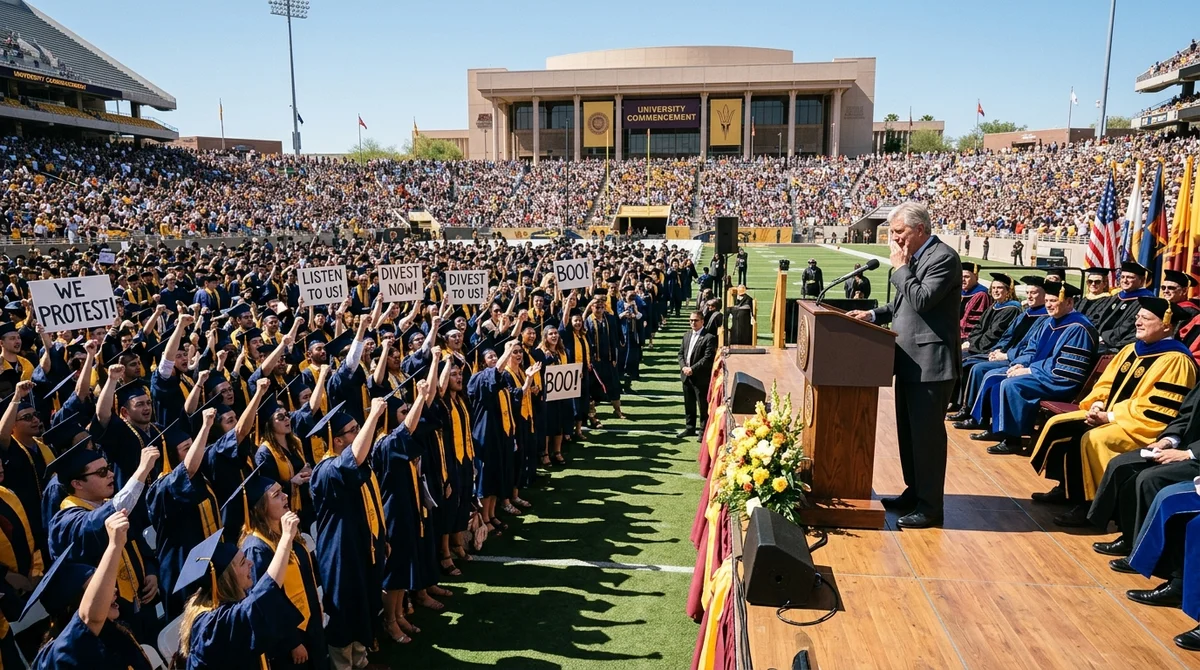
At the University of Arizona commencement, former Google CEO Eric Schmidt faced widespread criticism from students when he spoke about artificial intelligence and its impact on society, the economy and the job market.
The incident on stage
Schmidt addressed roughly 10,000 graduates on Sunday and raised AI as a major technological shift that will reshape the modern economy and the very nature of work. His words drew sharp outrage from the audience: students did not just boo but also made noise, publicly expressing their displeasure.
The former Google chief, who led the company for more than a decade and amassed a multibillion-dollar fortune on the back of the digital revolution, expected a friendlier reception for his reflections on innovation and the future. The incident spread quickly on social media and became a symbol of the younger generation's growing skepticism toward the speeches of tech optimists and corporate leaders. For Schmidt, used to an enthusiastic welcome in elite Silicon Valley circles, the reaction was unexpected and telling.
The fears of a generation of graduates
The students' reaction reveals a deeper concern among young people: graduates genuinely fear that the rapid development of AI will lead to mass automation of jobs and job losses in the coming years. For a generation entering the labor market amid growing economic uncertainty, upbeat words about technology sound naive and indifferent to their real needs.
- Fear of job losses amid mass automation
- Uncertainty about retraining and the emergence of new employment opportunities
- Distrust of corporate leaders who actively push AI adoption
- Concern about a fair distribution of the benefits of new technologies
- Doubts about promises that new jobs will be created in abundance
What the statistics say
Research from Pew Research confirms that most Americans worry about AI and its impact on society more than they welcome its development and the new opportunities it brings. This is not an isolated view among Arizona graduates. It is a growing trend across all of American society, from young people to the middle class.
Distrust of promises that AI will create more jobs than it destroys remains high. Incidents like this one show that young people's skepticism is moving beyond private surveys and into open protest. The debate around AI is becoming more tense and polarized, with Silicon Valley optimists and the younger generation talking about the future of work in different terms.
What this means
The Schmidt incident symbolizes a widening gap between the tech establishment and the general public. When influential figures show up to talk about the wonders of AI, young people hear it as a dismissal of their real fears about their own future.
For businesses and policymakers, this is a signal: what is needed is not polished speeches about technology but concrete plans to support transition periods in the labor market, retraining programs and social protection measures. Without addressing these concerns, the gap between the younger generation and the tech elite will only keep widening.
- Nov 1, 202616 models tested on 7 search tools: Exa averaged 10.5 out of 14, SearXNG about 3
- Nov 1, 2026Google's StreamVibe video agent beats other models by 10.7% on response timing and quality
- Nov 1, 2026OpenAI Rewrites GPT Behavior Rules: Five Values and a Chain of Command
- Nov 1, 2026Voice bots built on LLMs turn to Jev, a fast classifier, for decisions in 200–500 ms
Key Questions Answered
What are the key details on The incident on stage?
Schmidt addressed roughly 10,000 graduates on Sunday and raised AI as a major technological shift that will reshape the modern economy and the very nature of work. His words drew sharp outrage from the audience: students did not just boo but also made noise, publicly expressing their displeasure. The former Google chief, who led the company for more than a decade and amassed a multibillion-dollar fortune on the back of the digital revolution, expected a friendlier reception for his reflections on innovation and the future. The incident spread quickly on social media and bec
What are the key details on The fears of a generation of graduates?
The students' reaction reveals a deeper concern among young people: graduates genuinely fear that the rapid development of AI will lead to mass automation of jobs and job losses in the coming years. For a generation entering the labor market amid growing economic uncertainty, upbeat words about technology sound naive and indifferent to their real needs. Fear of job losses amid mass automation Uncertainty about retraining and the emergence of new employment opportunities Distrust of corporate leaders who actively push AI adoption Concern about a fair distribution of the bene
What the statistics say?
Research from Pew Research confirms that most Americans worry about AI and its impact on society more than they welcome its development and the new opportunities it brings. This is not an isolated view among Arizona graduates. It is a growing trend across all of American society, from young people to the middle class. Distrust of promises that AI will create more jobs than it destroys remains high. Incidents like this one show that young people's skepticism is moving beyond private surveys and into open protest. The debate around AI is becoming more tense and polarized, wit
Test Frontier LLMs & Autonomous Agents in One Workspace
Run Claude Opus 5.5, GPT-6, Gemini 3.1, and DeepSeek side-by-side in Nomad AI (nomadnet.ai) — unified model routing, deep research, and multimodal workflows under one subscription.
The AI world, distilled — once a week
Seven stories that actually mattered, hand-picked. No noise, no reposts, no press releases.
Done! Check your inbox for a confirmation.