NVIDIA Showed How Multi-Agent Systems Find Signals in Financial Markets
NVIDIA demonstrated the application of multi-agent systems to automate the search for trading signals in financial markets. Agents analyze vast volumes of market data, including prices, trading volumes, economic indicators, and alternative sources like news content. The system identifies hidden patterns that help algorithmic traders and investment funds predict price movements and develop more effective investment strategies.
AI-processed from NVIDIA Developer Blog; edited by Hamidun News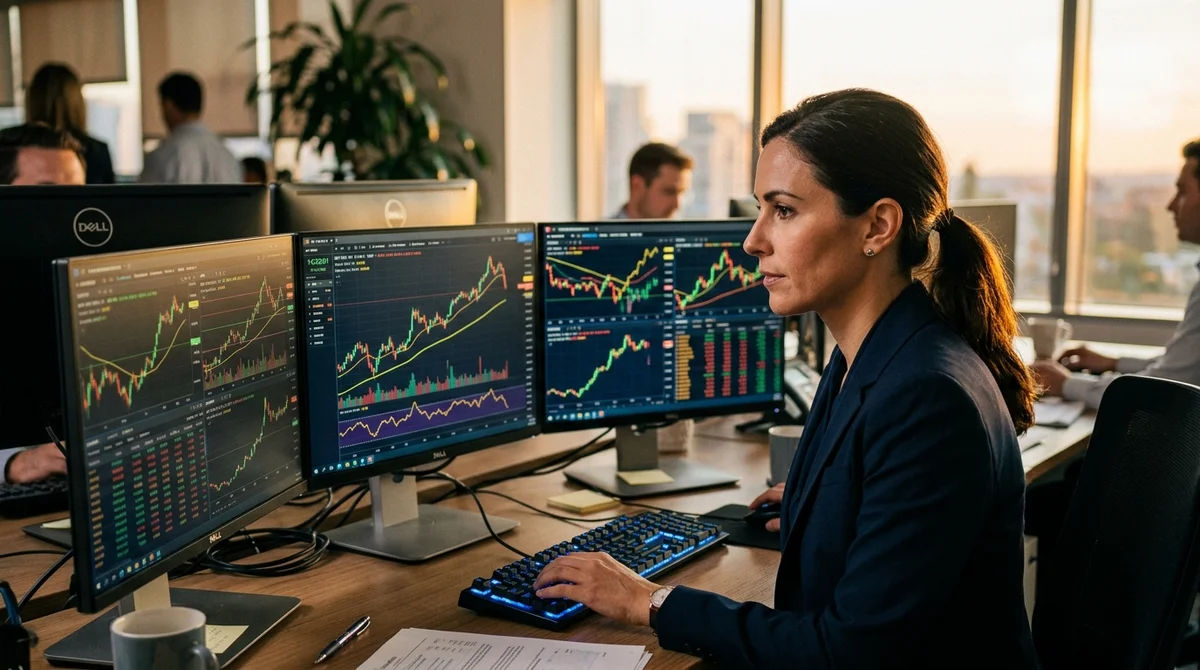
NVIDIA has demonstrated the application of multi-agent systems to automate the search for trading signals in quantitative trading. Researchers and algorithmic traders constantly seek patterns in market data that can help predict future price movements — this is a key part of developing successful trading algorithms. A new approach using multi-agent AI systems enables significantly accelerating this process.
How Multi-Agent Systems Work
Multi-agent AI systems enable automating the process of searching for trading signals, which previously required significant human resources and months of painstaking work. Each agent in the system specializes in a specific task: some analyze price data and trading volume dynamics, others track macroeconomic indicators and business activity indices, and still others monitor alternative information sources. These agents work in coordination, exchanging information and hypotheses to identify more reliable trading signals. The system can detect relationships between different data sources that would be practically impossible for a human analyst to notice. Parallel data processing allows the system to test multiple hypotheses simultaneously, significantly accelerating the research process.
Information Sources
NVIDIA's multi-agent systems analyze data from diverse sources, each providing unique market information:
- Real-time price data and trading volumes across various assets
- Macroeconomic indicators, interest rates, and economic indices
- Company fundamentals and financial reports
- News content, social media, and sentiment analysis
- Alternative sources, including satellite data and payment metadata
Integration of all these sources allows the system to form a complete picture of market processes. Multi-agent architecture provides more reliable analysis because each data source is evaluated independently, which reduces the risk of systematic errors.
Accelerating Strategy Development
The implementation of multi-agent systems significantly accelerates the development of new trading strategies. Where a traditional team of researchers would require months of analysis, the system can conduct similar work in days or hours. This enables quantum funds and traders to quickly adapt to changing market conditions. AI systems are also less prone to human biases and cognitive distortions that can lead to incorrect conclusions. They process information objectively and systematically, often identifying signals that traditional analysis methods would miss. Moreover, such systems are capable of operating around the clock without interruptions.
What This Means
Automating the search for trading signals in financial data is becoming a practical reality. For quantum funds and algorithmic traders, this means significant competitive advantage: the ability to process more hypotheses faster and conduct research more systematically. Such systems do not replace human judgment but complement it, freeing analysts from routine work and allowing them to focus on strategic aspects of developing trading systems.
- Oct 24, 2026GPT-6 Sol Daybreak Blue Tops Cyber Index: +32 Points and $1.77 per Task
- Oct 24, 2026Harvey LAB-AA v1.1: Grok 4.7 Leads With 9.4% After Hallucination Check
- Oct 24, 2026Anthropic's agents submitted 20 visa applications on a US State Department website
- Oct 24, 2026Artificial Analysis launches AA-3D: Claude Sonnet 5.5 leads with 1194 Elo
Key Questions Answered
How Multi-Agent Systems Work?
Multi-agent AI systems enable automating the process of searching for trading signals, which previously required significant human resources and months of painstaking work. Each agent in the system specializes in a specific task: some analyze price data and trading volume dynamics, others track macroeconomic indicators and business activity indices, and still others monitor alternative information sources. These agents work in coordination, exchanging information and hypotheses to identify more reliable trading signals. The system can detect relationships between different
What are the key details on Information Sources?
NVIDIA's multi-agent systems analyze data from diverse sources, each providing unique market information: Real-time price data and trading volumes across various assets Macroeconomic indicators, interest rates, and economic indices Company fundamentals and financial reports News content, social media, and sentiment analysis Alternative sources, including satellite data and payment metadata Integration of all these sources allows the system to form a complete picture of market processes. Multi-agent architecture provides more reliable analysis because each data source is eva
What are the key details on Accelerating Strategy Development?
The implementation of multi-agent systems significantly accelerates the development of new trading strategies. Where a traditional team of researchers would require months of analysis, the system can conduct similar work in days or hours. This enables quantum funds and traders to quickly adapt to changing market conditions. AI systems are also less prone to human biases and cognitive distortions that can lead to incorrect conclusions. They process information objectively and systematically, often identifying signals that traditional analysis methods would miss. Moreover, su
Delegate Deep Research, Coding & Workflows to an AI Agent
Deploy autonomous multi-step execution with NomadNet Agent (agent.nomadnet.ai) — automated web research, data synthesis, code generation, and complex task orchestration.
The AI world, distilled — once a week
Seven stories that actually mattered, hand-picked. No noise, no reposts, no press releases.
Done! Check your inbox for a confirmation.