Habr AI
AI news source. Articles are auto-selected and adapted by Hamidun News editors.
Latest publications

OpenAI's Ad Compromise: Why ChatGPT Monetization Won't Cover Billion-Dollar Losses
OpenAI has begun implementing targeted advertising in ChatGPT, hoping to earn billions. But analytics show that this desperate move is unlikely to cover the company's colossal losses.

The End of AI Isolation: How Model Context Protocol Connects AI to Reality
Language models are no longer locked in a text vacuum. We break down how the MCP standard gives neural networks secure access to files, databases, and external APIs without unnecessary magic.

Kaggle Under Google DeepMind Launches Benchmarks SDK for Comparing Large AI Models
Kaggle changed its slogan and focus: under Google DeepMind's management, the platform launched Benchmarks SDK — infrastructure for standardized testing of AI models.
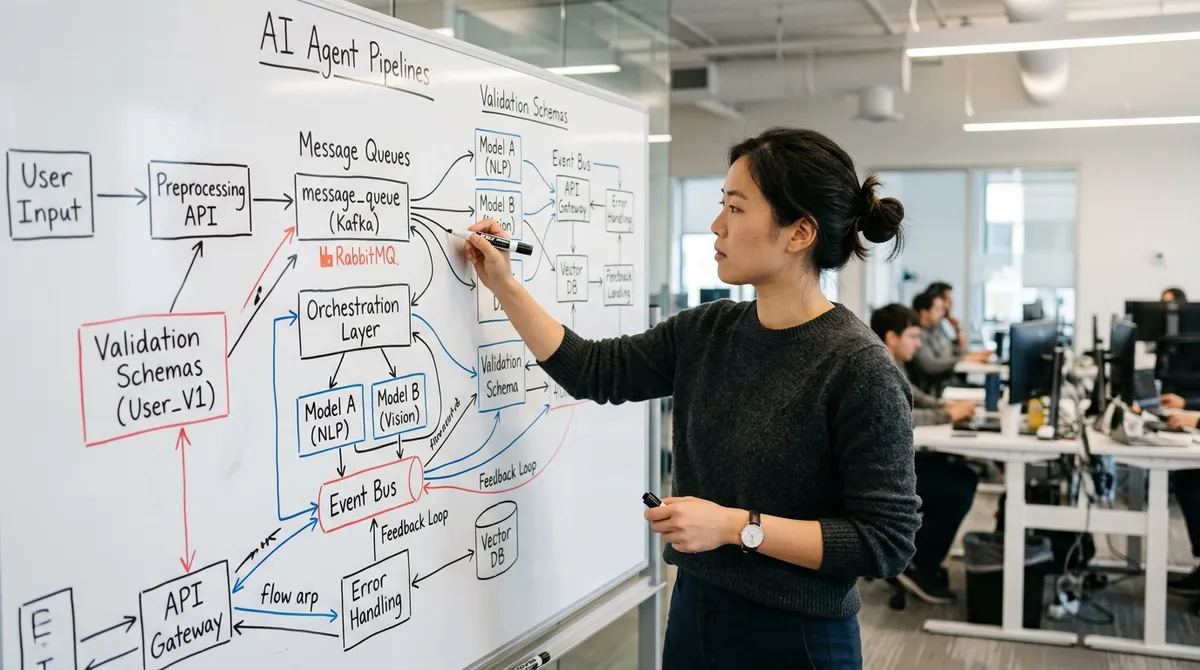
OpenClaw Outpaced Linux in GitHub Growth: Why Engineering Scaffolding Matters More Than the Model
Chief AI Architect Andrey Nosov explained how Kafka, Pydantic schemas, and Human-in-the-Loop transform unpredictable LLMs into reliable production systems.

Claude Opus 4.6 discovered a 23-year-old vulnerability in the Linux kernel over a weekend
Researcher Nicholas Carlini ran a simple Bash script with Claude Opus 4.6 — and the model discovered a critical flaw in the Linux file system that had existed since 2003.
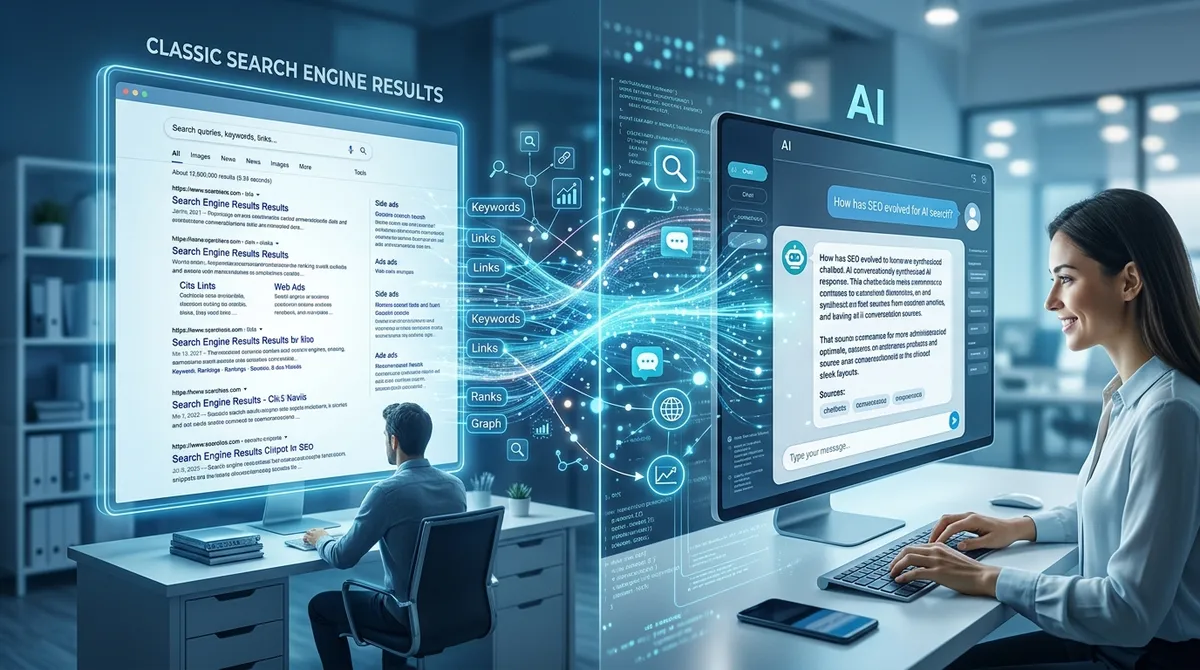
Why SEO Won't Die—And What's Really Behind the Trendy GEO
Marketers are panicking: LLMs are stealing traffic, links don't convert. We break down why SEO isn't going anywhere and where every GEO article gets it wrong.

Testing Pyramid as a Task Decomposition Tool for AI-Agents in QA Assist
Mikhail Fedorov explains why the classic testing pyramid became a key architectural solution in the QA Assist system of 11 AI-agents.

LangChain Loses Reasoning Content in CoT Models: How to Fix the LLM Provider Bug
LangChain chat classes fail to preserve the reasoning block when working with Chain-of-Thought models—users wait silently while developers are forced to fix it manually.
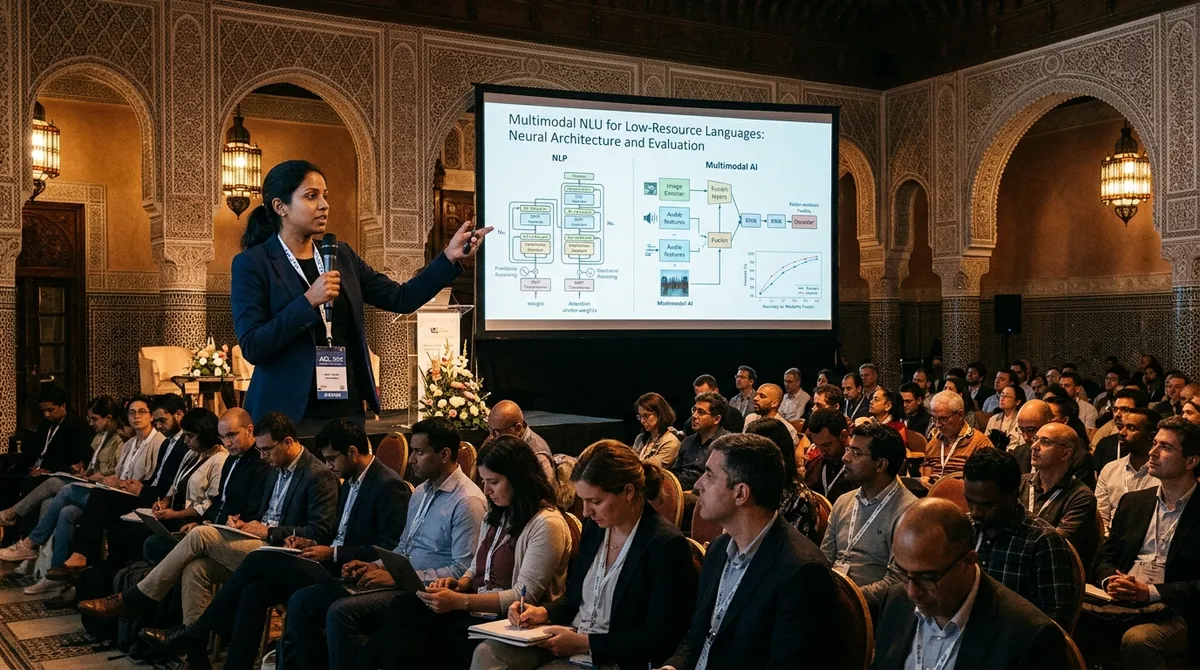
AIRI Researcher on EACL 2026 in Morocco: A Computer Vision Specialist's Perspective on the NLP World
Andrey Moskalenko from AIRI's FusionBrain laboratory attended EACL 2026 for the first time, a conference that made history by being held in Africa for the first time — in Marrakech.

How a product manager can assess AI product quality: a guide to evals
Anthropic and OpenAI executives call evals the key skill for product managers — a podcast with researchers lays out a step-by-step process for evaluating an AI product.

The 12 best LLMs in 2026: comparing Claude, ChatGPT, Gemini, DeepSeek, and Grok
An honest breakdown of 12 current language models in 2026 — from ChatGPT 5.4 to DeepSeek v3.2 — with benchmarks, real-world scenarios, and an answer to the question of which model to choose for your task.

Gemini and semantic search: AI matches furniture to blueprints with 87% accuracy
Russian developers built a Gemini-based AI system that automates furniture selection from architectural drawings — recommendation accuracy reaches 87%.

How Gemini helps a non-programmer handle small-business IT tasks without freelancers
A manager without a technical background explains how Gemini replaced expensive contractors for routine IT tasks — and why that changes the economics of small businesses.

Raft’s AI КОМП-АС framework: how to avoid mistakes when choosing the architecture of an AI solution
The Raft team breaks down section ‘A’ of the AI КОМП-АС framework — an architecture and product design methodology that reduces the risk of choosing the wrong direction before development begins.

Prompt decomposition in Gemini and Kling: how to recreate a Pinterest visual in a brand style
Step-by-step method: break a Pinterest reference into components, rebuild it in Gemini to match the brand style, and animate it in Kling — without a designer or videographer.

Clinical review of Gemini: attention deficit, pica, and hallucinatory party
An author on Habr analyzed Gemini's behavior as a clinical case: diagnosis — attention deficit and pica, recommendations — directive guidance and hallucination verification.

AI funding bubble threatens Western bank deposits — on two fronts
A closed-door meeting of the Federal Reserve, the U.S. Treasury and bankers was held in Washington: officially, about AI-related cyber risks; in reality, about the bursting $1.8 trillion private credit bubble.

Vibe-code review: how Claude Opus writes beautiful C++ that does not work correctly
An analysis of the markus project created by Claude Opus: why beautifully written AI code can hide serious problems with quality and correctness.

How YOLO and OpenCV Learned to Parse Transport Waybills — and Why That Isn’t Enough
An analysis of the three main limitations of YOLO, OpenCV, and Hugging Face when parsing real transport waybills — and how to build logic on top of raw detector outputs.

Sediment Palace: local memory for AI agents built on a geological-layer model
A developer proposed a memory architecture for AI agents in which fresh data settles in layers like geological sediment, compacting over time.

SpeShu.AI launches feature crowdsourcing: Habr users decide what goes into the next patch
Russian neural network aggregator SpeShu.AI invited the Habr audience to influence the product directly — vote for an idea, and the team will implement it in the next patch.

Claude Code barred to minors, Qwen Code goes paid, and Opus 4.7 uses 30% more tokens
In the weekly digest: Anthropic introduces an age restriction for Claude Code, Alibaba monetizes Qwen Code, and OpenAI expands Codex into a full computer agent.

Vibe coding without AI slop: how the targetai team sped up development 12x
The targetai team shared a method for working with LLM tools that can shorten the development cycle 8–12x without quality loss or AI slop buildup.

The Dark Side of AI: Why Corporations Are Really Building Neural Networks
Productivity tool or Trojan horse? We examine how leading AI companies use technology to build an exploitative corporate oligarchy.

Battle of coding titans: comparing ChatGPT, Gemini, and Claude on real-world tasks
Which tech giant currently offers the best tool for developers? We tested the flagship models from OpenAI, Google, and Anthropic on tasks of varying complexity.

Vibe coding: how AI assistants erode engineering thinking
An ML engineer with four years of experience built an app in a few days without knowing either the language or the stack. But alongside the quick result came technical debt and an unexpected shift — the willingness to so

Gemini 3.1 Flash Lite: How Google Is Changing the Affordable AI Model Market
Google has introduced Gemini 3.1 Flash Lite, the most affordable and fastest model in its lineup. We examine whether the new release can outperform rivals in real-world tests and architectural efficiency.

Who Is Responsible for AI Agent Errors: Three Models of Legal Liability
When an autonomous agent makes an error, finding the culprit becomes a legal quest. We examine three liability scenarios — from a simple tool to full system autonomy.

Autonomous agents and a “spy novel”: a new level of human-AI interaction
The story of how the OpenClaw platform and Anthropic models turned routine development into a compelling process of creating digital personalities and writing code on the fly.

OpenAI introduced GPT-5.3 Instant: focus on accuracy and user experience
OpenAI released GPT-5.3 Instant, focusing on response quality and fixing errors. The model became more accurate and moved away from excessive censorship, addressing users' main requests.