Habr AI
AI news source. Articles are auto-selected and adapted by Hamidun News editors.
Latest publications

Diasoft automated API and event tests with AI and shifted QA's role toward business logic
Diasoft described an AI agent that, from a business use case, selects APIs and events, writes a Groovy test, runs it in a test environment, and fixes it using logs in 2–3 iterations.

SimpleOne: how unchecked AI-generated code turns seniors into janitors of other people's code
SimpleOne warns: if developers paste generated code at scale without understanding the architecture, initial speed rises, but review load, defects, and senior burnout rise even faster.

Runity showed how it is building an enterprise RAG assistant for Confluence and GitLab
Runity is preparing an internal RAG assistant that searches across Confluence and GitLab, checks access permissions via user tokens, and runs on local infrastructure.

Habr AI lists nine AI services for web search and PDFs: DuckDuckGo, BotHub, GigaChat
In a new review, Habr AI examined nine services that combine internet search with document analysis — from privacy-focused DuckDuckGo and Brave to Perplexity, BotHub, and GigaChat.

Vi.Tech and Shturval examined what remains of DevOps after the hype and where AI is useful
An SRE from Vi.Tech and the Shturval platform team explained why DevOps has not disappeared, why excessive automation is risky, and which tasks AI is already genuinely handling in engineering work.

TAPe raised accuracy on 2% of COCO to 98% and began shifting from centroids to bounding box detection
The TAPe team said that, in quick tests on 2% of the COCO dataset, TAPe raised accuracy to 98%, reduced false positives, and for the first time showed a shift from locating an object's center to rectangular bounding boxe

Russia drafts its first major AI law: what changes for services, models, and platforms
Russia’s draft AI law sets the first framework for the market: the right to a non-AI alternative in some cases, labeling of synthetic content, and new rules for models and platforms.

Selectel: 35% of Russian companies increased IT capacity for AI projects over the past year
A Selectel study found that half of Russian companies already use infrastructure for AI, and the main barriers are now tied not to demand, but to economic factors and expertise.

How DeepSeek and Wordstat turned manual keyword collection into a multi-agent SEO system
A Habr post showed how a simple script for exporting keywords from Wordstat evolved into a system with DeepSeek, SERP clustering, and agent voting, cutting manual review to 5%.

ChatGPT, DeepSeek, and GigaChat built a gaming PC for 100,000 rubles — no ideal option emerged
X-Com compared how ChatGPT, DeepSeek, and GigaChat pick a gaming PC for 100,000 rubles: all produced workable builds, but each model made mistakes in important details.

Stanford: leading AI chatbots flatter users and give harmful advice
A Stanford study in Science found that 11 popular AI models too often validate the user’s stance, even when it involves deception, harm, or personal conflicts.
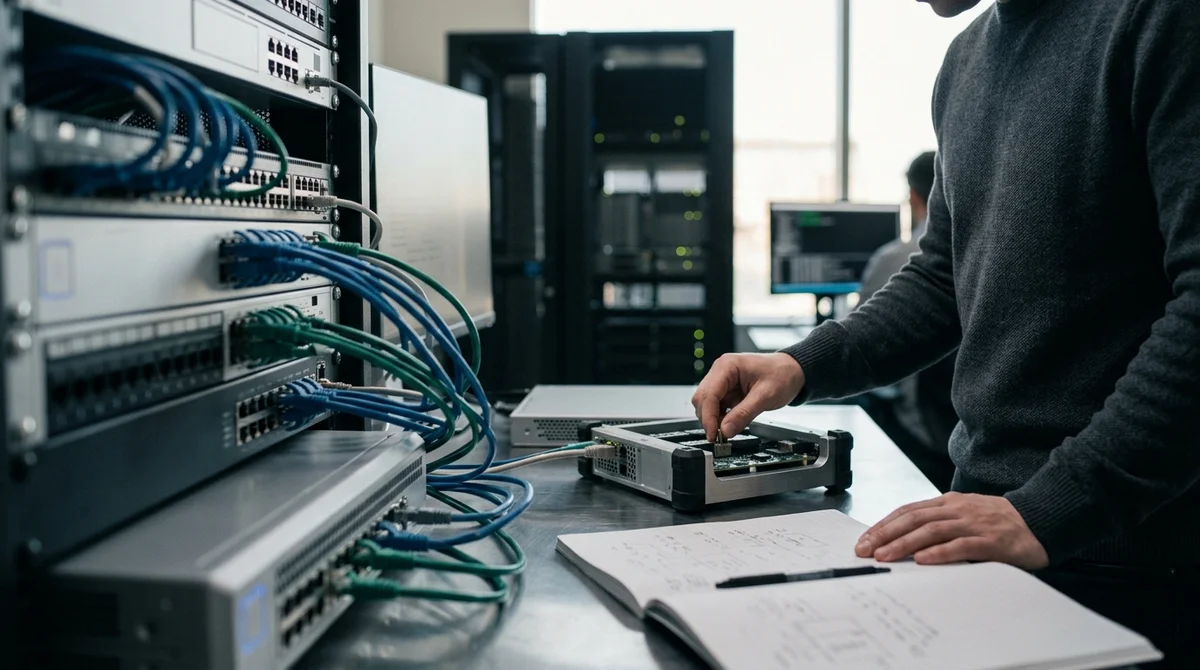
Suricata showed how to train ML-based attack detection systems on real traffic
The study showed that Suricata IDS events can be used to label real network traffic and train ML-based IDS, if signatures are carefully selected and noisy labels are cleaned up.

How Claude and TickTick help turn weekly planning into a working system without last-minute rushes
A Habr AI author described a system in which tasks are broken down into 45-minute blocks, placed on the calendar, and Claude uses TickTick data each week to highlight imbalances, gaps, and next steps.

Habr AI: TAPe detection moved away from transformers and toward almost free segmentation
In the seventh entry of the TAPe diary, the Habr AI team showed that dropping transformers simplifies the model and brings an unexpected bonus — signs of skin and clothing segmentation without separate training.

How a Habr author swapped prompts for reference images in ChatGPT and created a series of AI prints
Habr published a case study on how text prompts gave way to reference images: the author started showing the model photos of the subject, the uniform, and the scene, and assembled a collection of hockey-themed AI prints.

Electric bus operators can recoup the cost of face recognition cameras in 14–23 months
The project's author outlined a face recognition camera setup for electric buses: 120° field of view, accuracy above 99.5%, data storage for up to 90 days, and a 14–23 month payback period.

How the University of Edinburgh’s Freddy robot became a symbol of the first AI winter
Freddy II, a robot from the University of Edinburgh, could assemble toys, but its slow and overly honest demonstration became one of the triggers of the first «AI winter».

Habr AI breaks down RAG architecture: how search across corporate PDFs and Excel files works
Habr AI showed how a RAG system semantically finds the right fragments in corporate PDFs, spreadsheets, and presentations, then compiles an answer from sources with almost no hallucinations.

Warp tested on real DevOps tasks: handles routine, but makes you think less
A Habr author checked how Warp behaves in real DevOps scenarios: the terminal built a Flask service, configured the server and deployment without errors, but turned out to be slow and overly relaxing.

Cursor hid Composer 2's base model, but the API exposed Kimi K2.5 and sparked a transparency dispute
Cursor's Composer 2 launch turned into a scandal: the API accidentally revealed traces of Kimi K2.5, forcing Moonshot, Fireworks, and Cursor itself to respond.

OpenClaw has moved beyond the hype: what businesses and DevOps teams can already put to work
OpenClaw has evolved from a toy for enthusiasts into the center of a new AI agent race: companies are building multi-agent pipelines, while the market is urgently tackling security and scaling issues.

Tokentap and MitM Proxies for LLMs: How to Monitor Tokens, Costs, and Data Leaks
Tools like Tokentap make it possible to place a MitM proxy between an LLM CLI and a cloud model to track token usage in real time and reduce the risk of sensitive data leaks.

PrimeCode adds a full graphical interface to OpenCode CLI right inside VS Code
The PrimeCode extension turns OpenCode CLI into a full interface inside VS Code: it shows tool calls, file changes, context, and lets users resume previous sessions.

Whisper for Teams: developer built a utility for translating speech live during meetings
Habr featured a utility that captures the system audio stream, splits speech into phrases, transcribes it with Whisper, and translates meetings into the target language.

OpenIDE adds ACP: how the JetBrains and Zed protocol changes how AI agents work in IDEs
OpenIDE is preparing ACP support, an open protocol meant to simplify connecting AI agents to IDEs and remove developers' reliance on one-off integrations.

DeepSeek and Qwen tried to get through "Everlasting Summer," but got stuck in the labyrinth
An experiment with DeepSeek, Qwen, Gemma and gpt-oss showed that local LLMs can already play visual novels via Ren’Py and Ollama, but they still often get confused by choices and derail the playthrough.

OpenClaw turned out to be a costly autonomous agent: 81 million tokens and server conflicts
Firsthand experience installing OpenClaw showed that an autonomous AI agent can quickly run into infrastructure conflicts, consume tens of millions of tokens, and require a dedicated GPU server.

Garage Eight explained how recursive metaprompting replaces prompt guesswork
Garage Eight described an approach in which the model is given not a ready-made prompt, but context and a goal so it can design the task itself, choose the steps, and reduce the number of iterations.

Matt Shumer sparked panic around AI and the labor market, but the data do not confirm a wave of layoffs
Matt Shumer’s viral post claiming that AI will hit employment harder than Covid drew 85 million views, but real-world data on model adoption still do not support a mass layoff scenario.

Habr AI described a minimalist shooter game as a testing ground for a self-learning mind
Habr AI has published the start of a project on the practical implementation of a mind: the author proposes training an artificial agent in an extremely simple game where the user plays the role of a hunter.