How to Train a Large Neural Network for Your Own Tasks: Fine-Tuning DeepSeek
Together AI has expanded its fine-tuning platform. It now supports models with 100B+ parameters: DeepSeek-R1, Qwen3-235B and Llama 4. The update adds support for extended contexts and integration with the Hugging Face Hub. Training has become more accessible and efficient.
AI-processed from Together AI Blog; edited by Hamidun News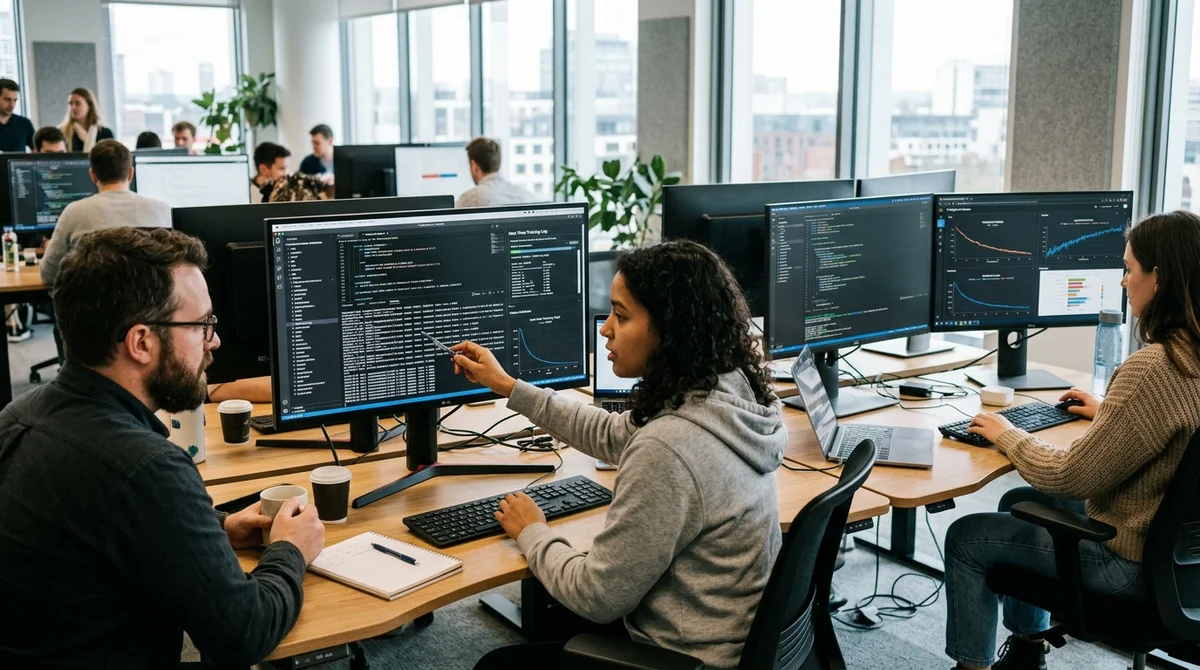
In 2025, fine-tuning large models such as DeepSeek-R1 became more accessible: developers can now train neural networks on their own data without huge costs.
What is fine-tuning and why use it?
Fine-tuning lets you adapt a ready-made model (for example, DeepSeek-R1 or Llama) to a company's specific tasks. It is cheaper than training from scratch and takes less time and fewer resources.
Which models does Together AI now support?
The platform supports the largest open models: DeepSeek-R1, Qwen3-235B and Llama 4 Maverick, all with 100+ billion parameters.
Why was training large neural networks hard before?
Fine-tuning giant models required deep ML engineering expertise and was expensive. Together AI optimized its architecture to make the task simpler for developers.
Which models can you train on Together AI?
DeepSeek-R1, Qwen3-235B and Llama 4 Maverick are open models that deliver results close to the best proprietary models on some tasks.
What is neural network fine-tuning?
Fine-tuning is the adaptation of an already trained neural network to a company's specific tasks. Instead of training from scratch (which is expensive and difficult), you take a ready-made model and tune it on new data.
Which models can you train in 2025?
Fine-tuning is available for models with 100+ billion parameters: DeepSeek-R1, Qwen3-235B and Llama 4 deliver results close to the best proprietary models.
- Nov 1, 202616 models tested on 7 search tools: Exa averaged 10.5 out of 14, SearXNG about 3
- Nov 1, 2026MoneyGate safety layer blocked all 42 fraudulent requests to local AI models
- Oct 31, 2026DeepSeek-V4.1-Flash cuts HBM KV cache to 890 bytes per token, down from 3514
- Oct 30, 2026Mistral opens Large 4 weights: strong at code, but Chinese models score 32 to its 26
Key Questions Answered
What is fine-tuning and why use it?
Fine-tuning lets you adapt a ready-made model (for example, DeepSeek-R1 or Llama) to a company's specific tasks. It is cheaper than training from scratch and takes less time and fewer resources.
Which models does Together AI now support?
The platform supports the largest open models: DeepSeek-R1, Qwen3-235B and Llama 4 Maverick, all with 100+ billion parameters.
Why was training large neural networks hard before?
Fine-tuning giant models required deep ML engineering expertise and was expensive. Together AI optimized its architecture to make the task simpler for developers.
Which models can you train on Together AI?
DeepSeek-R1, Qwen3-235B and Llama 4 Maverick are open models that deliver results close to the best proprietary models on some tasks.
Test Frontier LLMs & Autonomous Agents in One Workspace
Run Claude Opus 5.5, GPT-6, Gemini 3.1, and DeepSeek side-by-side in Nomad AI (nomadnet.ai) — unified model routing, deep research, and multimodal workflows under one subscription.
The AI world, distilled — once a week
Seven stories that actually mattered, hand-picked. No noise, no reposts, no press releases.
Done! Check your inbox for a confirmation.