Speech Transcription with AWS SageMaker and vLLM
AWS has introduced a solution for real-time voice applications. Voice agents, automatic video captions and contact-center analytics all need instant speech transcription, and the traditional request-response approach adds latency. SageMaker AI with vLLM provides a streaming architecture: audio is processed in chunks, and results arrive in real time.
AI-processed from AWS Machine Learning Blog; edited by Hamidun News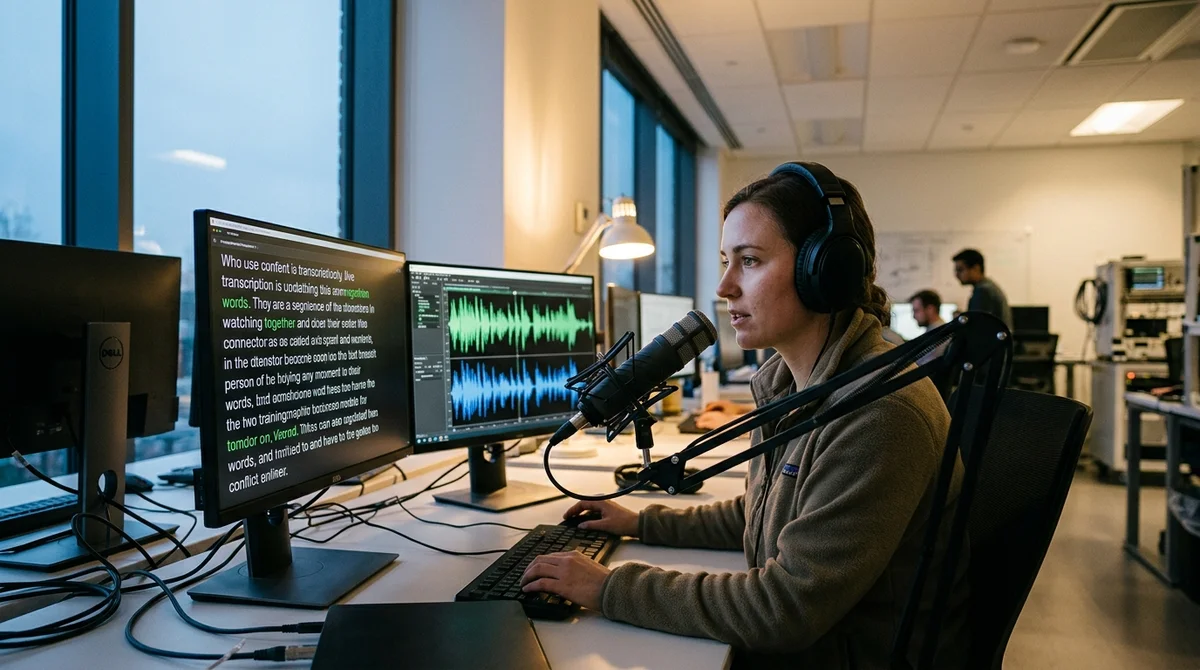
Voice agents, automatic subtitle systems and contact-center analytics need neural networks that transcribe speech instantly, in real time.
How does streaming transcription differ from the standard approach?
Streaming uses a single persistent connection and processes the audio stream as it arrives, without delays. The traditional method follows a request-response pattern: the user sends the complete audio, the system receives it in full, and only then starts transcribing.
What sets streaming transcription apart from conventional transcription?
The conventional method works as request-response: the user sends the complete audio, the system receives all of it, then transcribes it. Streaming transcription processes the audio stream synchronously as it is received, over a single persistent connection, so the result arrives immediately, without delays.
How does a neural network process an audio stream in real time?
AWS has presented an architecture in which the audio stream is processed synchronously as it is received, over a single persistent connection, without delays and without waiting for the recording to end.
- Oct 31, 2026Worldwide Express hands disputed invoices to AI agents and cuts unresolved disputes by 75%
- Oct 30, 2026AWS gives coding agents a live site preview straight from an isolated session
- Oct 30, 2026MoEngage Opens 400 Private APIs to AI Agents Through AgentCore Gateway, Without Building Its Own MCP Servers
- Oct 29, 2026NVIDIA Nemotron 3.5 Super VL: 120B Parameters, 12B Active, Running on AWS
Key Questions Answered
How does streaming transcription differ from the standard approach?
Streaming uses a single persistent connection and processes the audio stream as it arrives, without delays. The traditional method follows a request-response pattern: the user sends the complete audio, the system receives it in full, and only then starts transcribing.
What sets streaming transcription apart from conventional transcription?
The conventional method works as request-response: the user sends the complete audio, the system receives all of it, then transcribes it. Streaming transcription processes the audio stream synchronously as it is received, over a single persistent connection, so the result arrives immediately, without delays.
How does a neural network process an audio stream in real time?
AWS has presented an architecture in which the audio stream is processed synchronously as it is received, over a single persistent connection, without delays and without waiting for the recording to end.
Test Frontier LLMs & Autonomous Agents in One Workspace
Run Claude Opus 5.5, GPT-6, Gemini 3.1, and DeepSeek side-by-side in Nomad AI (nomadnet.ai) — unified model routing, deep research, and multimodal workflows under one subscription.
The AI world, distilled — once a week
Seven stories that actually mattered, hand-picked. No noise, no reposts, no press releases.
Done! Check your inbox for a confirmation.