To Pay or Not to Pay for Transcription: Paid vs. Free Services Compared
Is transcription software worth paying for? Wired tested popular services and found that free options (ChatGPT, Google Docs) perform almost as well as paid ones (Wispr Flow). Paid subscriptions only make sense for professionals who handle large volumes of content.
AI-processed from Wired; edited by Hamidun News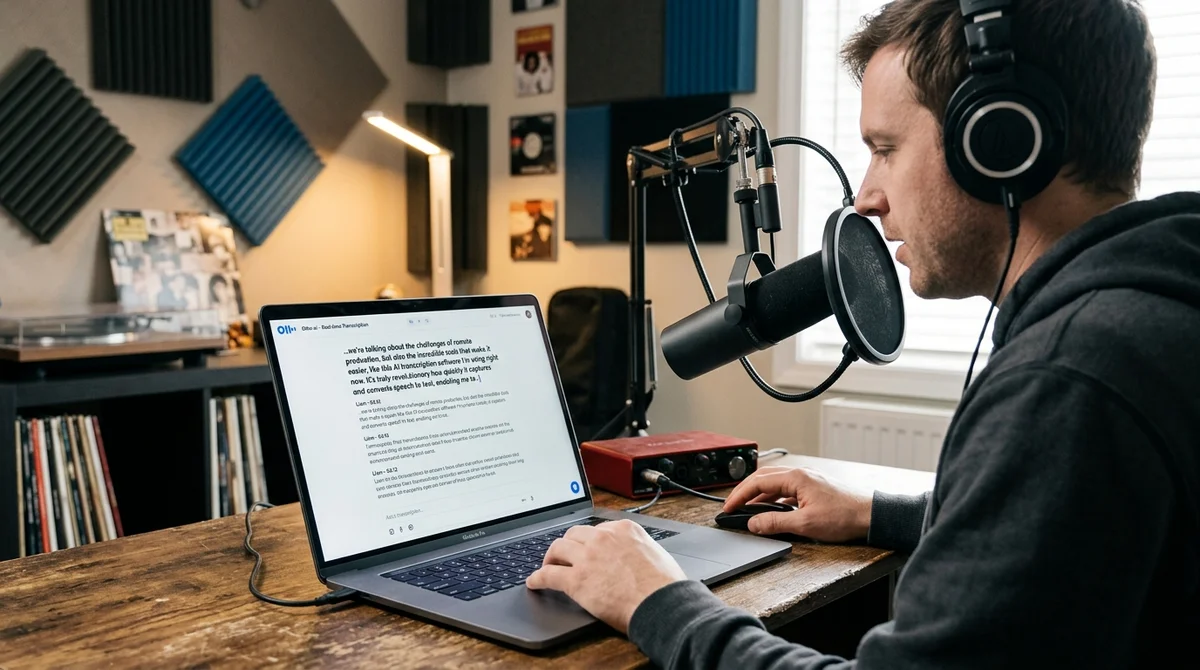
More and more people use AI to turn speech into text for meetings, interviews, lectures, and podcasts. But is specialized software worth a premium when free alternatives exist? I tested Wispr Flow, ChatGPT, Google Docs, and other tools to find out whether paid services actually justify their price.
Paid services: what they promise
Wispr Flow pitches itself as a premium tool for professionals. It promises high accuracy, solid handling of technical terms, and integrations with popular apps. The developers stress that their algorithm was trained on millions of hours of speech and can recognize not only standard English but also different accents, slang, and specialized terminology.
Pricing typically ranges from $10 to $30 per month, depending on how many hours of processing you need. For some professionals, that's an investment that pays for itself in saved time: if you process dozens of hours of audio every month, a paid system makes sense.
Typical features of paid services:
- Low processing latency (real-time or close to it)
- Support for many languages and accents
- Integrations with calendars, CRMs, note-taking apps, and editors
- Cloud storage with cross-device sync
- Formatting with automatic paragraph breaks and punctuation
- Privacy: some services promise not to send data to external servers
Free alternatives are surprisingly good
Here's the key point: most free services and built-in features today run on the same or similar AI. The differences lie in convenience and processing speed, not in the quality of the transcription itself.
OpenAI's Whisper, which powers many free services, is already powerful and accurate. Google Docs has built dictation directly into the document (it works in Russian and 70+ other languages). ChatGPT lets you upload video recordings and get a transcript back. Microsoft is building transcription into Teams, and the built-in dictation on Android and iOS works reasonably well.
The results are often on par with paid options as long as background noise is minimal. Yes, processing is slower and there are no integrations, but the text quality is virtually identical. The ecosystem has grown much stronger over the past few years, and paid software no longer has a clear edge in quality.
Who actually benefits from a paid subscription
If you work with video or audio professionally — as an editor, podcaster, journalist, or researcher — a paid subscription saves you dozens of hours a month. The savings come from integrations with your workflow, quality processing of large volumes of content, and specialized vocabulary (medical terms, proper names in your field).
But if you write personal notes, occasionally need an interview transcribed, or only need it once, the free options are more than enough. Paying for Wispr Flow and similar services when ChatGPT and Google Docs are already part of your everyday tools is simply irrational.
What this means
The AI transcription market has matured to the point where free tools already cover 90% of a typical user's needs. Paid services are justified only for professional use, when time savings and accuracy actually affect your income. For everyone else, they're just an extra expense that duplicates functionality already built into the apps you use every day.
- Nov 1, 2026Local models lose to Opus and Codex: 0.21 on a MacBook versus 1.00 for Codex
- Nov 1, 2026Kimi scores 96.2% on a 1C database analytics test and emerges as a fallback if Claude access is blocked
- Nov 1, 2026OpenAI Rewrites GPT Behavior Rules: Five Values and a Chain of Command
- Nov 1, 2026Google admits AI Mode cuts search revenue, shares fall 15%
Key Questions Answered
What are the key details on Paid services: what they promise?
Wispr Flow pitches itself as a premium tool for professionals. It promises high accuracy, solid handling of technical terms, and integrations with popular apps. The developers stress that their algorithm was trained on millions of hours of speech and can recognize not only standard English but also different accents, slang, and specialized terminology. Pricing typically ranges from $10 to $30 per month, depending on how many hours of processing you need. For some professionals, that's an investment that pays for itself in saved time: if you process dozens of hours of audio
What are the key details on Free alternatives are surprisingly good?
Here's the key point: most free services and built-in features today run on the same or similar AI. The differences lie in convenience and processing speed, not in the quality of the transcription itself. OpenAI's Whisper, which powers many free services, is already powerful and accurate. Google Docs has built dictation directly into the document (it works in Russian and 70+ other languages). ChatGPT lets you upload video recordings and get a transcript back. Microsoft is building transcription into Teams, and the built-in dictation on Android and iOS works reasonably well.
Who actually benefits from a paid subscription?
If you work with video or audio professionally — as an editor, podcaster, journalist, or researcher — a paid subscription saves you dozens of hours a month. The savings come from integrations with your workflow, quality processing of large volumes of content, and specialized vocabulary (medical terms, proper names in your field). But if you write personal notes, occasionally need an interview transcribed, or only need it once, the free options are more than enough. Paying for Wispr Flow and similar services when ChatGPT and Google Docs are already part of your everyday tool
Test Frontier LLMs & Autonomous Agents in One Workspace
Run Claude Opus 5.5, GPT-6, Gemini 3.1, and DeepSeek side-by-side in Nomad AI (nomadnet.ai) — unified model routing, deep research, and multimodal workflows under one subscription.
The AI world, distilled — once a week
Seven stories that actually mattered, hand-picked. No noise, no reposts, no press releases.
Done! Check your inbox for a confirmation.