Russia's Robot End-Effector Market Set to Grow 25-Fold by 2030
The market for end-effectors (grippers, welding heads, dispensers) for industrial robots could grow 25-fold, from 6.6 billion rubles in 2024 to 168.4 billion rubles by 2030. These interchangeable tools are critical to automation: they determine what a robot can actually do.
AI-processed from CNews AI; edited by Hamidun News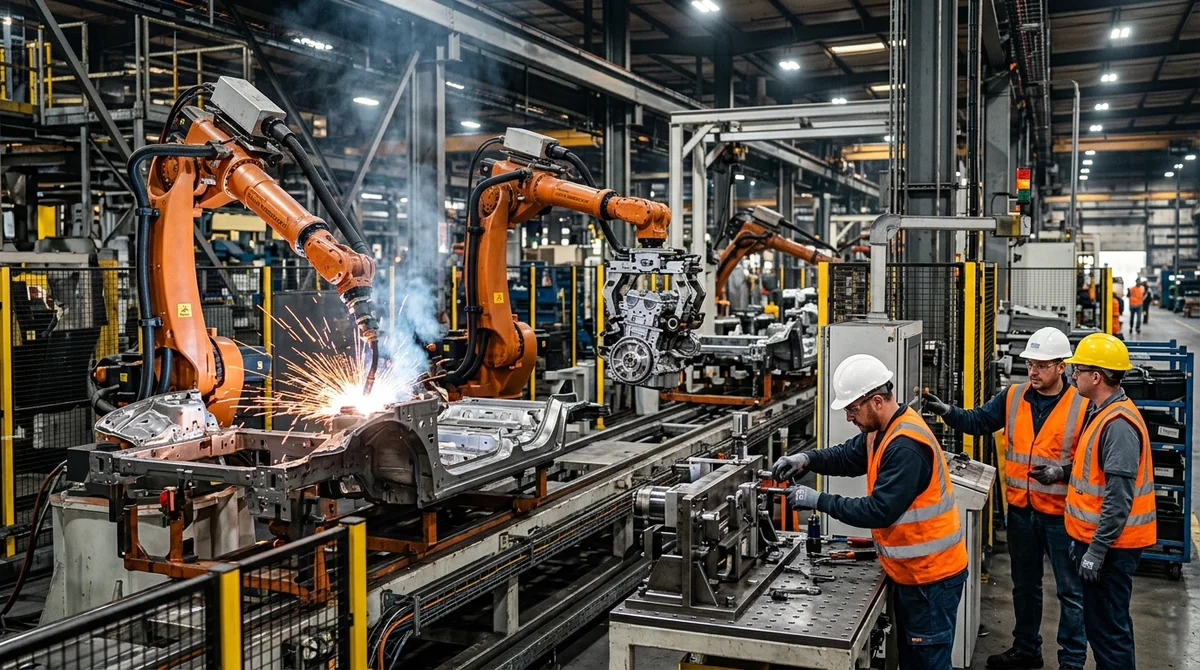
Russia's market for industrial robot end-effectors is heading for explosive growth. Experts forecast that the market could expand more than 25-fold, from 6.6 billion rubles in 2024 to 168.4 billion rubles by 2030.
What are end-effectors
End-effectors are interchangeable working tools mounted on the end of an industrial robot's manipulator arm. They can be grippers of various types (mechanical claws, vacuum suction cups, magnetic grippers), welding heads, dispensers, polishing tools, soldering tools and much more. All of these determine which operation a robotic cell is able to perform.
If you need to weld a car body, you fit a specialized head. If you need delicate electronics assembly, you need a precise gripper with force sensors. Vacuum systems suit handling fragile products in the food industry.
Effective robotization is simply impossible without quality end-effectors. Their selection, design and calibration determine the productivity, precision and reliability of the entire production cell.
Why the market is growing so fast
The forecast of explosive growth rests on several objective factors that simultaneously push Russian manufacturing toward faster automation and raise demand for quality components.
First, sanctions and import substitution. Companies are forced to localize production, which requires investment in automation and lower unit costs. Robotization is one of the fastest ways to raise output with the same or fewer workers.
Second, an acute labor shortage, especially in dangerous and monotonous jobs. Demographics are pushing business toward machines.
The third factor is cheap electricity. In Russia it costs less than in most countries, which makes paying for a robot's work more attractive than paying a human's wages.
Finally, there is state support for manufacturing and the development of domestic robotics expertise. Russia used to import almost everything; now homegrown manufacturers are emerging, and they need domestic end-effectors built to their own standards.
In 2024, the Russian market is estimated at 6.6 billion rubles. By 2030 that figure could reach 168.4 billion rubles. That amounts to a complete transformation of the country's industrial landscape, and it would happen within a few years.
Where end-effectors are used
The highest demand is expected in industries where automation delivers the greatest effect:
- Automotive: traditionally the main consumer of a wide range of robot end-effectors for welding, assembly and painting
- Food industry: grippers for packaging, dosing systems, product sorting
- Electronics and microelectronics: precise component assembly, soldering, testing
- Logistics and warehousing: automated order picking, parcel sorting
- Mechanical engineering: production of the robots themselves, press and forging operations
What this means
This is not just a forecast figure. It signals a shift of Russian manufacturing to a new technological level. Companies investing now in robotization and local end-effector production will gain a lasting competitive advantage.
For the tech ecosystem, market growth will create new opportunities: startups specializing in end-effector design and manufacturing will appear, jobs in high-tech manufacturing will grow, and demand will rise for engineers who can design and integrate such systems.
Robotization is becoming not merely a cost-saving tool but the main engine of modernization for Russian industry.
Key Questions Answered
What are end-effectors?
End-effectors are interchangeable working tools mounted on the end of an industrial robot's manipulator arm. They can be grippers of various types (mechanical claws, vacuum suction cups, magnetic grippers), welding heads, dispensers, polishing tools, soldering tools and much more. All of these determine which operation a robotic cell is able to perform. If you need to weld a car body, you fit a specialized head. If you need delicate electronics assembly, you need a precise gripper with force sensors. Vacuum systems suit handling fragile products in the food industry. Effect
Why the market is growing so fast?
The forecast of explosive growth rests on several objective factors that simultaneously push Russian manufacturing toward faster automation and raise demand for quality components. First, sanctions and import substitution. Companies are forced to localize production, which requires investment in automation and lower unit costs. Robotization is one of the fastest ways to raise output with the same or fewer workers. Second, an acute labor shortage, especially in dangerous and monotonous jobs. Demographics are pushing business toward machines. The third factor is cheap electri
Where end-effectors are used?
The highest demand is expected in industries where automation delivers the greatest effect: Automotive: traditionally the main consumer of a wide range of robot end-effectors for welding, assembly and painting Food industry: grippers for packaging, dosing systems, product sorting Electronics and microelectronics: precise component assembly, soldering, testing Logistics and warehousing: automated order picking, parcel sorting Mechanical engineering: production of the robots themselves, press and forging operations
Test Frontier LLMs & Autonomous Agents in One Workspace
Run Claude Opus 5.5, GPT-6, Gemini 3.1, and DeepSeek side-by-side in Nomad AI (nomadnet.ai) — unified model routing, deep research, and multimodal workflows under one subscription.
The AI world, distilled — once a week
Seven stories that actually mattered, hand-picked. No noise, no reposts, no press releases.
Done! Check your inbox for a confirmation.