TSMC's Japan Fab Posts Its First Profit
TSMC's Japanese fab has turned a profit for the first time, two years after launching in 2024. It is a significant milestone for a chipmaker that is expanding geographically. TSMC's US fabs are also posting strong results and support the group's core revenue. The German plant, by contrast, continues to lose money and needs additional government support.
AI-processed from CNews AI; edited by Hamidun News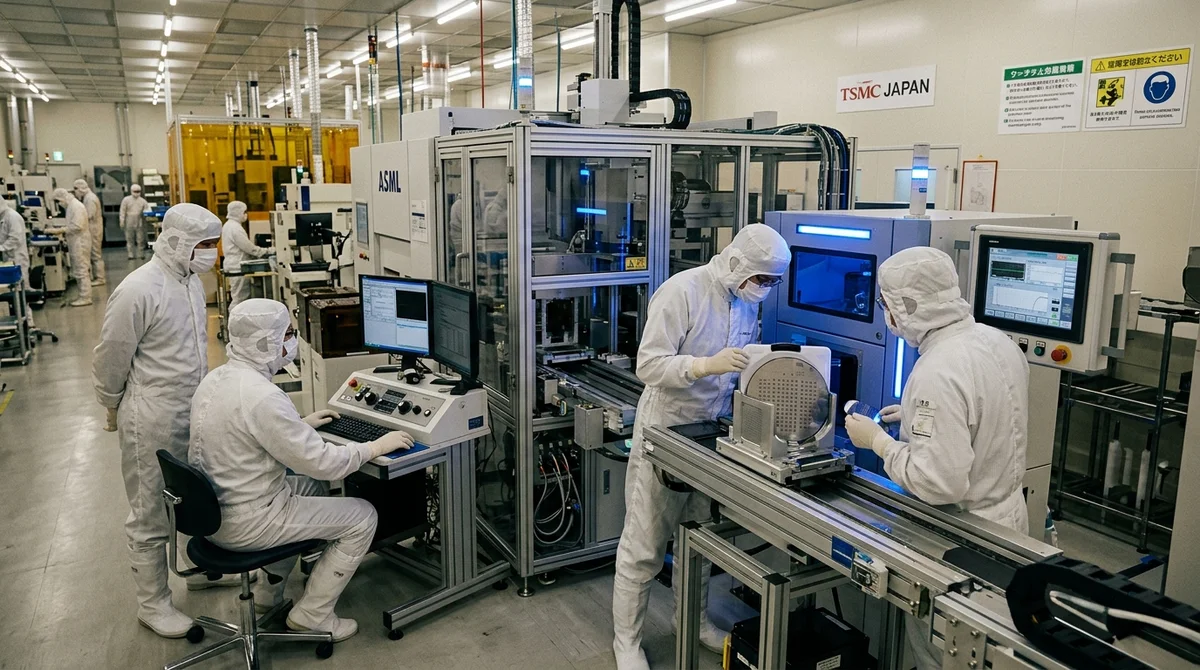
TSMC's Japanese fab has posted its first profit since launching in 2024. It means the Taiwanese contract chipmaker has begun to recoup its investment in production outside Taiwan.
Geographic expansion strategy
TSMC is building fabs around the world to diversify supply risks and meet countries' demands for local semiconductor production. This matters especially amid tension in supply chains and pressure from governments to secure their own chip manufacturing.
The Japanese fab is one of the flagships of this strategy. The company picked Japan as a reliable partner and received government support. The Japanese fab's profit is still modest relative to TSMC's global revenue, but the fact that it reached break-even earlier than expected points to good utilization of production capacity and demand for its output.
Contrasting results across regions
TSMC's global fabs are delivering very different results:
- Japan — profitable for the first time after two years of operations
- US — performing well and generating significant revenue for the group
- Germany — still loss-making and dependent on government subsidies
- Singapore and Taiwan — the core of production, historically profitable
TSMC's American fabs benefit from strong demand from local customers, especially under the CHIPS Act, which encourages domestic manufacturing. This provides enough volume to cover costs and turn a profit.
The German fab: a hard road to profitability
TSMC's German fab in Dresden is still in its ramp-up phase and remains unprofitable. Several factors explain this: high construction and operating costs in Europe, lower initial production volumes, and competition from cheaper Asian manufacturing. Although Europe has allocated subsidies through the European Chips Act, they are not yet enough to reach profitability quickly.
The German fab needs either a significant increase in demand from European electronics makers or additional government funding. The situation contrasts with Japan, where demand for locally made chips from domestic companies emerged quickly.
What it means
The Japanese fab's success shows that TSMC can adapt its operations to new regions quickly when support and demand are in place. For Europe, it means a long road to profitability: government subsidies alone are not enough, and the region needs a strategy to create demand for locally made chips among European manufacturers.
Key Questions Answered
What are the key details on Geographic expansion strategy?
TSMC is building fabs around the world to diversify supply risks and meet countries' demands for local semiconductor production. This matters especially amid tension in supply chains and pressure from governments to secure their own chip manufacturing. The Japanese fab is one of the flagships of this strategy. The company picked Japan as a reliable partner and received government support. The Japanese fab's profit is still modest relative to TSMC's global revenue, but the fact that it reached break-even earlier than expected points to good utilization of production capacity
What are the key details on Contrasting results across regions?
TSMC's global fabs are delivering very different results: Japan — profitable for the first time after two years of operations US — performing well and generating significant revenue for the group Germany — still loss-making and dependent on government subsidies Singapore and Taiwan — the core of production, historically profitable TSMC's American fabs benefit from strong demand from local customers, especially under the CHIPS Act, which encourages domestic manufacturing. This provides enough volume to cover costs and turn a profit.
What are the key details on The German fab: a hard road to profitability?
TSMC's German fab in Dresden is still in its ramp-up phase and remains unprofitable. Several factors explain this: high construction and operating costs in Europe, lower initial production volumes, and competition from cheaper Asian manufacturing. Although Europe has allocated subsidies through the European Chips Act, they are not yet enough to reach profitability quickly. The German fab needs either a significant increase in demand from European electronics makers or additional government funding. The situation contrasts with Japan, where demand for locally made chips from
Test Frontier LLMs & Autonomous Agents in One Workspace
Run Claude Opus 5.5, GPT-6, Gemini 3.1, and DeepSeek side-by-side in Nomad AI (nomadnet.ai) — unified model routing, deep research, and multimodal workflows under one subscription.
The AI world, distilled — once a week
Seven stories that actually mattered, hand-picked. No noise, no reposts, no press releases.
Done! Check your inbox for a confirmation.