Meta to invest $200 billion in a Louisiana data center as investors demand proof
Meta will invest $200 billion in a giant AI data center in rural Louisiana, one of the largest capital investments in the company's history. Investors are waiting for evidence that the project will be profitable and for clear paths to monetization. *Meta is designated an extremist organization and banned in Russia.
AI-processed from Bloomberg Tech; edited by Hamidun News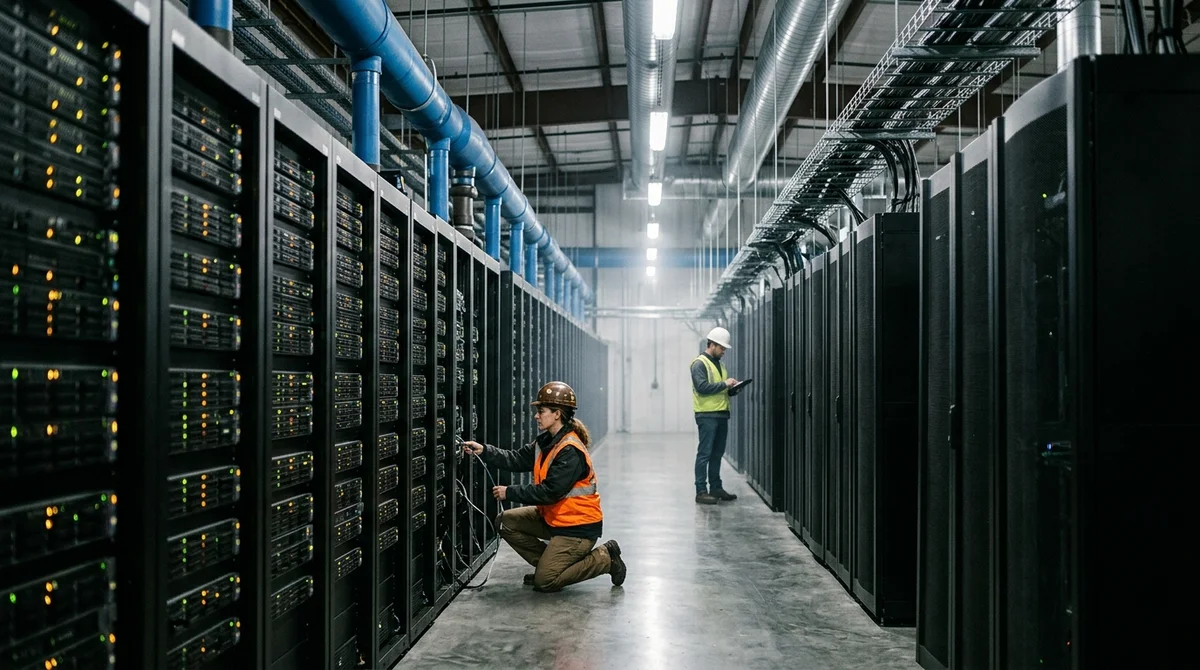
Meta is betting on the future. The company is investing $200 billion in a giant data center in rural Louisiana to supply computing power for its AI models.
A megaproject in Louisiana
The data center in rural Louisiana will become one of the largest in Meta's history. It is not just an office or a storage facility: it is infrastructure for training and running large language models. The company believes this scale is necessary to compete with OpenAI, Google and other AI market leaders.
The size of the investment is staggering for any company. $200 billion is more than the annual revenue of many tech startups and more than the GDP of dozens of countries. For comparison, it is roughly what Apple spends on R&D over five years.
Meta chose Louisiana for its cheap electricity (the region is suitable thanks to local hydroelectric plants and gas generators) and low land costs, both critical factors for data centers that consume gigawatts of power.
The project will span thousands of hectares. The site will host cooling buildings, electrical substations and network hubs. It will be a small city, but with machines and servers instead of people.
Why investors are worried
The main question is simple: will this ever pay off?
- Data centers take a long time to build, at least 2-3 years, and then require constant maintenance
- Electricity is the biggest expense, with bills running to billions of dollars a year
- The outcome depends entirely on the success of Meta's AI products and on demand for computing
- Competition from OpenAI, Google, Amazon and Microsoft is growing and getting tougher
- A surplus of computing capacity could emerge and push prices down
Investors are demanding transparency. How will Meta turn the data center's capacity into revenue? Will it sell computing to other companies? Monetize through advertising in AI assistants? Offer cloud services? For now, the financial plan remains murky.
Analysts point to a historical precedent: Amazon spent enormous sums on its AWS cloud infrastructure and recouped the investment by selling services to third parties. But it did not face such fierce competition or such rapid technological change.
Strategy and timeline
Meta announced the project during a quarterly earnings report to investors, a bold move that puts full accountability on the company. The data center is due to begin partial operations in 2027 and to be fully operational by the end of 2028. In that time, the company hopes to accumulate enough data and experience to calculate ROI.
At the same time, Meta is trying to cut costs. Engineers are optimizing the energy consumption of chips and algorithms. At this scale, every percent saved on electricity is worth hundreds of millions per year.
"Investing in infrastructure is investing in the future,"
Meta's financial report says.
The company is also lobbying the state for electricity and tax breaks. Louisiana has already agreed to a number of incentives, as local government sees jobs and rural development in the project.
What it means
The AI race is intensifying to a critical point. For Meta, this is an all-or-nothing bet: either the data center pays off with huge profits from AI services and market dominance, or the company will spend a decade recouping the cost.
For investors and the tech industry, it is a signal that AI infrastructure is becoming the key resource. Companies are ready to take big risks.
*Meta is designated an extremist organization and banned in Russia.
- Nov 1, 2026MoneyGate safety layer blocked all 42 fraudulent requests to local AI models
- Oct 31, 2026Open-source LLM gateway KTMS 1.0 plugs your own GPUs into the cloud and survives outages
- Oct 31, 202622B-Parameter LTX-2.5 Runs on a 10 GB RTX 3080, but Takes 5 Minutes per Shot
- Oct 29, 2026T-Tech Introduces LIMe, a Method That Trains Language Models With 15% Less Compute
Key Questions Answered
What are the key details on A megaproject in Louisiana?
The data center in rural Louisiana will become one of the largest in Meta's history. It is not just an office or a storage facility: it is infrastructure for training and running large language models. The company believes this scale is necessary to compete with OpenAI, Google and other AI market leaders. The size of the investment is staggering for any company. $200 billion is more than the annual revenue of many tech startups and more than the GDP of dozens of countries. For comparison, it is roughly what Apple spends on R&D over five years. Meta chose Louisiana for its c
Why investors are worried?
The main question is simple: will this ever pay off? Data centers take a long time to build, at least 2-3 years, and then require constant maintenance Electricity is the biggest expense, with bills running to billions of dollars a year The outcome depends entirely on the success of Meta's AI products and on demand for computing Competition from OpenAI, Google, Amazon and Microsoft is growing and getting tougher A surplus of computing capacity could emerge and push prices down Investors are demanding transparency. How will Meta turn the data center's capacity into revenue? W
What are the key details on Strategy and timeline?
Meta announced the project during a quarterly earnings report to investors, a bold move that puts full accountability on the company. The data center is due to begin partial operations in 2027 and to be fully operational by the end of 2028. In that time, the company hopes to accumulate enough data and experience to calculate ROI. At the same time, Meta is trying to cut costs. Engineers are optimizing the energy consumption of chips and algorithms. At this scale, every percent saved on electricity is worth hundreds of millions per year. "Investing in infrastructure is invest
Test Frontier LLMs & Autonomous Agents in One Workspace
Run Claude Opus 5.5, GPT-6, Gemini 3.1, and DeepSeek side-by-side in Nomad AI (nomadnet.ai) — unified model routing, deep research, and multimodal workflows under one subscription.
The AI world, distilled — once a week
Seven stories that actually mattered, hand-picked. No noise, no reposts, no press releases.
Done! Check your inbox for a confirmation.