Trillion-Dollar AI Investments Boost Profits but Threaten Jobs
Hyperscalers are investing trillions of dollars in AI infrastructure and cloud computing, driving up corporate profits and fueling a wave of IPOs. But analysts at Bernstein Private Wealth warn about the main threat: the labor market. As AI rolls out, companies are increasingly rethinking their headcount and asking which jobs artificial intelligence can replace. Profits are real, and so is the risk that unemployment rises faster than new jobs appear.
AI-processed from Bloomberg Tech; edited by Hamidun News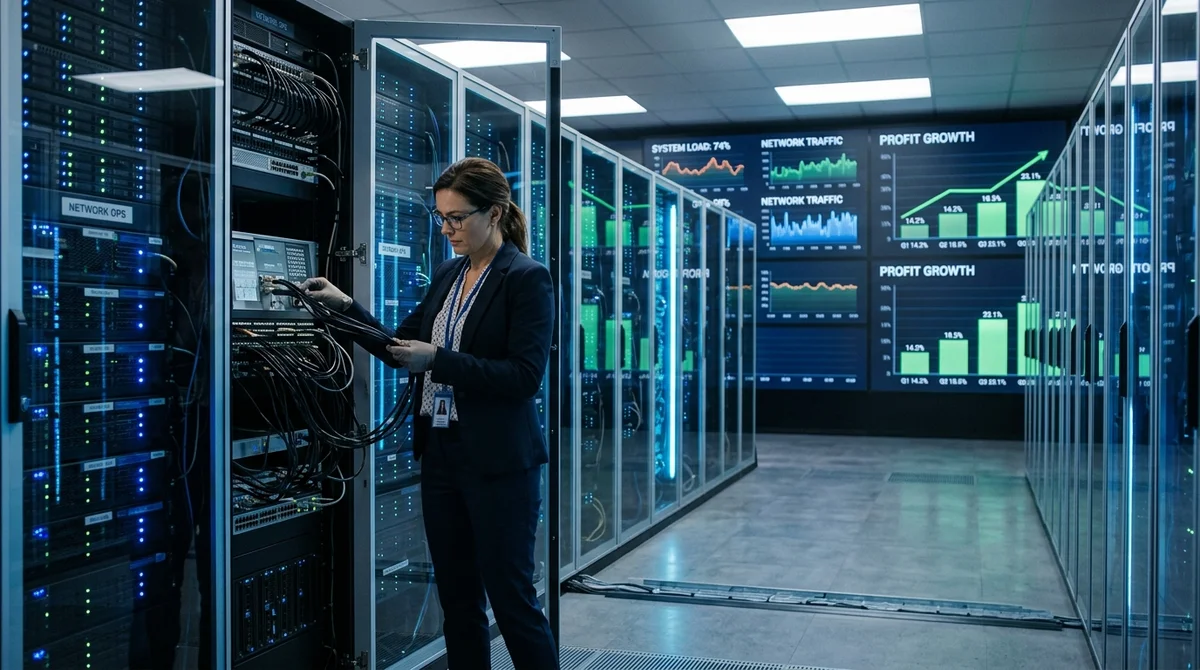
Hyperscalers' trillion-dollar spending on AI infrastructure is fueling corporate profits like never before. But the boom has a price, and the labor market is paying it.
How trillions are transforming profits
Companies like OpenAI, Google, Meta*, Amazon and Microsoft have already poured trillions of dollars into new infrastructure: data centers, neural networks, cloud computing. This is not a strategic reserve. It is a bet on winning the AI race. And the bet is working.
The results show up in quarterly reports. Public corporations are seeing revenue growth thanks to new AI services and improvements to existing ones. Share prices are rising, and demand for IPOs is heating up. Investors believe hyperscalers will be able to recoup the trillions and deliver growth over the next five years.
The logic is simple: data center investment works as a multiplier. One dollar invested generates several dollars of revenue. API access to GPT or Claude is a mini-factory in the cloud. Advertising through OpenAI, Google's AI-powered search, Amazon's enterprise services: all of these are examples of capital being converted into profit.
The weak link: the labor market
But this is where the machinery starts to grind. Yes, profits are growing. Yes, IPOs are attracting investors. But what happens to people?
Analysts at Bernstein Private Wealth point directly to the labor market as the main risk. As AI is deployed across the economy, companies start to reassess how many workers they need. And they start asking uncomfortable questions: which functions can AI take over? Document handling? Analytics? Programming? Tech support? The answer is simple: it can.
The wave of layoffs does not begin immediately, but it is inevitable:
- Routine roles (data entry, basic analytics, repetitive reports) are losing value
- Small teams are consolidating thanks to automation
- Demand for older skills is falling, and wages in routine positions are under pressure
- Work is concentrating in hubs with AI expertise, while other regions lose ground
- Retraining is required, but not everyone is ready to retrain
The risk is that unemployment may rise faster than new jobs open up. The history of technological shifts shows that the profits from innovation concentrate in a few hands, while the pain of job destruction is spread widely.
The growth paradox
There is a strange paradox here. AI expands the economy and creates new goods and services. The IPO wave and the investment are not speculation; they reflect recognition that the economic pie is growing. But the expansion is asymmetric. It creates demand for new skills (programming, managing AI systems, analytics) and at the same time destroys demand for old ones. The speed of destruction may outpace the speed of creation.
This is not just a technological shift.
It is a reassessment of whom companies need to hire and in what numbers.
What this means
The profits from AI are real, and the trillions spent on infrastructure are paying off. IPOs will happen, and innovation will continue. But Altman, Nadella and Pichai are not buying this growth for free: the price is a hasty restructuring of the labor market.
If companies retrain parts of their teams and create enough new roles, the risk will ease. If not, we face a scenario in which corporate profits rise while employment falls. Spending on social programs could wipe out all of the profit growth. History knows such moments, and they rarely pass smoothly.
*Meta is designated an extremist organization and banned in the Russian Federation.
- Nov 1, 2026Local models lose to Opus and Codex: 0.21 on a MacBook versus 1.00 for Codex
- Nov 1, 2026Kimi scores 96.2% on a 1C database analytics test and emerges as a fallback if Claude access is blocked
- Nov 1, 2026OpenAI Rewrites GPT Behavior Rules: Five Values and a Chain of Command
- Nov 1, 2026Google admits AI Mode cuts search revenue, shares fall 15%
Key Questions Answered
How trillions are transforming profits?
Companies like OpenAI, Google, Meta, Amazon and Microsoft have already poured trillions of dollars into new infrastructure: data centers, neural networks, cloud computing. This is not a strategic reserve. It is a bet on winning the AI race. And the bet is working. The results show up in quarterly reports. Public corporations are seeing revenue growth thanks to new AI services and improvements to existing ones. Share prices are rising, and demand for IPOs is heating up. Investors believe hyperscalers will be able to recoup the trillions and deliver growth over the next five
What are the key details on The weak link: the labor market?
But this is where the machinery starts to grind. Yes, profits are growing. Yes, IPOs are attracting investors. But what happens to people? Analysts at Bernstein Private Wealth point directly to the labor market as the main risk. As AI is deployed across the economy, companies start to reassess how many workers they need. And they start asking uncomfortable questions: which functions can AI take over? Document handling? Analytics? Programming? Tech support? The answer is simple: it can. The wave of layoffs does not begin immediately, but it is inevitable: Routine roles (data
What are the key details on The growth paradox?
There is a strange paradox here. AI expands the economy and creates new goods and services. The IPO wave and the investment are not speculation; they reflect recognition that the economic pie is growing. But the expansion is asymmetric. It creates demand for new skills (programming, managing AI systems, analytics) and at the same time destroys demand for old ones. The speed of destruction may outpace the speed of creation. This is not just a technological shift. It is a reassessment of whom companies need to hire and in what numbers.
Ship AI Faster with Founders, Engineers & Weekly Architecture Reviews
Inside Vibe Club (hamidun.com/club) — weekly live masterminds with Zhemal Khamidun, Tech Radar, full LMS access, and 370+ production Claude Code skills.
The AI world, distilled — once a week
Seven stories that actually mattered, hand-picked. No noise, no reposts, no press releases.
Done! Check your inbox for a confirmation.