US Suspects Nvidia Chips Are Being Smuggled to Alibaba Through Thailand
The US is investigating a large-scale scheme to smuggle Super Micro Computer servers loaded with advanced Nvidia GPUs through Thailand to Alibaba and other Chinese companies. A Thai company tied to the country's national AI project is allegedly orchestrating the scheme to get around US export restrictions. Billions of dollars are at stake, along with strategic control over artificial intelligence technology.
AI-processed from Bloomberg Tech; edited by Hamidun News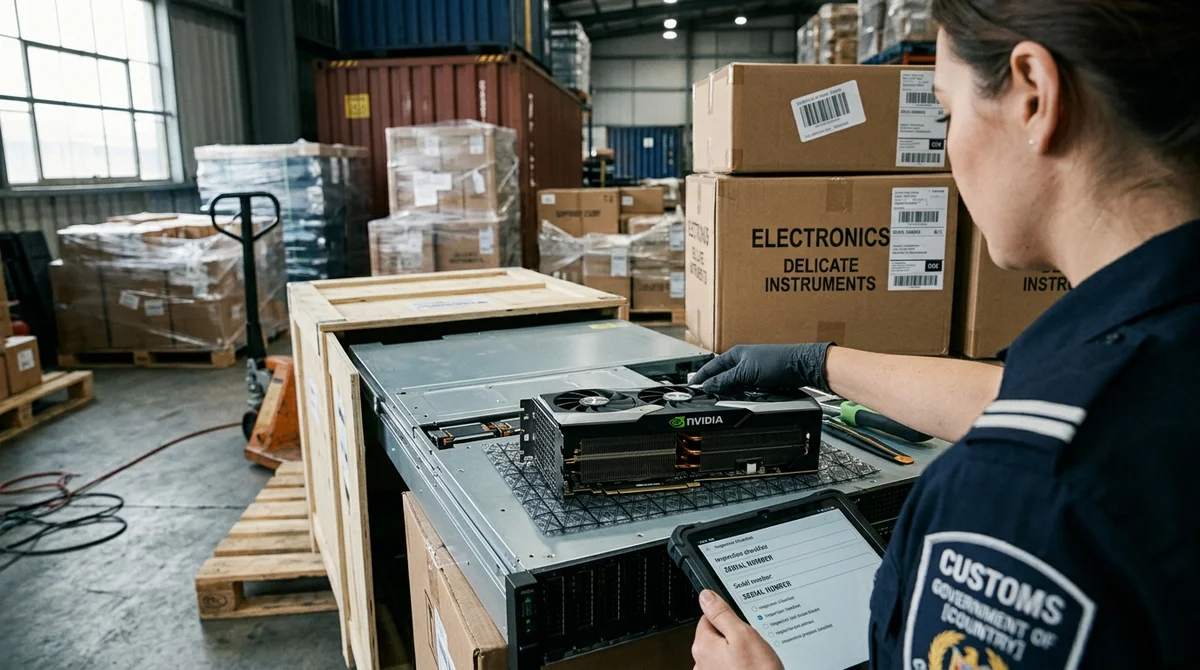
US authorities suspect a Thai company of smuggling servers with advanced Nvidia GPUs into China, including shipments for Alibaba. According to people familiar with the investigation, the hardware is worth billions of dollars, and the scheme systematically circumvents US export restrictions.
The smuggling chain
The central figure in the investigation is the company behind one of Thailand's key artificial intelligence development projects. According to Bloomberg, this company is helping reroute Super Micro Computer servers equipped with advanced Nvidia GPUs from Thailand to China. Alibaba Group is one of the main end users, although other large Chinese technology companies are also involved in the scheme.
The mechanism is simple but effective. The server is officially shipped to Thailand as legitimate goods, ostensibly to build national AI infrastructure. After it arrives, however, it is not used locally but redirected to China. Thailand is geographically ideal for this: it sits right next to China, is not on US sanctions lists, and has a reputation as a technology hub in the region.
Why the US is tightening the screws
For years, the US government has been building an export control system for the most advanced chips. Nvidia GPUs are not just computer components; they are the foundation for training large artificial intelligence models. Without enough high-quality processors, large-scale training of models like GPT-5, Claude or their Chinese counterparts is impossible.
Export restrictions follow a simple logic: chips in China's hands mean faster growth in its AI capabilities. And AI is not entertainment. It is a strategic asset: autonomous systems, intelligence, defense, surveillance. Every server that slips through brings China closer to technological parity with the West.
- The restrictions cover the most powerful GPUs: Nvidia H100, H200, A100
- Export lists are revised and tightened every year
- Attempts to evade controls via third countries are a predictable phenomenon and a criminal offense
- The value of the smuggled goods points to a long-running, large-scale operation
Thailand in a bind
Thailand has ended up in an awkward position. On one hand, the country wants to develop its own AI sector and keep pace with its neighbors. On the other, involvement in smuggling (even through its own companies) undermines its status as a trusted US partner. If the allegations are confirmed, Thailand could face serious consequences: sanctions, restricted access to technology, and diplomatic pressure.
What this means for the industry
The GPU smuggling story is not just a crime report. It is a mirror of the growing technological split between the US and China. Every server delivered to China adds to its AI capabilities. Hence the strict US restrictions and the hunt for workarounds.
Super Micro Computer, the server maker, may face reputational damage and additional scrutiny. Nvidia will be even stricter about tracking end users. The US government will step up monitoring of shipments to third countries and China's neighbors.
What this means
Thailand is choosing between two uncomfortable scenarios: remain a reliable US partner or gain access to the advanced technology it needs to build its own AI market. The story shows that, in an era of technological split, there is practically no third path.
- Nov 2, 2026TensorFold 1.2.0 boosts Qwen3.8-27B throughput on M3 Ultra by 44.2% at 16 streams
- Nov 1, 2026Local models lose to Opus and Codex: 0.21 on a MacBook versus 1.00 for Codex
- Nov 1, 2026Habr author fine-tunes YOLOv8l on dental X-rays and pushes mAP50 to 0.642
- Nov 1, 2026Voice bots built on LLMs turn to Jev, a fast classifier, for decisions in 200–500 ms
Key Questions Answered
What are the key details on The smuggling chain?
The central figure in the investigation is the company behind one of Thailand's key artificial intelligence development projects. According to Bloomberg, this company is helping reroute Super Micro Computer servers equipped with advanced Nvidia GPUs from Thailand to China. Alibaba Group is one of the main end users, although other large Chinese technology companies are also involved in the scheme. The mechanism is simple but effective. The server is officially shipped to Thailand as legitimate goods, ostensibly to build national AI infrastructure. After it arrives, however,
Why the US is tightening the screws?
For years, the US government has been building an export control system for the most advanced chips. Nvidia GPUs are not just computer components; they are the foundation for training large artificial intelligence models. Without enough high-quality processors, large-scale training of models like GPT-5, Claude or their Chinese counterparts is impossible. Export restrictions follow a simple logic: chips in China's hands mean faster growth in its AI capabilities. And AI is not entertainment. It is a strategic asset: autonomous systems, intelligence, defense, surveillance. Eve
What are the key details on Thailand in a bind?
Thailand has ended up in an awkward position. On one hand, the country wants to develop its own AI sector and keep pace with its neighbors. On the other, involvement in smuggling (even through its own companies) undermines its status as a trusted US partner. If the allegations are confirmed, Thailand could face serious consequences: sanctions, restricted access to technology, and diplomatic pressure.
Test Frontier LLMs & Autonomous Agents in One Workspace
Run Claude Opus 5.5, GPT-6, Gemini 3.1, and DeepSeek side-by-side in Nomad AI (nomadnet.ai) — unified model routing, deep research, and multimodal workflows under one subscription.
The AI world, distilled — once a week
Seven stories that actually mattered, hand-picked. No noise, no reposts, no press releases.
Done! Check your inbox for a confirmation.