TSMC revenue hits $13.1 billion in April on AI chip demand
TSMC reported April revenue of $13.1 billion, 17.5% higher than a year ago. The main growth driver is demand for GPUs and AI processors used to train models. Analysts forecast that TSMC's revenue will grow 35% over the whole of Q2.
AI-processed from 3DNews AI; edited by Hamidun News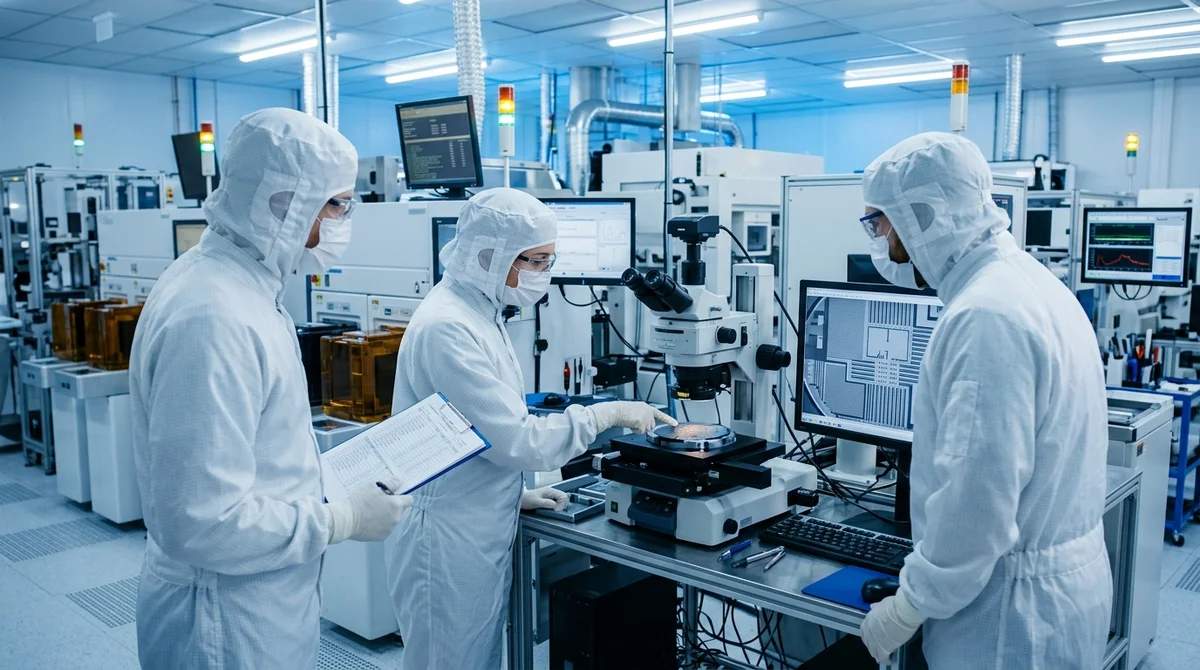
TSMC has published its April financial report, and the numbers suggest the AI boom looks far more real than a passing spike. The Taiwanese giant's revenue reached $13.1 billion, 17.5% higher than a year ago. For an ordinary month of the second quarter, that is a significant increase, and it points to genuine demand from the industry.
The full-quarter forecasts are striking
Analysts expect TSMC's revenue for the second quarter as a whole to grow by a full 35% year over year. Growth at that pace is rare in the history of the semiconductor industry, which usually moves in long demand cycles driven by PCs and smartphones. The current growth stems entirely from unprecedented demand for computing power for artificial intelligence applications, demand that began after the release of ChatGPT and has only accelerated since. Every month brings new announcements of AI infrastructure expansion and the launch of new large models that require ever more computing power.
Demand that outstrips production
The main source of TSMC's revenue growth is unprecedented demand for GPUs and specialized processors for training large language models. Companies such as Nvidia and AMD, which buy chips from TSMC and then sell them to enterprise customers through cloud services, report record orders that exceed their ability to deliver. Demand spans several critical categories:
- GPUs for LLM training (mainly graphics accelerators such as the Nvidia H100 and H200)
- Specialized AI accelerators from various manufacturers
- High-bandwidth HBM memory for graphics cards
- Chips for cloud AI services (AWS, Google Cloud, Microsoft Azure)
Each of these categories requires advanced manufacturing processes, 3-nanometer and narrower nodes, where TSMC holds a near-monopoly on the global market.
TSMC is a critical bottleneck
TSMC is not just a large manufacturer but a critical bottleneck in the global supply chain for AI hardware. The company controls roughly 90% of production of the most advanced semiconductors on the planet. When TSMC's revenue grows at this pace, it is not just good news for the company's investors. It is a direct signal that AI demand remains not only healthy but is in fact accelerating, despite periodic predictions of slowing investment.
"TSMC is a vital partner for the entire artificial intelligence industry.
If growth on that scale is happening there, the whole market will feel it," investors say.
What this means
TSMC's growth rate shows that the AI boom is clearly not slowing down. As long as companies keep building out infrastructure to train and deploy large models, demand for advanced chips will only grow. That is good news for TSMC itself and its shareholders. But it is also a significant challenge for the entire global semiconductor supply chain, which is already operating at the edge of its capacity. Further acceleration of demand could lead to even greater shortages and a new round of investment in manufacturing.
- Nov 1, 2026Local models lose to Opus and Codex: 0.21 on a MacBook versus 1.00 for Codex
- Nov 1, 2026Kimi scores 96.2% on a 1C database analytics test and emerges as a fallback if Claude access is blocked
- Nov 1, 2026OpenAI Rewrites GPT Behavior Rules: Five Values and a Chain of Command
- Nov 1, 2026Google admits AI Mode cuts search revenue, shares fall 15%
Key Questions Answered
What are the key details on The full-quarter forecasts are striking?
Analysts expect TSMC's revenue for the second quarter as a whole to grow by a full 35% year over year. Growth at that pace is rare in the history of the semiconductor industry, which usually moves in long demand cycles driven by PCs and smartphones. The current growth stems entirely from unprecedented demand for computing power for artificial intelligence applications, demand that began after the release of ChatGPT and has only accelerated since. Every month brings new announcements of AI infrastructure expansion and the launch of new large models that require ever more com
What are the key details on Demand that outstrips production?
The main source of TSMC's revenue growth is unprecedented demand for GPUs and specialized processors for training large language models. Companies such as Nvidia and AMD, which buy chips from TSMC and then sell them to enterprise customers through cloud services, report record orders that exceed their ability to deliver. Demand spans several critical categories: GPUs for LLM training (mainly graphics accelerators such as the Nvidia H100 and H200) Specialized AI accelerators from various manufacturers High-bandwidth HBM memory for graphics cards Chips for cloud AI services (
What are the key details on TSMC is a critical bottleneck?
TSMC is not just a large manufacturer but a critical bottleneck in the global supply chain for AI hardware. The company controls roughly 90% of production of the most advanced semiconductors on the planet. When TSMC's revenue grows at this pace, it is not just good news for the company's investors. It is a direct signal that AI demand remains not only healthy but is in fact accelerating, despite periodic predictions of slowing investment. "TSMC is a vital partner for the entire artificial intelligence industry. If growth on that scale is happening there, the whole market wi
Test Frontier LLMs & Autonomous Agents in One Workspace
Run Claude Opus 5.5, GPT-6, Gemini 3.1, and DeepSeek side-by-side in Nomad AI (nomadnet.ai) — unified model routing, deep research, and multimodal workflows under one subscription.
The AI world, distilled — once a week
Seven stories that actually mattered, hand-picked. No noise, no reposts, no press releases.
Done! Check your inbox for a confirmation.