Charlie Berns Slams Vantage Megaproject: How an AI Data Center Is Dividing Wisconsin
Comedian Charlie Berns has sided with Wisconsin residents who oppose Vantage Data Centers' $8 billion data center. The project promises 1,000+ jobs but raises concerns about water and electricity. Residents are unhappy about the lack of transparency and the generous tax breaks given to the company.
AI-processed from Guardian; edited by Hamidun News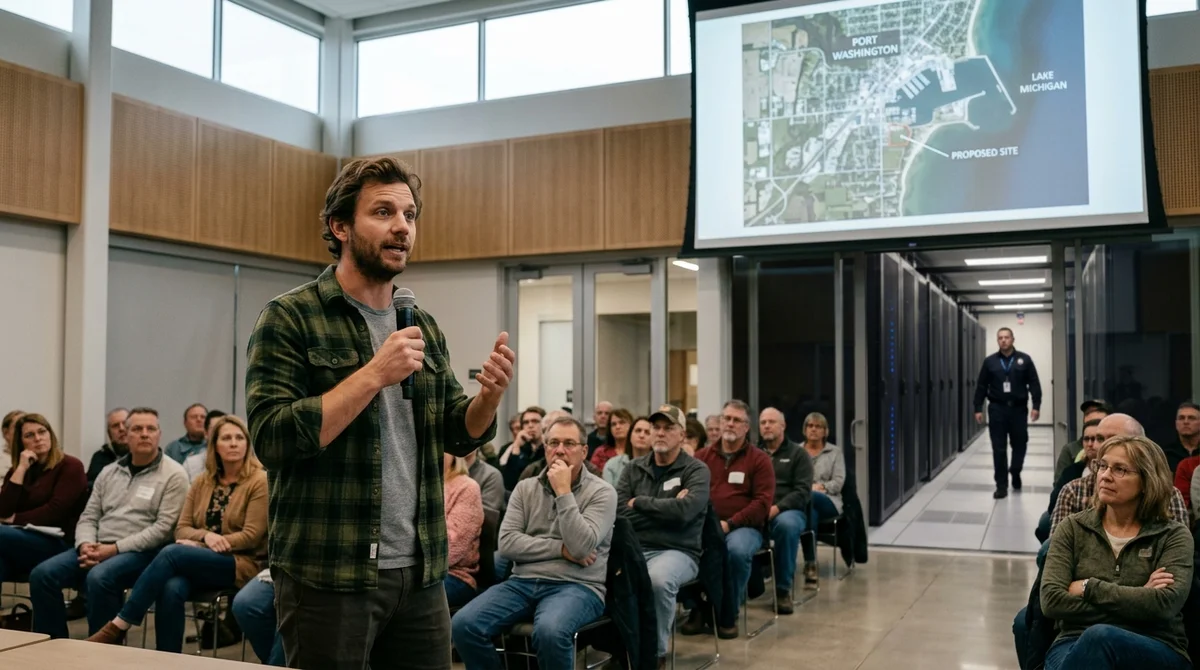
Comedian and journalist Charlie Berns, known for his "Manitowoc Minute" series and sharp Midwestern humor, has begun loudly criticizing plans to build one of the largest AI data center campuses in the US in Wisconsin, joining a growing wave of local concern.
When an $8 Billion Decision Becomes a Problem
Last summer, Berns began receiving many messages from worried Wisconsin residents about the upcoming construction of a massive data center campus. Developer Vantage Data Centers presented an ambitious plan: an $8 billion investment that, according to the company, will run mostly on renewable energy: solar panels, wind turbines and storage systems. The company promised thousands of temporary jobs during the multi-year construction and more than 1,000 permanent, well-paid positions in Port Washington, a city of just 13,000 people about a half-hour drive from Milwaukee.
At first glance, it sounds like a rescue for the local economy. But residents looked deeper, and their questions were just as ambitious.
Water, Electricity and Generous Tax Breaks
Criticism of the project quickly focused on several key problems:
- Lack of transparency: the company did not disclose detailed plans to local residents and authorities before announcing it in the national media
- Generous tax incentives: Vantage received significant tax breaks despite being a large international corporation
- Enormous strain on natural resources: the 1.3-gigawatt project will require large volumes of water to cool servers, plus additional power supply on an already strained local grid
The scale of the project is striking: the campus could occupy 1,900 acres of land. This is not just an industrial site. It is an entire industrial ecosystem the size of a small city, with its own infrastructure and an environmental footprint that will be felt for decades.
A Comedian's Voice Amplifies the Concerns
When Charlie Berns, who has an influential Midwest audience thanks to his comedy and journalism, publicly backed the critics, it sharply increased media focus on the issue. His popularity in the region gave him a platform that both locals and the national press listen to. A conversation that could have remained a local dispute reached the national level and drew the attention of energy experts.
Berns took a principled stance: even in an era of global AI optimism, there is room for healthy, critical questions. Who actually benefits from such a project, and who pays the price for building it?
More Than a Local Dispute
The Wisconsin story reflects a broader dynamic unfolding across America. As tech giants scale up data centers to power AI services, they are running into finite resources: water, electricity and the consent of local communities. Some states welcome the investment; others are starting to set strict conditions.
What This Means
The fight over the Vantage data center in Wisconsin is a microcosm of a larger standoff between the AI industry's drive to grow at any cost and the reality of local ecosystems. Can an AI economy be fair when the benefits are concentrated in the hands of a few while the costs are spread across the whole community? There is no clear answer to that question yet.
Key Questions Answered
When an $8 Billion Decision Becomes a Problem?
Last summer, Berns began receiving many messages from worried Wisconsin residents about the upcoming construction of a massive data center campus. Developer Vantage Data Centers presented an ambitious plan: an $8 billion investment that, according to the company, will run mostly on renewable energy: solar panels, wind turbines and storage systems. The company promised thousands of temporary jobs during the multi-year construction and more than 1,000 permanent, well-paid positions in Port Washington, a city of just 13,000 people about a half-hour drive from Milwaukee. At fir
What are the key details on Water, Electricity and Generous Tax Breaks?
Criticism of the project quickly focused on several key problems: Lack of transparency: the company did not disclose detailed plans to local residents and authorities before announcing it in the national media Generous tax incentives: Vantage received significant tax breaks despite being a large international corporation Enormous strain on natural resources: the 1.3-gigawatt project will require large volumes of water to cool servers, plus additional power supply on an already strained local grid The scale of the project is striking: the campus could occupy 1,900 acres of l
What are the key details on A Comedian's Voice Amplifies the Concerns?
When Charlie Berns, who has an influential Midwest audience thanks to his comedy and journalism, publicly backed the critics, it sharply increased media focus on the issue. His popularity in the region gave him a platform that both locals and the national press listen to. A conversation that could have remained a local dispute reached the national level and drew the attention of energy experts. Berns took a principled stance: even in an era of global AI optimism, there is room for healthy, critical questions. Who actually benefits from such a project, and who pays the price
Test Frontier LLMs & Autonomous Agents in One Workspace
Run Claude Opus 5.5, GPT-6, Gemini 3.1, and DeepSeek side-by-side in Nomad AI (nomadnet.ai) — unified model routing, deep research, and multimodal workflows under one subscription.
The AI world, distilled — once a week
Seven stories that actually mattered, hand-picked. No noise, no reposts, no press releases.
Done! Check your inbox for a confirmation.