SoftBank to Make Batteries for AI Data Centers at Former Sharp Plant
SoftBank is launching battery production for power-hungry AI data centers at a former Sharp plant in Osaka. The target output is 1 gigawatt-hour of batteries per year. Korean companies Cosmos Lab and DeltaX are taking part in the project. The first batteries are due to roll off the line from April 2025, and zinc-halogen technology will arrive in 2027.
AI-processed from TNW; edited by Hamidun News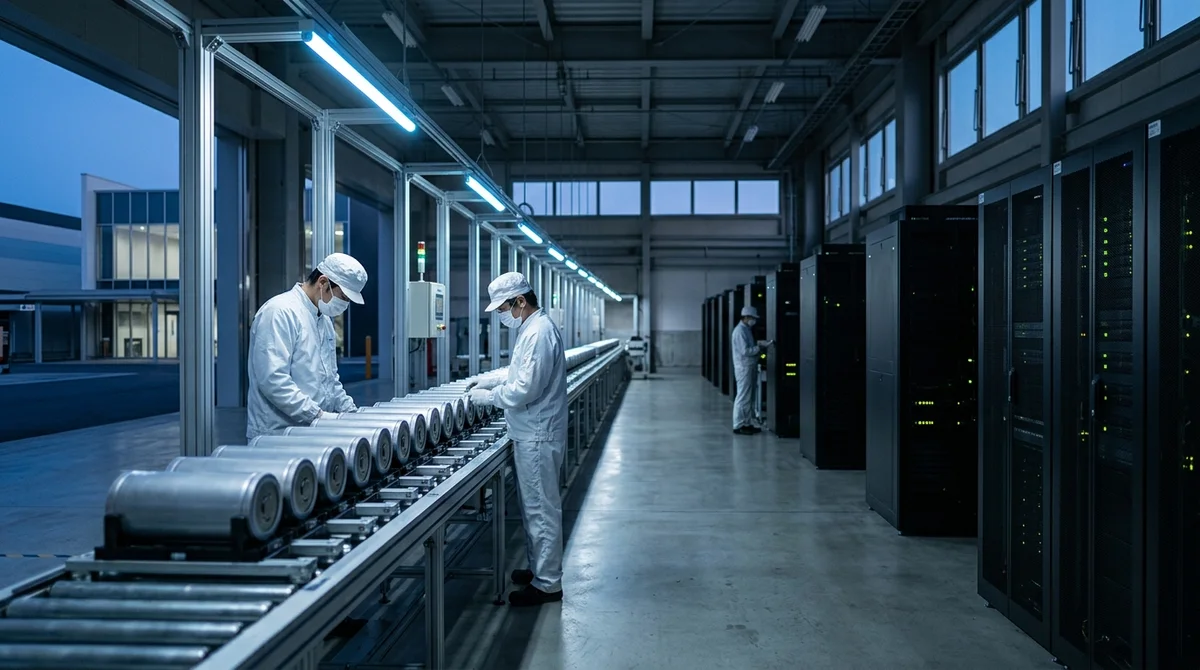
SoftBank has announced it is launching in-house battery production for AI data centers at a former Sharp site in Osaka. The Japanese company sees batteries as a strategic asset in the era of energy-hungry artificial intelligence.
A new life for the Sharp plant
The plant in Sakai, Osaka, once made electronic components for Sharp. It is now being converted to battery manufacturing. SoftBank has set an ambitious output target: 1 gigawatt-hour of batteries per year. That means the plant could power a small data center for a full day of operation.
The line is scheduled to start in April 2025. The company has already planned an expansion: in 2027 it will add production of batteries based on zinc-halogen chemistry, which promises better energy density and cost.
An international partnership
SoftBank is not going it alone. Two companies with deep expertise have joined the project:
- Cosmos Lab from South Korea: battery system development
- DeltaX: integrating batteries into complex grids
- SoftBank: manufacturing base and financing
This setup lets each party focus on its own strengths and speeds up bringing a competitive product to market.
Power for AI is becoming critical
Data centers that train large language models consume megawatts of electricity. A single training run of a GPT-scale model can use as much electricity as a city does in a month.
Batteries serve several purposes:
- Peak shaving: during peaks, batteries are used instead of drawing power from the grid
- Backup power: when the main source fails
- Lower electricity bills: batteries reduce peak demand
As an owner of cloud services and an investor in AI companies, SoftBank understands this need from the inside. Its own battery production should give it a competitive edge and a new source of revenue.
What this means
Batteries for data centers are moving from niche equipment to strategic infrastructure. SoftBank's investment signals a market with potential in the tens of billions of dollars. Expect other large cloud providers to start investing in their own battery production.
Key Questions Answered
What are the key details on A new life for the Sharp plant?
The plant in Sakai, Osaka, once made electronic components for Sharp. It is now being converted to battery manufacturing. SoftBank has set an ambitious output target: 1 gigawatt-hour of batteries per year. That means the plant could power a small data center for a full day of operation. The line is scheduled to start in April 2025. The company has already planned an expansion: in 2027 it will add production of batteries based on zinc-halogen chemistry, which promises better energy density and cost.
What are the key details on An international partnership?
SoftBank is not going it alone. Two companies with deep expertise have joined the project: Cosmos Lab from South Korea: battery system development DeltaX: integrating batteries into complex grids SoftBank: manufacturing base and financing This setup lets each party focus on its own strengths and speeds up bringing a competitive product to market.
What are the key details on Power for AI is becoming critical?
Data centers that train large language models consume megawatts of electricity. A single training run of a GPT-scale model can use as much electricity as a city does in a month. Batteries serve several purposes: Peak shaving: during peaks, batteries are used instead of drawing power from the grid Backup power: when the main source fails Lower electricity bills: batteries reduce peak demand As an owner of cloud services and an investor in AI companies, SoftBank understands this need from the inside. Its own battery production should give it a competitive edge and a new sourc
Test Frontier LLMs & Autonomous Agents in One Workspace
Run Claude Opus 5.5, GPT-6, Gemini 3.1, and DeepSeek side-by-side in Nomad AI (nomadnet.ai) — unified model routing, deep research, and multimodal workflows under one subscription.
The AI world, distilled — once a week
Seven stories that actually mattered, hand-picked. No noise, no reposts, no press releases.
Done! Check your inbox for a confirmation.