AI memory shortage splits the chip market into winners and losers
The memory-chip shortage caused by the AI race is opening a sharp gap in corporate results and share prices. Companies that have secured memory for their AI systems are growing faster and attracting large investments. The other players are falling behind in development and losing out in competition. This deepens the split in the technology market into two camps.
AI-processed from Bloomberg Tech; edited by Hamidun News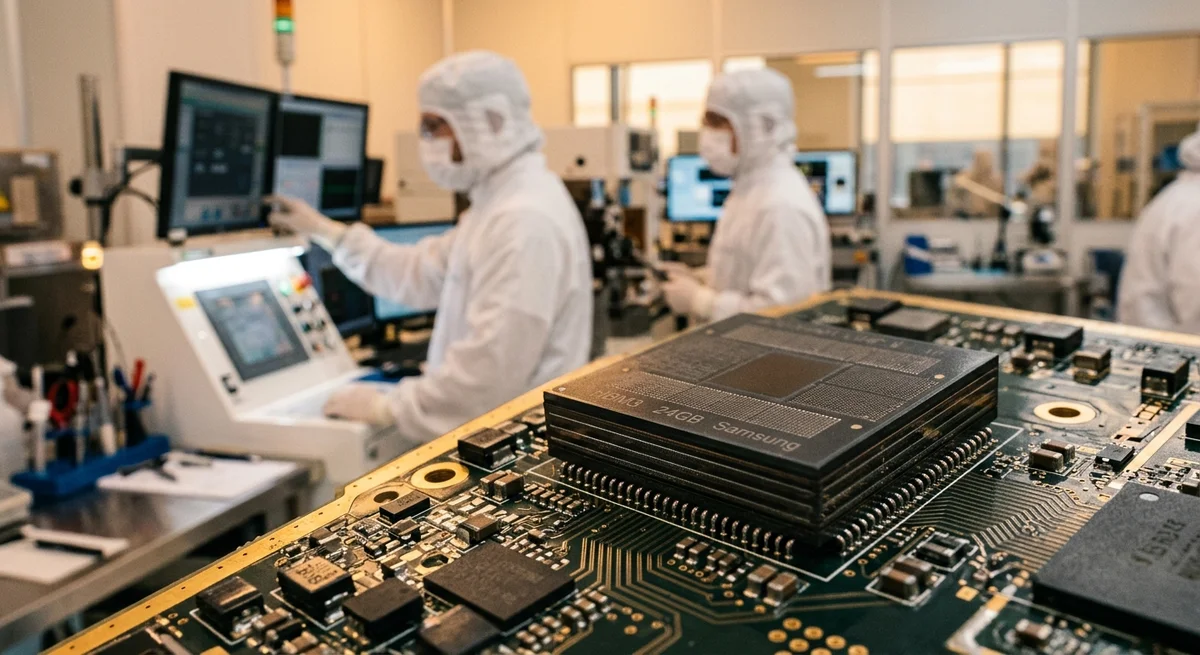
The memory-chip shortage is one of the main bottlenecks in the artificial intelligence ecosystem. The scarcity of HBM (High Bandwidth Memory) and other types of memory critical for training neural networks creates a highly uneven distribution of capabilities between companies. Those that have managed to secure supply are growing fast. The rest are stalling in development.
Who wins, who loses
Market dynamics are diverging sharply. Large players such as NVIDIA, which control access to memory and chips, are strengthening their position. Cloud providers (AWS, Google Cloud, Azure) with good supply contracts can offer AI services to customers. But mid-sized companies that failed to sign long-term agreements are starting to fall behind in development.
Memory-chip prices are rising. This hurts startups and companies outside the top 5 consumers especially. They are forced either to look for alternatives (less powerful chips, in-house solutions) or to postpone projects. Shares of those with secured supply are rising. Shares of the others are falling.
Scale of demand and shortage
Demand for memory has gone off the charts with the release of GPT-4, Claude 3, Gemini 2.0 and a wave of open-source models. Each new generation of neural networks requires more computation and, as a result, more memory bandwidth. HBM production cannot keep up.
Analysts expect the shortage to last at least one to two years. Investment in expanding production is under way, but fabs take years, not months, to come online. This means a short-term split in the market is unavoidable.
Consequences for the technology market
The memory shortage creates a cascading effect:
- Split by capital size — big tech and cloud giants win, the rest lose
- Rising AI service prices — cloud providers are raising rates because memory is scarce
- Frozen projects — startups are postponing development and waiting for prices to fall
- Investment flows to "winners" — venture funds are backing companies that already have memory secured
- Bargaining power concentrates — memory manufacturers and NVIDIA dictate the terms
What this means
The AI market is not simply growing; it is splitting into two castes: those with access to memory and compute, and those without. This creates a "closed club" regime for 1-2 years, until production normalizes. Startups need to look for alternative paths now (local models, cloud partnerships) so they don't end up with nothing in development.
- Nov 1, 2026Kimi scores 96.2% on a 1C database analytics test and emerges as a fallback if Claude access is blocked
- Nov 1, 2026OpenAI Rewrites GPT Behavior Rules: Five Values and a Chain of Command
- Nov 1, 2026Google admits AI Mode cuts search revenue, shares fall 15%
- Oct 31, 2026Author puts his script before an AI jury: the verdict cost 850 thousand tokens
Key Questions Answered
Who wins, who loses?
Market dynamics are diverging sharply. Large players such as NVIDIA, which control access to memory and chips, are strengthening their position. Cloud providers (AWS, Google Cloud, Azure) with good supply contracts can offer AI services to customers. But mid-sized companies that failed to sign long-term agreements are starting to fall behind in development. Memory-chip prices are rising. This hurts startups and companies outside the top 5 consumers especially. They are forced either to look for alternatives (less powerful chips, in-house solutions) or to postpone projects.
What are the key details on Scale of demand and shortage?
Demand for memory has gone off the charts with the release of GPT-4, Claude 3, Gemini 2.0 and a wave of open-source models. Each new generation of neural networks requires more computation and, as a result, more memory bandwidth. HBM production cannot keep up. Analysts expect the shortage to last at least one to two years. Investment in expanding production is under way, but fabs take years, not months, to come online. This means a short-term split in the market is unavoidable.
What are the key details on Consequences for the technology market?
The memory shortage creates a cascading effect: Split by capital size — big tech and cloud giants win, the rest lose Rising AI service prices — cloud providers are raising rates because memory is scarce Frozen projects — startups are postponing development and waiting for prices to fall Investment flows to "winners" — venture funds are backing companies that already have memory secured Bargaining power concentrates — memory manufacturers and NVIDIA dictate the terms
Test Frontier LLMs & Autonomous Agents in One Workspace
Run Claude Opus 5.5, GPT-6, Gemini 3.1, and DeepSeek side-by-side in Nomad AI (nomadnet.ai) — unified model routing, deep research, and multimodal workflows under one subscription.
The AI world, distilled — once a week
Seven stories that actually mattered, hand-picked. No noise, no reposts, no press releases.
Done! Check your inbox for a confirmation.