Samsung, SK Hynix and Micron may not close the DRAM shortage before the end of 2027
The DRAM shortage could drag on for years: even by the end of 2027, memory makers may be able to meet only about 60% of demand. Samsung, SK Hynix and Micron are building new capacity, but almost none of it will come online before 2027–2028. SK Group already acknowledges that severe market strain and supply shortages could persist until 2030.
AI-processed from The Verge; edited by Hamidun News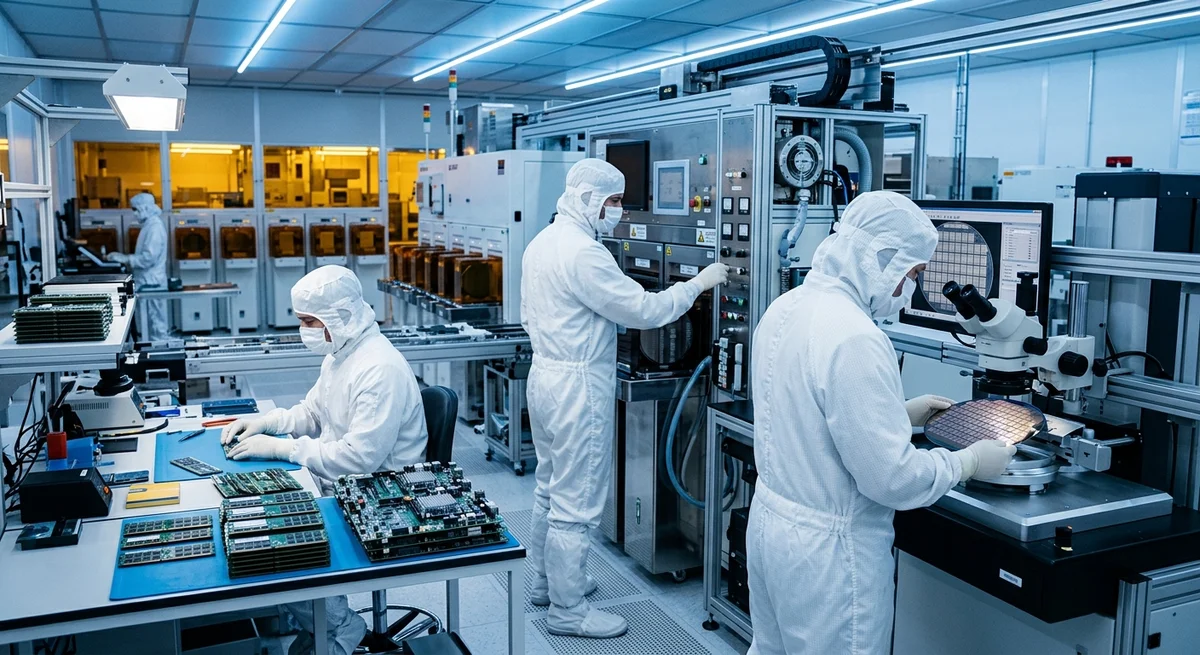
The memory market is entering a long stretch of shortages. Even as DRAM output grows, manufacturers will be able to cover only about 60 percent of demand by the end of 2027, according to Nikkei Asia. SK Group's leadership concedes that the strain could last even longer, possibly until 2030.
Why supply can't keep up
The problem isn't that manufacturers are sitting idle. Demand is simply climbing faster than the industry can build new capacity. Memory goes not only into smartphones, laptops and general-purpose servers, but also into the infrastructure that runs AI services. As the race for compute heats up, chipmakers are shifting investment and production lines, which puts extra pressure on the DRAM market.
Nikkei Asia reports that to balance supply and demand, the industry would need to grow output by roughly 12 percent a year in 2026 and 2027. That's a steep pace even for semiconductors, where bringing new capacity online takes years, costs billions, and depends on a complex supply chain of equipment, materials and skilled workers.
The industry's own inertia makes things worse. Too much time passes between project approval, construction, line tuning and stable volume production. So the market may be seeing new announcements today without getting any real relief in the coming quarters.
When the new capacity arrives
The biggest memory makers — Samsung, SK Hynix and Micron — are already expanding their fabs. But nearly all significant capacity gains won't arrive before 2027, and some projects won't come online until 2028. That means the market will spend at least several more years in a state where new orders arrive faster than new production lines can switch on. There's no quick turnaround in sight. That is the key lag for the market.
The picture for 2026 looks especially tight. According to the report, SK Hynix is the only one of the three leaders to have added a new plant: its fab in Cheongju opened in February. For a market this large, a single site is clearly not enough if demand keeps growing at its current pace. That's why even splashy investment announcements don't fix the problem right away: too much time passes between the plan, construction and actual volume output.
Who will feel the shortage
A memory shortage doesn't mean devices will vanish from shelves tomorrow, but it makes the market far more jittery and less predictable. For companies that depend on servers and accelerators for AI, it adds risk around timelines, costs and the availability of the configurations they need. The closer a project is to scaling, the harder memory constraints and long delivery cycles hit it. That's especially true where memory can't easily be swapped out.
- Server and data center builders will have to reserve memory supply further in advance.
- AI companies will find it harder to scale infrastructure quickly as workloads grow.
- Electronics assemblers will face stricter allocation of components across segments.
- Large customers will gain an edge over smaller players in supply negotiations.
- Any delay in new fabs could extend the shortage even further.
The forecast horizon is a separate concern. If the market really can meet only about 60 percent of demand by the end of 2027, this isn't a brief disruption after one bad quarter but a structural gap between consumption and production. Against that backdrop, the SK Group chairman's warning about a possible shortage lasting until 2030 no longer sounds like an emotional caution, but like a scenario the market has to factor into its planning.
What it means
The AI boom is increasingly affecting the basic building blocks of the computing industry. If the DRAM forecasts come true, memory will become one of the main constraints on growth for data centers, cloud services and parts of the electronics market, and the winners will be those who lock in capacity and contracts early. For the rest of the market, the signal is clear: the memory shortage is no longer a temporary anomaly. It is already becoming a strategic factor for years to come.
Key Questions Answered
Why supply can't keep up?
The problem isn't that manufacturers are sitting idle. Demand is simply climbing faster than the industry can build new capacity. Memory goes not only into smartphones, laptops and general-purpose servers, but also into the infrastructure that runs AI services. As the race for compute heats up, chipmakers are shifting investment and production lines, which puts extra pressure on the DRAM market. Nikkei Asia reports that to balance supply and demand, the industry would need to grow output by roughly 12 percent a year in 2026 and 2027. That's a steep pace even for semiconduct
When the new capacity arrives?
The biggest memory makers — Samsung, SK Hynix and Micron — are already expanding their fabs. But nearly all significant capacity gains won't arrive before 2027, and some projects won't come online until 2028. That means the market will spend at least several more years in a state where new orders arrive faster than new production lines can switch on. There's no quick turnaround in sight. That is the key lag for the market. The picture for 2026 looks especially tight. According to the report, SK Hynix is the only one of the three leaders to have added a new plant: its fab in
Who will feel the shortage?
A memory shortage doesn't mean devices will vanish from shelves tomorrow, but it makes the market far more jittery and less predictable. For companies that depend on servers and accelerators for AI, it adds risk around timelines, costs and the availability of the configurations they need. The closer a project is to scaling, the harder memory constraints and long delivery cycles hit it. That's especially true where memory can't easily be swapped out. Server and data center builders will have to reserve memory supply further in advance. AI companies will find it harder to sca
Ship AI Faster with Founders, Engineers & Weekly Architecture Reviews
Inside Vibe Club (hamidun.com/club) — weekly live masterminds with Zhemal Khamidun, Tech Radar, full LMS access, and 370+ production Claude Code skills.
The AI world, distilled — once a week
Seven stories that actually mattered, hand-picked. No noise, no reposts, no press releases.
Done! Check your inbox for a confirmation.