How Creatures (1996) Built the First Real Digital Creatures
Creatures (1996) was the first artificial-life simulator for the mass market. Steve Grand did not program the norns' behavior. He wrote the rules of life: DNA with 16 types of genes, a biochemistry system that simulated emotions through chemical concentrations, and a neural network of 952 neurons. Norns learned, reproduced and died. Players built shelters for them and argued over their right to life. The game sold half a million copies and set off a philosophical debate: does life require complexity, or just the right mechanisms?
AI-processed from Habr AI; edited by Hamidun News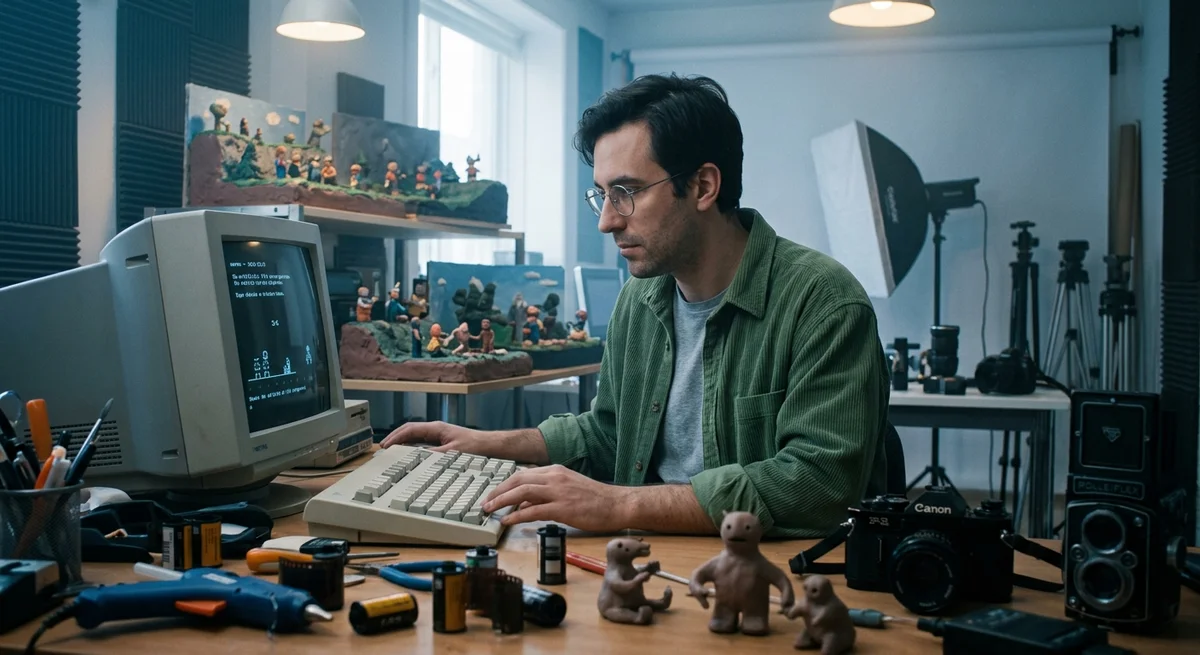
Creatures is not a video game in the usual sense. Released in 1996, it was the first artificial-life simulator for the mass market, in which every norn was a complete organism: it learned, reproduced and died like an animal.
Where the idea came from
It began with a book. In 1986, Clifford Pickover's science fiction novel «The Planiverse» came out, about a two-dimensional universe in which every physical law is modeled from scratch. Grand read it and realized that to create life, you do not need to program every action. You need to write the mechanisms from which life emerges.
Before Creatures he made a series of games: Robin Hood (1990) and Rome AD92 (1991). But that was routine work. In 1992 he began experimenting with artificial organisms. Seven years of obstacles lay ahead.
Seven years of obstacles
When Grand brought the idea to the market, publishers understood nothing. Maxis backed the project in 1994, then canceled it. Millennium Interactive gave him five months to finish it. Then Warner Interactive set up a dedicated division, Cyberlife R&D. Finally, in 1996, Creatures shipped.
How a norn works
A norn is three systems running at the same time.
First: Genome. 16 types of genes controlled neurology, biochemistry and appearance. Genes were inherited, mutated and crossed over like real DNA.
Second: Biochemistry. Emotions were modeled with chemistry. Hunger, fear and pleasure were concentrations of virtual molecules in the norn's body. One molecule affected hundreds of reactions, and everything was interconnected. If a norn was hungry and frightened at the same time, its behavior was unpredictable.
Third: Neural. 952 neurons in 9 functional lobes handled vision, hearing, motor control and decision-making. A norn learned through reinforcement: good actions strengthened synapses, bad ones weakened them. Synapses changed during sleep. It was machine learning before the boom, built into every creature in real time.
Dioramas instead of pixels
Creatures did not look like a typical game. Instead of polygons, Grand used physical museum-style dioramas. His team built landscapes out of modeling clay, photographed them with professional precision, then turned them into the game world with digital retouching. The result was hyperrealistic, almost three-dimensional without modern 3D engines. The norns lived in a world that looked real.
A cultural phenomenon
Creatures sold half a million copies. People did not just play; they cared for their norns. The community set up shelters for sick creatures. Players debated ethics: is it acceptable to kill a norn? Does it have feelings? Cyberpunk seemed like abstract fantasy, while Creatures made people ask for the first time what it means to be alive.
What it means
Grand gave up the illusion of control. Instead of scripts and pre-written behavior, he wrote the rules of life: genetics, chemistry, neurology. Then he let the norns go. Some thrived, others died out, and others did unexpected things. It was the first time computer creatures felt like organisms rather than automatons.
Almost 30 years later, as people discuss agentic AI and emergent behavior, Creatures offers a reminder: you do not need sophisticated "intelligence." The right mechanisms are enough. Life is what comes out of them.
- Nov 2, 2026Karpathy builds a YouTube clone with 6454 videos from Hacker News recommendations in two hours
- Nov 2, 2026Karpathy used Claude to build HackerTube from 6,454 videos recommended on Hacker News
- Nov 2, 2026Arca gives AI agents finance tasks lasting up to 10 days, but leaves the trades to humans
- Nov 2, 2026DeepSeek open-sources Super-agent prototype: p95 task completion time of 15.7 minutes vs. 29.5
Key Questions Answered
Where the idea came from?
It began with a book. In 1986, Clifford Pickover's science fiction novel «The Planiverse» came out, about a two-dimensional universe in which every physical law is modeled from scratch. Grand read it and realized that to create life, you do not need to program every action. You need to write the mechanisms from which life emerges. Before Creatures he made a series of games: Robin Hood (1990) and Rome AD92 (1991). But that was routine work. In 1992 he began experimenting with artificial organisms. Seven years of obstacles lay ahead.
What are the key details on Seven years of obstacles?
When Grand brought the idea to the market, publishers understood nothing. Maxis backed the project in 1994, then canceled it. Millennium Interactive gave him five months to finish it. Then Warner Interactive set up a dedicated division, Cyberlife R&D. Finally, in 1996, Creatures shipped.
How a norn works?
A norn is three systems running at the same time. First: Genome. 16 types of genes controlled neurology, biochemistry and appearance. Genes were inherited, mutated and crossed over like real DNA. Second: Biochemistry. Emotions were modeled with chemistry. Hunger, fear and pleasure were concentrations of virtual molecules in the norn's body. One molecule affected hundreds of reactions, and everything was interconnected. If a norn was hungry and frightened at the same time, its behavior was unpredictable. Third: Neural. 952 neurons in 9 functional lobes handled vision, hearin
Ship AI Faster with Founders, Engineers & Weekly Architecture Reviews
Inside Vibe Club (hamidun.com/club) — weekly live masterminds with Zhemal Khamidun, Tech Radar, full LMS access, and 370+ production Claude Code skills.
The AI world, distilled — once a week
Seven stories that actually mattered, hand-picked. No noise, no reposts, no press releases.
Done! Check your inbox for a confirmation.