OpenAI Prism: Writing Scientific Papers Without the Pain (and Without Overleaf)
OpenAI has launched Prism, a specialized environment for writing scientific papers. It is a direct challenge to Overleaf and traditional academic typesetting. Prism combines the o1 and GPT-4o models with a full LaTeX editor, automatic citation management and fact-checking against scientific databases. While researchers have spent hours debugging formulas, OpenAI built a system that does it in real time. The key question: will there be room for traditional publishing tools in a world where AI understands the structure of a dissertation better than a graduate student does?
AI-processed from Jiqizhixin (机器之心); edited by Hamidun News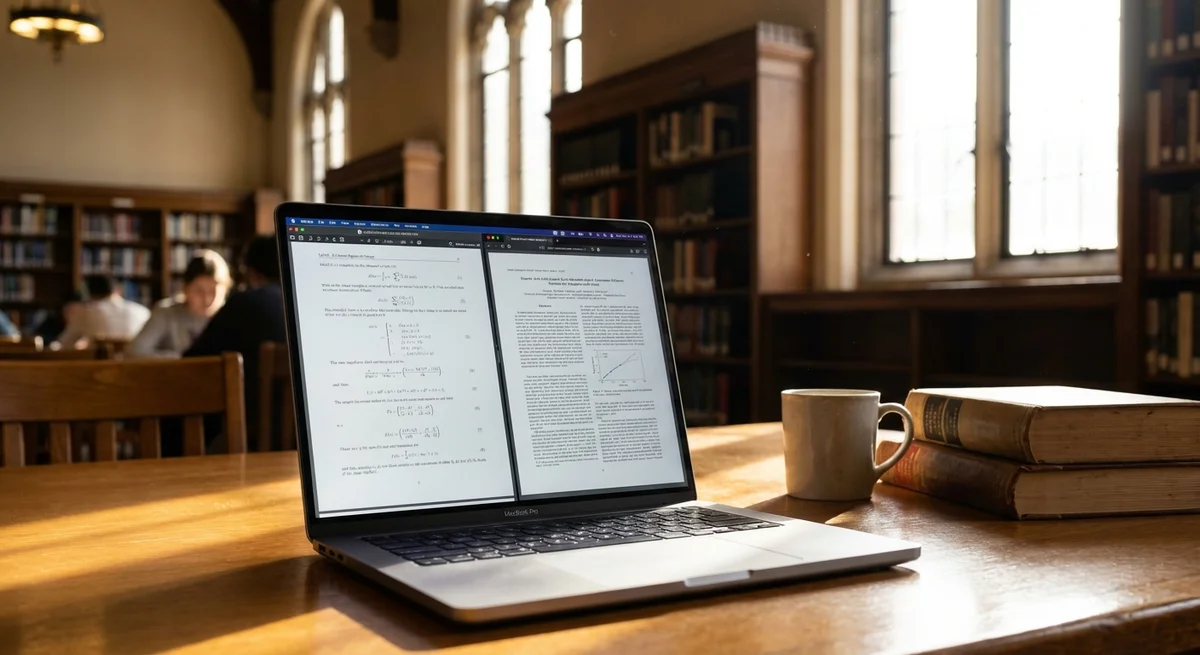
For a long time, the academic world remained a conservative bastion ruled by complex typesetting systems and clunky citation managers. OpenAI has decided it is time to end the era in which scientists spend 40% of their time formatting text instead of doing research. The launch of Prism marks the company's shift from building general-purpose chatbots to releasing narrowly specialized professional tools. It is not just another chat window, but a full integrated development environment (IDE) for science, and it threatens the years-long dominance of Overleaf and similar services.
The conflict between AI and science goes back to the first versions of GPT, when students and professors tried to get the model to write papers. But the main problems always remained: hallucinations and the inability to handle complex LaTeX markup. Prism tackles these problems at a fundamental level. The system does not just generate text. It understands the structure of a scientific document, automatically matches references against real databases and suggests ways to visualize data. OpenAI has built its most powerful reasoning models into the Prism engine, which lets the AI check the logical coherence of the argumentation within a paper.
What has actually changed for the end user? Imagine no longer having to write out every formula by hand or make sure that reference numbers in the text match the bibliography. Prism takes over all the formatting routine. It also offers an intelligent co-authoring feature. You can sketch out your main theses or attach a set of raw data, and the system will propose a structure for the "Methodology" or "Results" section, based on the standards of leading journals such as Nature or Science. This significantly lowers the barrier to entry for young researchers, for whom LaTeX has always been something of an "endurance exam."
Why does this matter right now? The scientific publishing industry is going through a crisis of trust and content overproduction. Prism could make the situation worse by flooding journals with "synthetic" papers, or it could save it by freeing real scientists' time for deep thinking. OpenAI is clearly betting on the second outcome, building source verification mechanisms directly into the editor interface. Now, if the model tries to cite a nonexistent work, the system flags it as an error before the text ever reaches a reviewer. This is an important step toward responsible use of AI in serious disciplines.
Competitors like Overleaf will have a very hard time. For a long time they felt safe as the only convenient cloud solution for collaborating on LaTeX files. But Prism offers not just a "cloud" but a "brain." If Overleaf is a typewriter with an internet connection, Prism is an experienced scientific editor sitting next to you 24/7. Given OpenAI's enormous computing resources and access to the newest models of the o1 series, catching up with it on functionality will be practically impossible. Most likely, we will see a mass exodus of academic groups to the new platform within the next few months.
The bottom line: OpenAI has begun capturing vertical markets, and science is the first target. Will the academic community be able to maintain quality standards when writing a paper turns into a dialogue with a machine?
- Nov 2, 2026Arca gives AI agents finance tasks lasting up to 10 days, but leaves the trades to humans
- Nov 2, 2026Meta's Muse assistant keeps dossiers on loved ones and gets root on Ubuntu by default
- Nov 1, 2026Local models lose to Opus and Codex: 0.21 on a MacBook versus 1.00 for Codex
- Nov 1, 2026Kimi scores 96.2% on a 1C database analytics test and emerges as a fallback if Claude access is blocked
Test Frontier LLMs & Autonomous Agents in One Workspace
Run Claude Opus 5.5, GPT-6, Gemini 3.1, and DeepSeek side-by-side in Nomad AI (nomadnet.ai) — unified model routing, deep research, and multimodal workflows under one subscription.
The AI world, distilled — once a week
Seven stories that actually mattered, hand-picked. No noise, no reposts, no press releases.
Done! Check your inbox for a confirmation.