Mass Pushback: Why AI Data Centers Are Becoming the Enemy of Local Communities
AI data centers require extreme amounts of electricity and cooling water. Local communities are protesting: new facilities threaten residents' infrastructure and resources. The AI industry calls the opposition "discrimination," but critics point out that real people are the ones left without power and water.
AI-processed from Guardian; edited by Hamidun News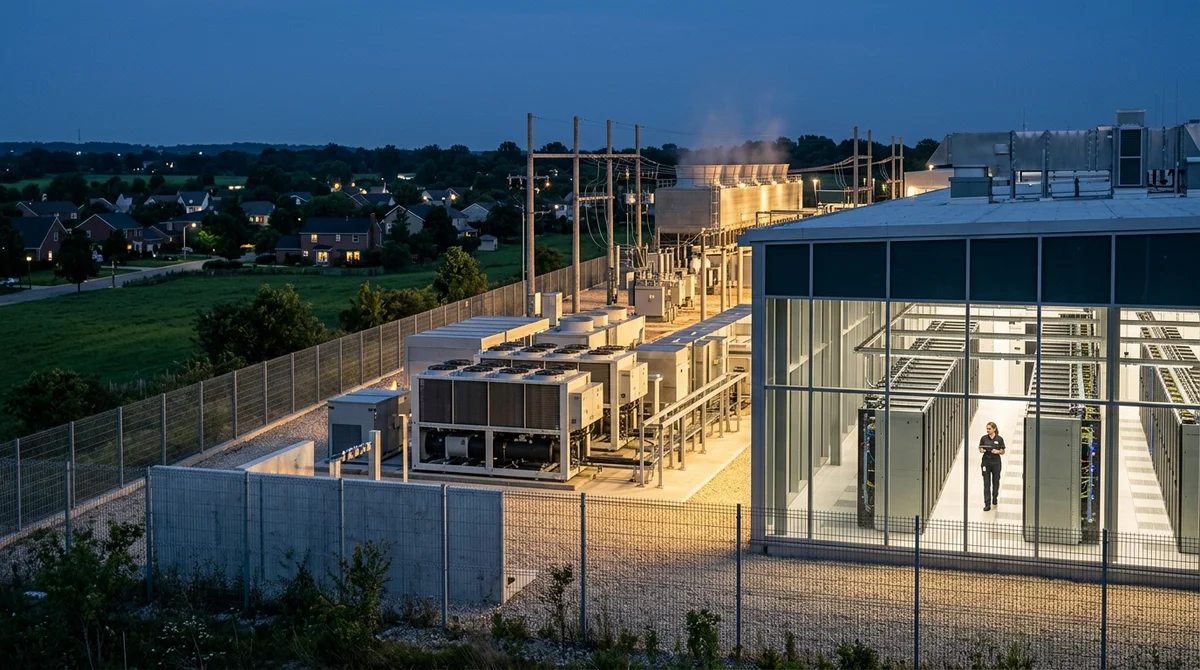
Data centers for artificial intelligence are becoming a new front in the conflict between a growing industry and local communities. They demand astronomical amounts of electricity and water, diverting resources from the needs of ordinary residents.
An Astonishing Scale
A single modern data center can consume as much electricity as a city of 100,000 people. Cooling the servers takes millions of liters of water a day, often in regions already short on fresh water.
These are not just numbers. In Texas and Iowa, residents already face summer power outages, and farmers cannot irrigate their fields.
A Wave of Local Resistance
Neighborhood councils, authorities and activists have all joined the fight. In some areas, data center projects are being blocked at the planning stage. Residents put it simply: you are taking our resources for your servers while we pay inflated electricity rates.
Tech companies are facing real resistance. This is not an abstract debate about progress. These are real people who do not want their water going to cool AI.
"If they want AI for everyone, let them be the first to build these
centers on their own land"
What the Industry Says
Tech companies call the local resistance "discrimination." Their main arguments:
- Data centers create jobs in the region
- They pay taxes and bring investment
- AI is being developed for all of humanity, not only for local residents
- The companies supposedly are improving energy efficiency
But critics see wordplay here. The jobs number in the dozens, while electricity consumption runs to millions of kilowatt-hours. Taxes look like small change next to the damage to infrastructure and quality of life.
What This Means
The conflict between the AI industry and local communities is only intensifying. If companies want to build data centers, they must take responsibility: invest in expanding power grids, switch to renewable sources and compensate residents. Otherwise the resistance will grow, and data centers will land at the center of a heated political debate about whom AI really serves.
Key Questions Answered
What are the key details on An Astonishing Scale?
A single modern data center can consume as much electricity as a city of 100,000 people. Cooling the servers takes millions of liters of water a day, often in regions already short on fresh water. These are not just numbers. In Texas and Iowa, residents already face summer power outages, and farmers cannot irrigate their fields.
What are the key details on A Wave of Local Resistance?
Neighborhood councils, authorities and activists have all joined the fight. In some areas, data center projects are being blocked at the planning stage. Residents put it simply: you are taking our resources for your servers while we pay inflated electricity rates. Tech companies are facing real resistance. This is not an abstract debate about progress. These are real people who do not want their water going to cool AI. "If they want AI for everyone, let them be the first to build these centers on their own land"
What the Industry Says?
Tech companies call the local resistance "discrimination." Their main arguments: Data centers create jobs in the region They pay taxes and bring investment AI is being developed for all of humanity, not only for local residents The companies supposedly are improving energy efficiency But critics see wordplay here. The jobs number in the dozens, while electricity consumption runs to millions of kilowatt-hours. Taxes look like small change next to the damage to infrastructure and quality of life.
Test Frontier LLMs & Autonomous Agents in One Workspace
Run Claude Opus 5.5, GPT-6, Gemini 3.1, and DeepSeek side-by-side in Nomad AI (nomadnet.ai) — unified model routing, deep research, and multimodal workflows under one subscription.
The AI world, distilled — once a week
Seven stories that actually mattered, hand-picked. No noise, no reposts, no press releases.
Done! Check your inbox for a confirmation.