Sony defends Xperia camera AI assistant after criticism of weak sample shots
Sony drew criticism for the weak sample images of the AI Camera Assistant in the Xperia 1 XIII. The company says it is not automatic photo editing but a system of intelligent suggestions. The assistant analyzes lighting, scene depth and the subject, then offers four adjustment options covering exposure, color and background blur. Sony also says the feature suggests the best camera angle, although the demo video showed only a zoom.
AI-processed from The Verge; edited by Hamidun News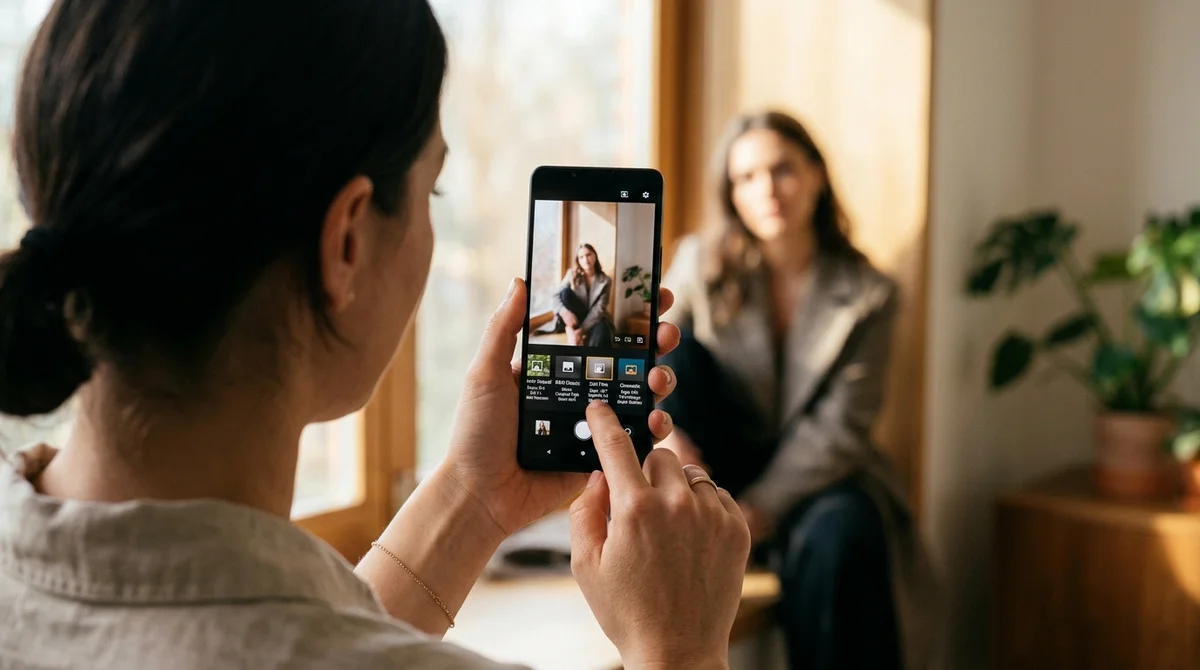

Sony has unveiled the AI Camera Assistant for the Xperia 1 XIII, promising smart suggestions while you shoot. But the first published examples drew sharp criticism for poor results. Now the company is trying to reframe its pitch and explain what the feature actually does.
How the camera assistant works
AI Camera Assistant does not edit finished photos. It is a suggestion system that works before you press the shutter. The assistant analyzes the scene using three main parameters: lighting, scene depth and the type of subject. Based on that analysis, the system offers four ready-made presets.
Each option includes recommended values for exposure, color balance and background blur (bokeh). The idea is to give the user a quick choice of optimal settings instead of tedious manual tuning of each value separately.
According to Sony, the system is especially useful in difficult lighting, for example when shooting in contrasty light or in a closed room with uneven illumination.
- Analysis of lighting in the frame
- Detection of scene depth and distance to the subject
- Recognition of the subject type (portrait, landscape, macro)
- Generation of four alternative presets
- Parameter selection without the need for manual tuning
Words and reality diverge
In its official product video, Sony claims the AI will also suggest the "most photogenic angle" for a shot. But the video shows only a zoom function, which has nothing to do with choosing the best camera angle. This gap between big promises and the functionality actually shown rightly drew criticism from tech outlets.
Even more criticism landed on the examples Sony itself posted on X (Twitter). All four options suggested by the AI assistant looked equally poor: none clearly looked better than the others or suited the shooting situation more. That gave the impression that the feature simply does not work as the marketing materials describe.
Where it stands among competitors
Using AI to suggest shooting settings is long past new in the industry. Samsung, Apple and other manufacturers have already built similar systems into their flagship models. Sony is trying to position its approach as more advanced thanks to a more comprehensive analysis of more parameters and the use of its own neural networks.
However, the market has become noticeably more critical of "AI solutions," especially when marketing promises clearly do not match real results. Sony will have to do more than explain the feature again and again to journalists and critics: it must also demonstrate its effectiveness in real-world photography.
"This is a suggestion system, not automatic photo editing," the company tried to clarify after the wave of criticism.
What this means
The AI Camera Assistant episode shows how critical today's users are of manufacturers' claims. Even with an honest explanation of the functionality, the first impression left by poor examples proved decisive for public perception. The gap between the marketing promise of a "photogenic angle" and reality (only a zoom) bred skepticism toward the product.
For Sony, this means it needs to do more than explain what AI Camera Assistant is: it must actively demonstrate its practical value through convincing real-world photos. Rebuilding trust in the feature will be harder than grabbing attention with big promises in the first place. The problem is that the first impression has already formed, and changing skeptics' minds will not be easy.
- Nov 2, 2026TensorFold 1.2.0 boosts Qwen3.8-27B throughput on M3 Ultra by 44.2% at 16 streams
- Nov 1, 2026Local models lose to Opus and Codex: 0.21 on a MacBook versus 1.00 for Codex
- Oct 29, 2026Claude Code Edits Video From a Transcript: How the video-use Skill With 30 000 Stars Works
- Oct 29, 2026Stanford AI tool verifies part of Signal's code in half a day for under $500, versus five months of expert work
Key Questions Answered
How the camera assistant works?
AI Camera Assistant does not edit finished photos. It is a suggestion system that works before you press the shutter. The assistant analyzes the scene using three main parameters: lighting, scene depth and the type of subject. Based on that analysis, the system offers four ready-made presets. Each option includes recommended values for exposure, color balance and background blur (bokeh). The idea is to give the user a quick choice of optimal settings instead of tedious manual tuning of each value separately.
What are the key details on Words and reality diverge?
In its official product video, Sony claims the AI will also suggest the "most photogenic angle" for a shot. But the video shows only a zoom function, which has nothing to do with choosing the best camera angle. This gap between big promises and the functionality actually shown rightly drew criticism from tech outlets. Even more criticism landed on the examples Sony itself posted on X (Twitter).
Where it stands among competitors?
Using AI to suggest shooting settings is long past new in the industry. Samsung, Apple and other manufacturers have already built similar systems into their flagship models. Sony is trying to position its approach as more advanced thanks to a more comprehensive analysis of more parameters and the use of its own neural networks. However, the market has become noticeably more critical of "AI solutions," especially when marketing promises clearly do not match real results.
Test Frontier LLMs & Autonomous Agents in One Workspace
Run Claude Opus 5.5, GPT-6, Gemini 3.1, and DeepSeek side-by-side in Nomad AI (nomadnet.ai) — unified model routing, deep research, and multimodal workflows under one subscription.
The AI world, distilled — once a week
Seven stories that actually mattered, hand-picked. No noise, no reposts, no press releases.
Done! Check your inbox for a confirmation.