Apple is building AirPods with cameras for Siri: what to know
Apple is developing AirPods Pro with built-in cameras for its AI assistant. The earbuds can analyze low-resolution visual information and help users through Siri. Example uses: suggesting a recipe based on the ingredients in front of you, giving step-by-step navigation, or answering a question about what you are looking at. Prototypes are already being actively tested, and the device is nearing the mass-production stage.
AI-processed from The Verge; edited by Hamidun News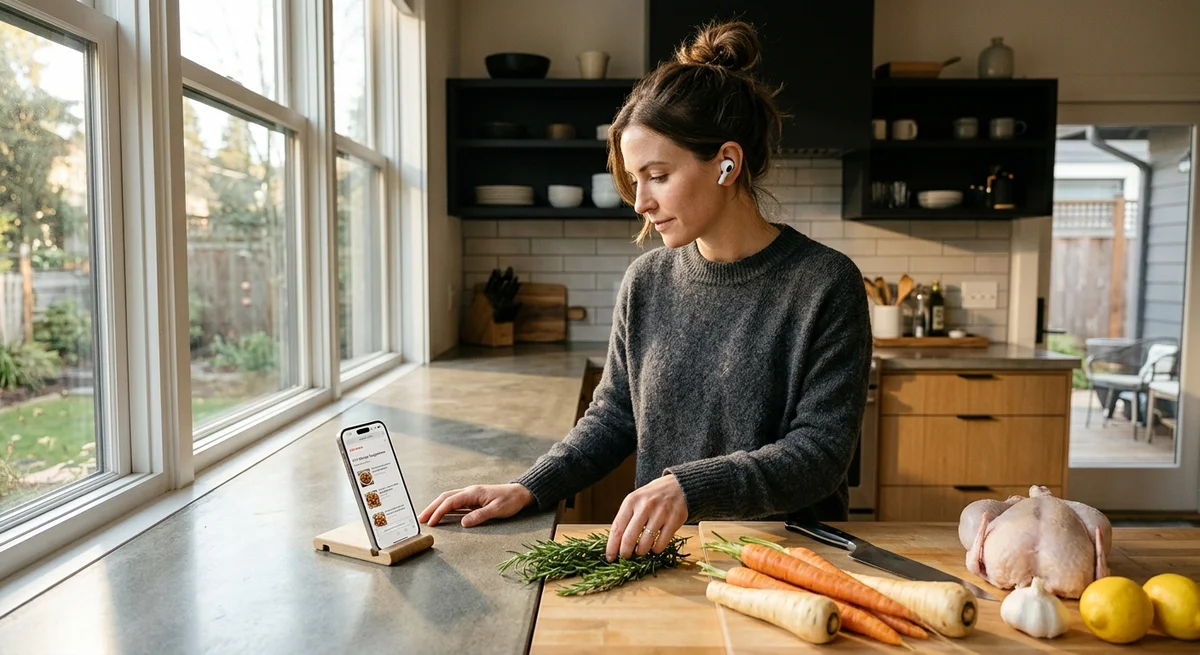
Apple is developing AirPods Pro with integrated cameras that will work together with Siri. According to Mark Gurman of Bloomberg, the device has already passed an important testing stage and will soon move into production.
How the cameras will work
The cameras in AirPods are not designed for taking photos or video, and Apple stresses this point separately. Instead, they capture low-resolution visual information that the user can analyze through Siri. This lets the earbuds act as eyes for artificial intelligence: seeing what the user sees and helping in real time.
The cameras will be positioned so they can capture what is in front of the wearer's face. Thanks to the low resolution and on-device processing (with nothing sent to servers), the technology should not raise serious privacy concerns. That matters, because adding cameras to personal devices always raises questions about the security and confidentiality of user data.
Practical uses
Here is how Apple envisions using the cameras in AirPods:
- Recipes and cooking — ask Siri what to make from the ingredients you see on the table
- Navigation and guidance — get step-by-step directions when finding your way around an unfamiliar place
- Object recognition — get information about what you see around you
- Help with work and creative tasks — from finding the right product in a store to working through details in a technical manual
- Support in everyday tasks — text recognition, contextual information about objects
This moves AI out of the abstract realm of text and into visual perception, where Siri can genuinely help a person in their immediate surroundings. Instead of describing a problem in words, the user simply shows it to the earbuds.
When it will happen
Prototypes of AirPods with cameras are at the design validation test (DVT) stage, the second-to-last phase before mass production. After DVT comes the production validation test (PVT), and only then a full release. Apple testers are "actively using" the prototypes, which suggests the technology is quite ready for real-world trials.
The full market launch is expected no earlier than 2027, but Apple's engineers are clearly in a hurry to get the project over the line. This indicates that Apple sees cameras in earbuds as an important part of its AI assistant strategy and views this direction as the future of personal gadgets. In parallel, the company is also developing Vision Pro, so the ecosystem may become more multimodal.
What it means
Cameras in AirPods are a more practical approach to spatial AI than glasses-style devices like Vision Pro. Most users already wear earbuds, and adding cameras requires no extra hardware. If Apple gets privacy right and makes the features genuinely useful, this could be the next big step for AI assistants. Together with Vision Pro, it could create an ecosystem in which AI sees and hears the user in different contexts.
- Nov 1, 2026Local models lose to Opus and Codex: 0.21 on a MacBook versus 1.00 for Codex
- Oct 29, 2026Claude Code Edits Video From a Transcript: How the video-use Skill With 30 000 Stars Works
- Oct 29, 2026Stanford AI tool verifies part of Signal's code in half a day for under $500, versus five months of expert work
- Oct 29, 2026Liquid AI releases LFM3: six multimodal 2B models with a 256K context window
Key Questions Answered
How the cameras will work?
The cameras in AirPods are not designed for taking photos or video, and Apple stresses this point separately. Instead, they capture low-resolution visual information that the user can analyze through Siri. This lets the earbuds act as eyes for artificial intelligence: seeing what the user sees and helping in real time. The cameras will be positioned so they can capture what is in front of the wearer's face. Thanks to the low resolution and on-device processing (with nothing sent to servers), the technology should not raise serious privacy concerns. That matters, because add
What are the key details on Practical uses?
Here is how Apple envisions using the cameras in AirPods: Recipes and cooking — ask Siri what to make from the ingredients you see on the table Navigation and guidance — get step-by-step directions when finding your way around an unfamiliar place Object recognition — get information about what you see around you Help with work and creative tasks — from finding the right product in a store to working through details in a technical manual Support in everyday tasks — text recognition, contextual information about objects This moves AI out of the abstract realm of text and into
When it will happen?
Prototypes of AirPods with cameras are at the design validation test (DVT) stage, the second-to-last phase before mass production. After DVT comes the production validation test (PVT), and only then a full release. Apple testers are "actively using" the prototypes, which suggests the technology is quite ready for real-world trials. The full market launch is expected no earlier than 2027, but Apple's engineers are clearly in a hurry to get the project over the line. This indicates that Apple sees cameras in earbuds as an important part of its AI assistant strategy and views
Test Frontier LLMs & Autonomous Agents in One Workspace
Run Claude Opus 5.5, GPT-6, Gemini 3.1, and DeepSeek side-by-side in Nomad AI (nomadnet.ai) — unified model routing, deep research, and multimodal workflows under one subscription.
The AI world, distilled — once a week
Seven stories that actually mattered, hand-picked. No noise, no reposts, no press releases.
Done! Check your inbox for a confirmation.