OpenAI Is Building Its Own Smartphone for a 2027 Launch
OpenAI is preparing its own smartphone instead of the Jony Ive gadget. According to analyst Ming-Chi Kuo, the company is fast-tracking development and plans to start mass production in early 2027. The key feature is a custom MediaTek Dimensity 9600 chip with enhanced photo processing.
AI-processed from The Verge; edited by Hamidun News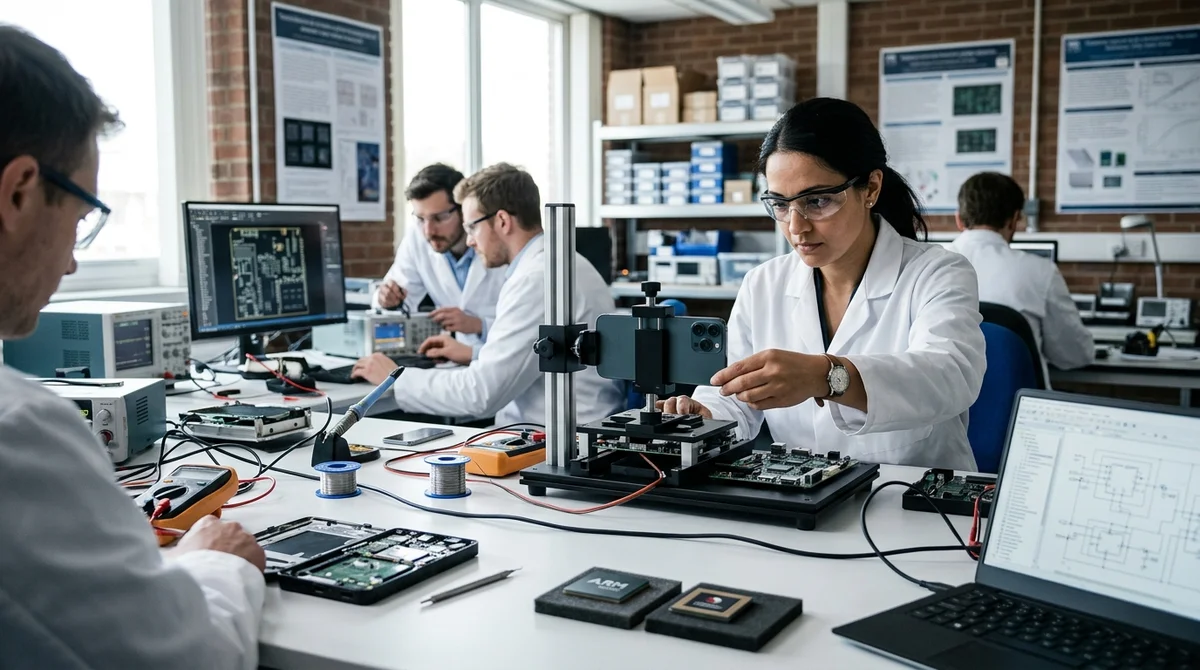
Instead of the mysterious gadget designer Jony Ive has been working on, OpenAI plans to release its own smartphone. The news comes from well-known supply chain analyst Ming-Chi Kuo, whose hardware predictions usually prove accurate.
When it launches and what powers it
OpenAI is fast-tracking development of the smartphone and plans to start mass production in early 2027. The device will run on a custom version of the MediaTek Dimensity 9600, a processor that comes out this fall and already powers flagships such as the Vivo X300 Pro and Oppo Find X9 Pro.
The standout component in OpenAI's phone, however, won't be the processor itself but its image signal processor, a dedicated block for handling photos and video. Here, MediaTek will add "enhanced HDR", an improved technology for shooting in difficult lighting, when the frame contains both bright and dark areas at once.
Why cameras and AI
For an AI-focused smartphone, strong image processing is critical. If OpenAI builds ChatGPT into the phone, the camera will become one of the main ways to interact with the model. A user shows a photo, a video, or a picture of a document, and the AI answers or completes the task on the spot.
That's why MediaTek's enhanced ISP matters so much to OpenAI:
- Recognizing text in documents and tables
- Analyzing photos to answer user questions
- Watching video and describing what's happening in it
- Processing all of this in real time, directly on the device
AI companies compete for hardware
Google has long integrated Gemini into its Pixel smartphones, and Apple is rolling out Apple Intelligence. OpenAI trails both on hardware but is clearly rushing to catch up.
Until now, it looked as if Jony Ive was working on something revolutionary: a vaguely defined gadget that would rethink how people interact with AI. Now it turns out it's just a smartphone.
What it means
OpenAI's smartphone signals that AI companies no longer want to depend entirely on Android and iOS. They are building their own ecosystems, with the AI model embedded at the OS and hardware level.
Whether this marks the start of a real war among AI makers for control over hardware and software, we'll find out in 2027.
- Nov 1, 2026OpenAI Rewrites GPT Behavior Rules: Five Values and a Chain of Command
- Nov 1, 2026Google admits AI Mode cuts search revenue, shares fall 15%
- Oct 31, 2026Author puts his script before an AI jury: the verdict cost 850 thousand tokens
- Oct 31, 2026Anthropic: Fold Subagents Back Into a Single Loop — One Customer's Tasks Ran Twice as Fast
Key Questions Answered
When it launches and what powers it?
OpenAI is fast-tracking development of the smartphone and plans to start mass production in early 2027. The device will run on a custom version of the MediaTek Dimensity 9600, a processor that comes out this fall and already powers flagships such as the Vivo X300 Pro and Oppo Find X9 Pro. The standout component in OpenAI's phone, however, won't be the processor itself but its image signal processor, a dedicated block for handling photos and video. Here, MediaTek will add "enhanced HDR", an improved technology for shooting in difficult lighting, when the frame contains both
Why cameras and AI?
For an AI-focused smartphone, strong image processing is critical. If OpenAI builds ChatGPT into the phone, the camera will become one of the main ways to interact with the model. A user shows a photo, a video, or a picture of a document, and the AI answers or completes the task on the spot. That's why MediaTek's enhanced ISP matters so much to OpenAI: Recognizing text in documents and tables Analyzing photos to answer user questions Watching video and describing what's happening in it Processing all of this in real time, directly on the device
What are the key details on AI companies compete for hardware?
Google has long integrated Gemini into its Pixel smartphones, and Apple is rolling out Apple Intelligence. OpenAI trails both on hardware but is clearly rushing to catch up. Until now, it looked as if Jony Ive was working on something revolutionary: a vaguely defined gadget that would rethink how people interact with AI. Now it turns out it's just a smartphone.
Build & Ship Production AI Agents Without Boilerplate Code
Start your free 72-hour trial at Hamidun Academy (academy.hamidun.com) — interactive lessons on Claude Code & Cursor, live Tech Radar, and production agent templates.
The AI world, distilled — once a week
Seven stories that actually mattered, hand-picked. No noise, no reposts, no press releases.
Done! Check your inbox for a confirmation.