By 2027, 80% of premium smartphones will get AI agents — on Qualcomm and MediaTek chips
By 2027, 80% of premium smartphones will be equipped with AI agents — a new generation of autonomous assistants that can handle multistep tasks on their own and understand the context of the user’s actions. MediaTek (Dimensity 9400) and Qualcomm (Snapdragon 8 Elite and Snapdragon 8 Gen 5) are the first chipmakers to prepare support. On wearables, AI agents will arrive later — by 2032, a full five years later.
AI-processed from 3DNews AI; edited by Hamidun News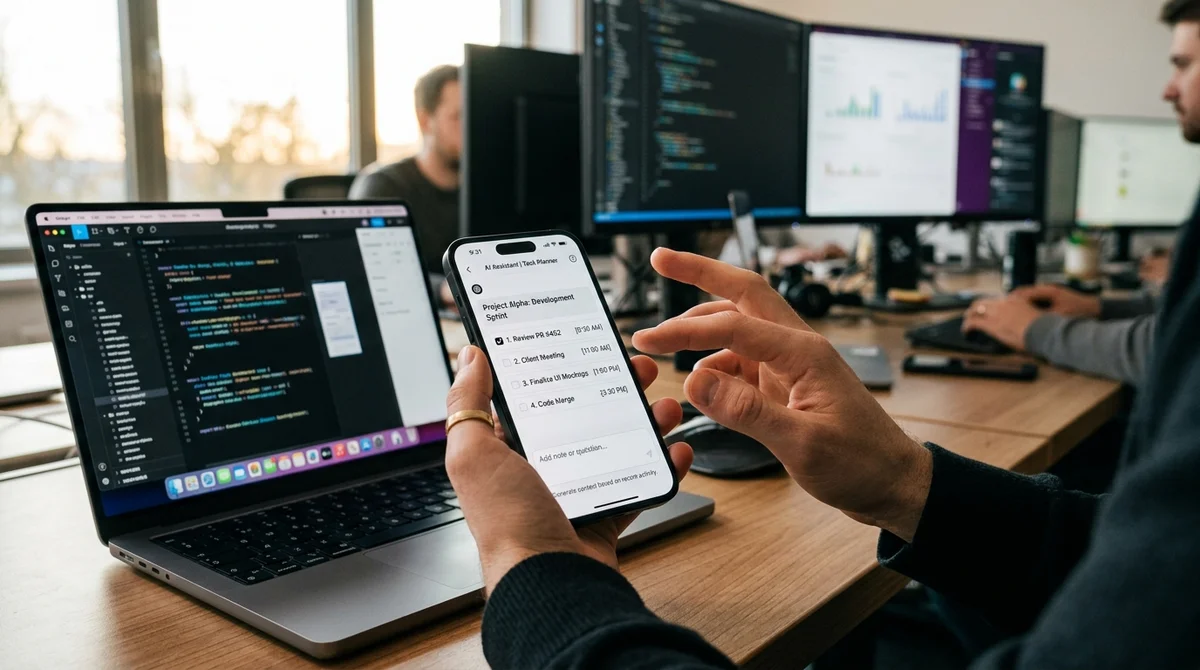
Premium smartphones will soon become more autonomous. Counterpoint Research analysts predict that by 2027, 80% of flagship models will be equipped with AI agents — autonomous assistants of a new generation that perform tasks without user intervention. This technology will appear on wearable devices later.
Four out of five will have AI agents
The majority of premium-class smartphones will receive AI agents in the coming years. This marks a rapid transition by manufacturers from traditional AI assistants like voice assistants to full-fledged autonomous agents that perform multi-step tasks without user intervention. This represents a fundamental shift in how we interact with mobile devices.
For wearable devices — smartwatches, bracelets, glasses — the forecast is different. Analysts predict that the same percentage (80%) will reach this segment only by 2032. The difference is explained by practical limitations: for agents to work fully, they require powerful energy-efficient processors and convenient interfaces adapted for small screens. This requires a separate generation of chips.
Which chips are ready
Chip manufacturers were the first to take up the baton. MediaTek presented the Dimensity 9400 — the first chip with built-in support for AI agents. Qualcomm responded immediately with two flagships: Snapdragon 8 Elite Gen 5 and Snapdragon 8 Gen 5. These processors symbolize a radical shift in the approach to artificial intelligence on mobile devices — the transition from cloud processing to local processing, where data never leaves the smartphone.
On these chips, a smartphone can run applications of a new type that:
- Make decisions based on the context of the user's actions
- Perform complex multi-step tasks autonomously
- Integrate with other applications and services on the device
- Learn the habits and preferences of the owner
- Work locally, without sending personal data to the cloud
Local execution is the key advantage. Data remains on the device, response speed increases, and privacy is guaranteed.
What is an AI agent in a smartphone
The definition is simple: it is a software agent that understands context, plans actions, makes decisions, and performs tasks on behalf of the user. Unlike current assistants, which only answer questions or suggest ready-made commands, an agent can independently open applications, click elements, fill out forms, check results, and adapt its actions to what is happening.
Example: instead of manually searching for a concert ticket, you tell the agent: "Buy tickets to a rock concert for the weekend." The agent sees what applications are available, what events are happening near you, compares prices on different platforms, selects the right option, and completes the purchase. All without your additional actions and screen taps.
What does this mean
A smartphone will no longer be just a tool for launching applications — it becomes an active assistant that saves time and cognitive resources for the user. Routine tasks that require many steps can be delegated to an application that will figure it out faster than a human.
"These processors marked the transition from ordinary AI assistants to autonomous, context-oriented AI functions," note
Counterpoint Research analysts.
For smartphone manufacturers, competition will shift from the amount of computing power to the quality of built-in AI agents. The question at stake: whose agent better understands user intentions and implements them faster. The market is entering a new phase, where the advantage will go to the one who best trains their AI.
Need AI working inside your business — not just in your newsfeed?
I build production AI for companies — custom CRM, internal tools, autonomous agents, workflow automation. Owned by you, shaped to your process, no per-seat tax. Built by Zhemal Khamidun, CPO of AlpinaGPT (AI platform, 6,000+ users).
The AI world, distilled — once a week
Seven stories that actually mattered, hand-picked. No noise, no reposts, no press releases.
Done! Check your inbox for a confirmation.