Anthropic and Elon Musk's xAI Sign a Compute Deal
Anthropic, the maker of Claude, has signed a deal with xAI to use its computing resources. It is a strange but logical move: with GPUs in critical shortage, cooperating pays better than fighting over every chip. Both companies keep their competitive edge at the algorithm level, but save billions on infrastructure.
AI-processed from Wired; edited by Hamidun News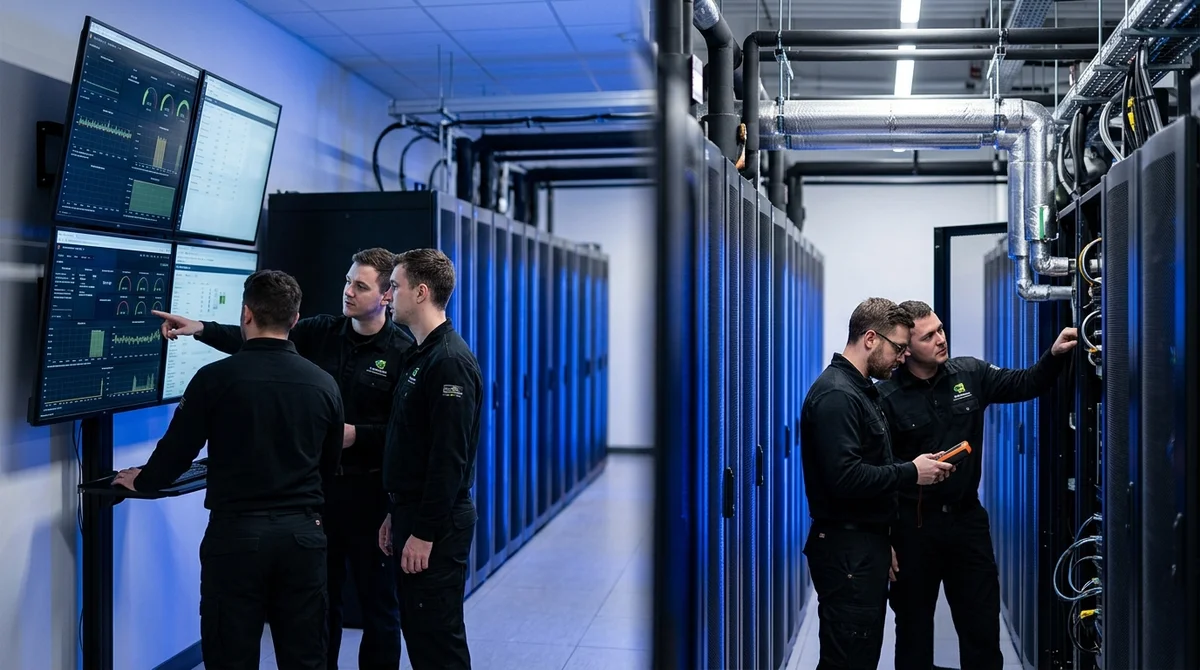
Anthropic and Elon Musk's xAI have signed an unexpected partnership to share computing resources. With the AI race in full swing, the two rivals have found a form of cooperation that may rewrite the rules of the industry and change the dynamics of AI development.
A partnership between rivals in the middle of the race
Anthropic, the team that created Claude, has struck a deal with xAI for access to computing capacity and infrastructure resources. At first glance it looks odd: both companies are after the same place in the industry, compete for the same investors and are trying to seize the market leader's position in AI.
xAI recently raised an unprecedented $6 billion in investment and has publicly said it aims to build AGI faster than OpenAI and other competitors. Anthropic is backed by Google, Amazon and Salesforce, and has raised more than $4 billion over the past year.
Still, the leadership of both companies has acknowledged the obvious: a war over computing resources is more expensive and less efficient than sensible cooperation. The deal helps both sides speed up development and save billions on infrastructure, without losing their competitive edge at the level of algorithms and the final product that users see.
A critical shortage of compute
The main reason for the partnership is an acute shortage of GPUs and specialized chips for training large language models. In 2024-2025, demand for computing power is growing exponentially, outpacing supply by a wide margin. NVIDIA cannot fill all orders even at $40 thousand per H100 GPU, and newer suppliers such as Cerebras and Graphcore are only gaining momentum and are unlikely to close the gap in the next 18-24 months.
This is not just about a lack of chips. Computing power has become more expensive than hiring people and has turned into the main bottleneck in developing new models:
- Each new-generation LLM needs exponentially more resources to train: GPT-4 required millions of GPUs and a city's worth of electricity per day
- Building a data center of the necessary scale takes 2-3 years of development and $2-5 billion in capital investment, plus a fight for access to electricity
- Cooling that many GPUs requires dedicated power infrastructure and can consume tens of megawatts of electricity
Instead of a multi-year cycle of building its own data centers, Anthropic can get immediate access to xAI's ready-made resources, saving billions and speeding up development of new versions of Claude.
A new trend in the AI industry
The deal points to a fundamental trend: competitors are ready to cooperate at the infrastructure level while fighting each other on products and research. OpenAI and Microsoft have long been allies (Azure), Google relies on its own TPUs, and Meta* hands out LLaMA on every available resource. Now Anthropic and xAI show that even direct competitors can work side by side on infrastructure without giving up their advantages in algorithms and product. This suggests we will see more such strategic alliances in the coming years.
What this means
In the new reality of the AI race, competition does not mean complete isolation. Companies will cooperate on infrastructure and data centers while competing on algorithms and products. This may lead to a healthier ecosystem in which innovation does not depend solely on the size of a wallet, and startups have equal access to resources to compete with the giants.
*Meta has been designated an extremist organization and is banned in Russia.
- Nov 1, 2026Local models lose to Opus and Codex: 0.21 on a MacBook versus 1.00 for Codex
- Nov 1, 2026Kimi scores 96.2% on a 1C database analytics test and emerges as a fallback if Claude access is blocked
- Nov 1, 2026OpenAI Rewrites GPT Behavior Rules: Five Values and a Chain of Command
- Nov 1, 2026Google admits AI Mode cuts search revenue, shares fall 15%
Key Questions Answered
What are the key details on A partnership between rivals in the middle of the race?
Anthropic, the team that created Claude, has struck a deal with xAI for access to computing capacity and infrastructure resources. At first glance it looks odd: both companies are after the same place in the industry, compete for the same investors and are trying to seize the market leader's position in AI. xAI recently raised an unprecedented $6 billion in investment and has publicly said it aims to build AGI faster than OpenAI and other competitors. Anthropic is backed by Google, Amazon and Salesforce, and has raised more than $4 billion over the past year. Still, the lea
What are the key details on A critical shortage of compute?
The main reason for the partnership is an acute shortage of GPUs and specialized chips for training large language models. In 2024-2025, demand for computing power is growing exponentially, outpacing supply by a wide margin. NVIDIA cannot fill all orders even at $40 thousand per H100 GPU, and newer suppliers such as Cerebras and Graphcore are only gaining momentum and are unlikely to close the gap in the next 18-24 months. This is not just about a lack of chips. Computing power has become more expensive than hiring people and has turned into the main bottleneck in developin
What are the key details on A new trend in the AI industry?
The deal points to a fundamental trend: competitors are ready to cooperate at the infrastructure level while fighting each other on products and research. OpenAI and Microsoft have long been allies (Azure), Google relies on its own TPUs, and Meta hands out LLaMA on every available resource. Now Anthropic and xAI show that even direct competitors can work side by side on infrastructure without giving up their advantages in algorithms and product. This suggests we will see more such strategic alliances in the coming years.
Test Frontier LLMs & Autonomous Agents in One Workspace
Run Claude Opus 5.5, GPT-6, Gemini 3.1, and DeepSeek side-by-side in Nomad AI (nomadnet.ai) — unified model routing, deep research, and multimodal workflows under one subscription.
The AI world, distilled — once a week
Seven stories that actually mattered, hand-picked. No noise, no reposts, no press releases.
Done! Check your inbox for a confirmation.