SpaceX Launches $55 Billion Terafab AI Chip Factory
Elon Musk's SpaceX is launching Terafab, an ambitious project to build its own AI chip factory in Austin, Texas. The initial investment is at least $55 billion, and it could grow to $119 billion if the project is fully built out. The factory is designed to support compute workloads on the scale of 200 gigawatts per year.
AI-processed from The Verge; edited by Hamidun News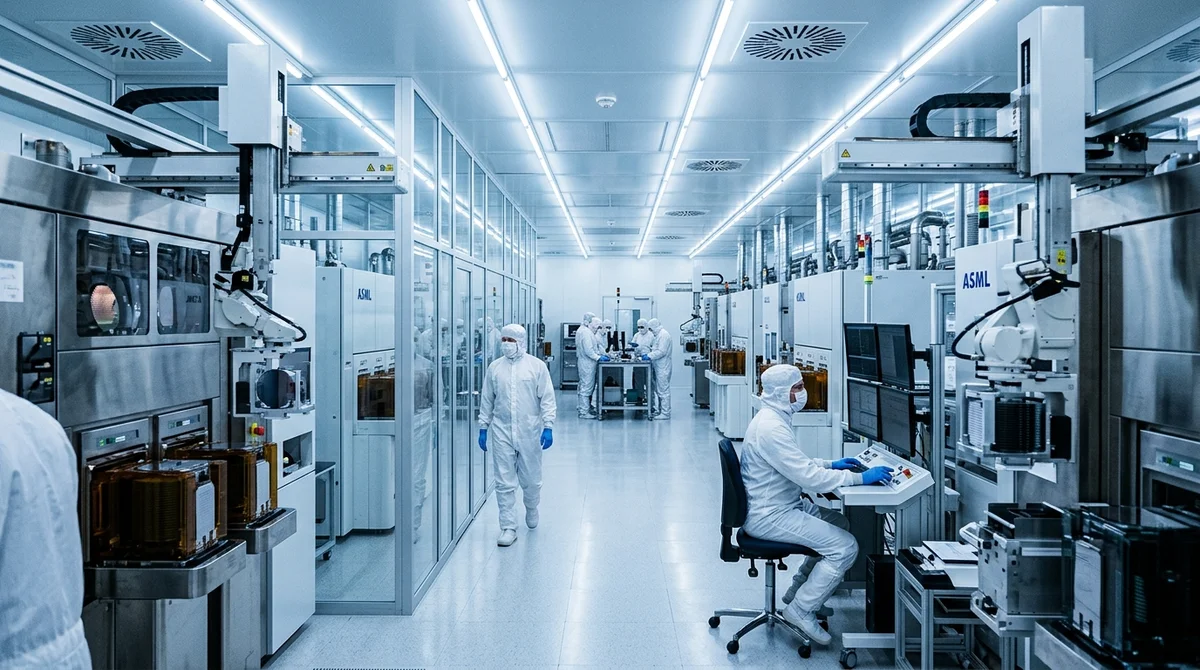
SpaceX, led by Elon Musk, is preparing one of the largest investment projects in the company's history. According to The New York Times and CNBC, SpaceX will invest at least $55 billion in building a giant AI chip factory codenamed Terafab in Austin, Texas.
The scale of the investment: more than NASA
SpaceX has filed detailed tax incentive documents in Grimes County, Texas, laying out the full scale of its ambitious project. The initial construction phase will require an investment of $55 billion. However, the company states in the filing that if all additional phases are built, the total cost of the project could reach $119 billion.
For context: NASA's entire annual budget is roughly $25 billion. SpaceX's investment in a single factory is more than double that. It is comparable to the annual GDP of many countries and shows how seriously Musk takes the need for his own chip manufacturing capacity.
Funding on this scale reflects fierce competition for access to semiconductor fabrication in the age of the AI revolution. SpaceX makes no secret of its intention to become one of the key players in the AI accelerator market.
What Terafab will produce
Musk first publicly announced Terafab in March 2026, immediately laying out ambitious goals. The factory will produce specialized chips capable of supporting compute workloads totaling up to 200 gigawatts per year. This is not just a big number: it is a scale that could meet the needs of the largest AI models, cloud services and new generations of LLMs.
According to the plans:
- Mass production of specialized processors for AI acceleration
- Scaling output to match fast-growing demand for chips used to train language models
- Creating an independent source of chips, both for SpaceX's own needs and for sale to outside customers
- Potentially reducing dependence on NVIDIA and other traditional semiconductor suppliers
The factory will be located in a Texas technology hub, which offers convenient logistics and access to a skilled workforce.
Why Musk needs his own factory
SpaceX, Musk's xAI and his ties to OpenAI mean he needs enormous computing capacity. Training modern large language models requires thousands of specialized GPUs/TPUs. Right now, the main supplier of such chips, NVIDIA, cannot meet all of the demand, and prices remain high.
Building its own production solves several problems at once: SpaceX will be able to control prices, guarantee access to critical infrastructure and avoid supply delays. Amid geopolitical tension and trade wars, this becomes a strategic advantage.
Terafab fits a global trend in which large tech companies (Google, Meta*, Amazon, Apple) are starting to design their own chips instead of depending entirely on third-party manufacturers. Musk is simply moving faster and more decisively than the rest.
What this means
If SpaceX manages to deliver Terafab on the announced timeline, it will reshape the geopolitics of the semiconductor industry. The US would gain a major independent chipmaker, reducing the tech sector's vulnerability to sanctions, trade restrictions and disruptions in the global supply chain.
For NVIDIA's competitors, this could mean the start of a new era in which integrated companies (those with their own manufacturing) gain a serious advantage.
*Meta has been designated an extremist organization and is banned in Russia.
- Nov 18, 2026OpenAI releases GPT-6.2 Astra: second place in the rankings and a 20% lower price
- Nov 18, 2026Three "token-saving" utilities raised the AI agent bill by 18–46%
- Nov 18, 2026Meituan open-sources 1.6-trillion-parameter agentic model trained without Nvidia
- Nov 12, 2026Jensen Huang steps down as Nvidia CEO: company loses $1.4 trillion in two weeks
Key Questions Answered
What are the key details on The scale of the investment: more than NASA?
SpaceX has filed detailed tax incentive documents in Grimes County, Texas, laying out the full scale of its ambitious project. The initial construction phase will require an investment of $55 billion. However, the company states in the filing that if all additional phases are built, the total cost of the project could reach $119 billion. For context: NASA's entire annual budget is roughly $25 billion. SpaceX's investment in a single factory is more than double that.
What Terafab will produce?
Musk first publicly announced Terafab in March 2026, immediately laying out ambitious goals. The factory will produce specialized chips capable of supporting compute workloads totaling up to 200 gigawatts per year. This is not just a big number: it is a scale that could meet the needs of the largest AI models, cloud services and new generations of LLMs.
Why Musk needs his own factory?
SpaceX, Musk's xAI and his ties to OpenAI mean he needs enormous computing capacity. Training modern large language models requires thousands of specialized GPUs/TPUs. Right now, the main supplier of such chips, NVIDIA, cannot meet all of the demand, and prices remain high. Building its own production solves several problems at once: SpaceX will be able to control prices, guarantee access to critical infrastructure and avoid supply delays.
Test Frontier LLMs & Autonomous Agents in One Workspace
Run Claude Opus 5.5, GPT-6, Gemini 3.1, and DeepSeek side-by-side in Nomad AI (nomadnet.ai) — unified model routing, deep research, and multimodal workflows under one subscription.
The AI world, distilled — once a week
Seven stories that actually mattered, hand-picked. No noise, no reposts, no press releases.
Done! Check your inbox for a confirmation.