Google and SpaceX Discuss Building Data Centers in Earth Orbit
Google and SpaceX are in talks to build data centers in Earth orbit. Both companies see space as a solution for the massive computing power AI requires: heat is easier to shed there, because radiators work in a vacuum. Costs, however, remain far higher than for ground-based options.
AI-processed from TechCrunch; edited by Hamidun News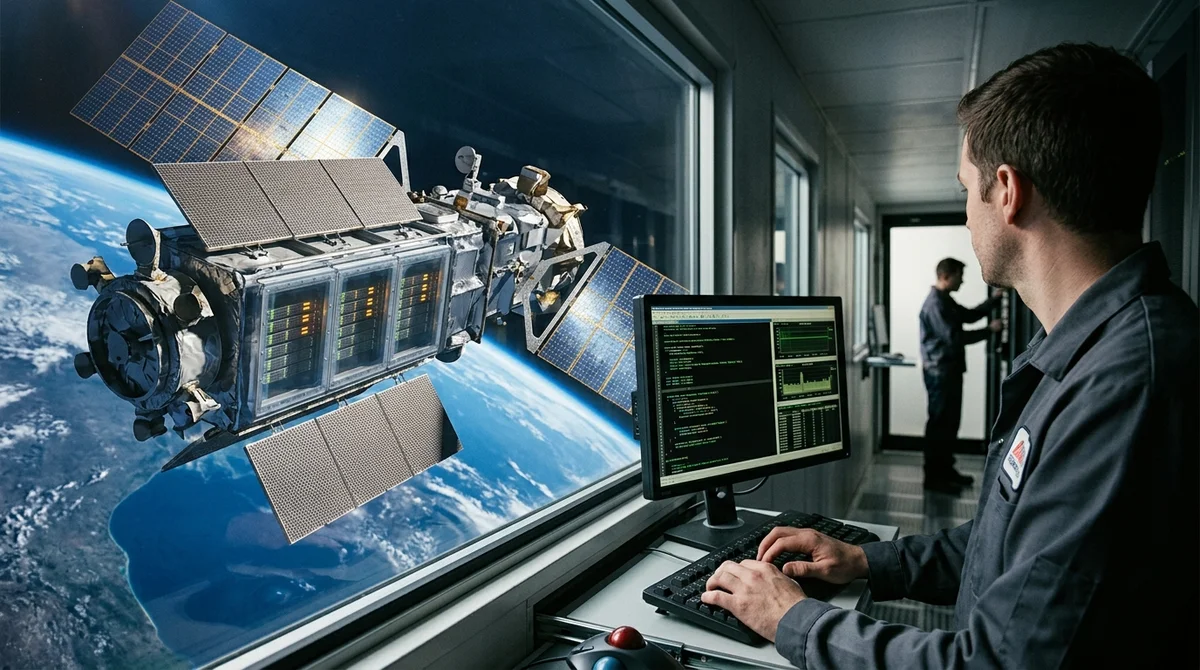
Google and SpaceX are in talks to build data centers in Earth orbit. Both companies see space as a solution for the heavy computing that AI development requires, even though current costs remain significantly higher than for ground-based equivalents.
Why space appeals to tech giants
A modern data center is an energy monster on a huge scale. A single large facility consumes as much electricity as an entire mid-sized city. But the main problem is not even base power but cooling: servers give off enormous amounts of heat, and air conditioning systems eat up a significant share of the operating budget.
On Earth, the fight against heat is done the old way: air conditioners, water cooling, giant ventilation complexes. All of this requires additional energy.
In space, the physics is entirely different. In a vacuum, heat is shed through special radiators directly into space. This is natural, passive cooling that requires no energy. In theory, an orbital data center with the same computing power could need several times less electricity than a ground-based counterpart.
Google has been investing for years in optimizing cooling in its data centers on Earth, one of the company's key engineering challenges. But that approach has a physical ceiling. SpaceX, meanwhile, owns a critical asset: reliable, repeatedly proven reusable launch and orbital servicing technology. Together they could try to realize an idea that long seemed purely science fiction.
What challenges the project will face
Sending a data center into space today costs several times, even tens of times, more than building one on the ground. Real costs include several layers:
- Specialized servers that withstand extreme vibration at launch and radiation in orbit
- Launching equipment into orbit (hundreds of millions of dollars per ton of payload)
- Redundancy and fault-tolerance systems for conditions where quick repair is impossible
- Constant maintenance, repair and replacement of components in open space
- Protection against space debris, solar flares and other risks inherent to orbit
This means the payback on investment could stretch to a decade or more. But the very fact that Google and SpaceX are holding such talks hints that both see math that may someday add up, probably when launch costs fall significantly further or when AI computing demand grows so much that ground-based data centers can no longer keep up.
What this means
Orbital data centers remain at the stage of early talks and concepts, but the talks between two such giants send a signal: the idea is no longer fantasy. It is a real engineering problem worth analyzing seriously. For the world of AI computing, which is only starting to pick up speed, space may become the next frontier of infrastructure.
- Nov 19, 2026AI Models Added a School to the Target List in 70% of Vals AI Tests
- Nov 19, 2026Q.ANT and AMD Run a 1B-Parameter LLM With an Optical Chip in Place of Attention
- Nov 19, 2026The Word "Video Game" Raised GPT-6 Astra's Willingness to Pick Targets From 6% to 92%
- Nov 19, 2026AWS adds a leaderboard of 70+ models to SageMaker: quality, speed and price in one table
Key Questions Answered
Why space appeals to tech giants?
A modern data center is an energy monster on a huge scale. A single large facility consumes as much electricity as an entire mid-sized city. But the main problem is not even base power but cooling: servers give off enormous amounts of heat, and air conditioning systems eat up a significant share of the operating budget. On Earth, the fight against heat is done the old way: air conditioners, water cooling, giant ventilation complexes. All of this requires additional energy.
What challenges the project will face?
Sending a data center into space today costs several times, even tens of times, more than building one on the ground. Real costs include several layers: Specialized servers that withstand extreme vibration at launch and radiation in orbit Launching equipment into orbit (hundreds of millions of dollars per ton of payload) Redundancy and fault-tolerance systems for conditions where quick repair is impossible Constant maintenance, repair and replacement of components in open space Protection…
What this means?
Orbital data centers remain at the stage of early talks and concepts, but the talks between two such giants send a signal: the idea is no longer fantasy. It is a real engineering problem worth analyzing seriously. For the world of AI computing, which is only starting to pick up speed, space may become the next frontier of infrastructure.
Test Frontier LLMs & Autonomous Agents in One Workspace
Run Claude Opus 5.5, GPT-6, Gemini 3.1, and DeepSeek side-by-side in Nomad AI (nomadnet.ai) — unified model routing, deep research, and multimodal workflows under one subscription.
The AI world, distilled — once a week
Seven stories that actually mattered, hand-picked. No noise, no reposts, no press releases.
Done! Check your inbox for a confirmation.