xAI adds 19 gas turbines to Colossus 2 despite ongoing litigation
xAI is adding 19 gas turbines to its Colossus 2 data center in Texas. Emails show the company expanding its portable generator fleet while a lawsuit over air quality is still underway. The company is putting compute capacity ahead of environmental concerns.
AI-processed from Wired; edited by Hamidun News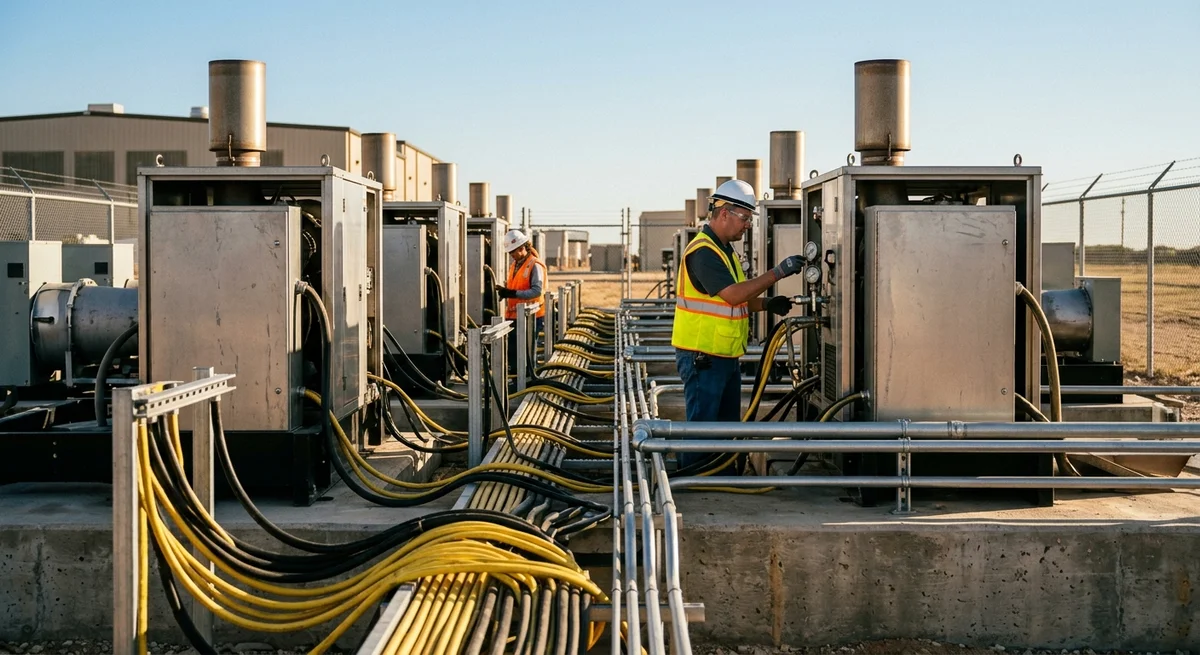
Elon Musk's xAI is expanding the power infrastructure at its Colossus 2 data center in Texas, adding 19 portable gas turbines. The expansion is happening alongside a lawsuit over air pollution brought by local communities and environmental organizations.
A large-scale expansion of portable power
Emails obtained by Wired journalists show that xAI is actively stepping up its power capacity at the data center. The addition of 19 new portable gas turbines to Colossus 2 points to the company's ambitious plans to scale the computing resources it uses to develop and train large language models.
This infrastructure strategy reflects the company's critical need for independent power sources. Portable gas generators have become a popular solution among large tech companies facing the limits of traditional grid infrastructure. The turbines provide complete independence from municipal grids, allowing companies to add compute capacity on their own schedule without waiting for public infrastructure to catch up.
Litigation and environmental concerns
While the infrastructure grows, the lawsuit continues, in which local residents and environmental organizations challenge the effect of the gas generators on air quality in the Texas region. The case points to growing conflict between the needs of the developing AI industry and its environmental obligations to local residents.
Still, the emails show that xAI is not freezing its expansion plans despite legal pressure and environmental objections. This demonstrates that the company prioritizes compute capacity and rapid scaling over addressing the environmental concerns of local communities.
- Addition of 19 portable gas turbines to the Colossus 2 data center
- Active expansion continuing despite the lawsuit
- Conflict between AI's energy needs and the region's environment
- Portable generators as a tool for bypassing traditional infrastructure
- Air quality issues worsening in the Texas county
The AI industry's growing energy need
Training modern large language models requires enormous amounts of electricity. The standard grid infrastructure of cities often cannot meet the demand of these intensive computing operations. As AI models grow more complex, energy consumption rises exponentially, creating critical constraints on development.
Portable gas generators offer companies an attractive alternative to a long wait for public infrastructure to develop. They allow compute capacity to be added quickly, without lengthy approvals from municipalities and utilities. However, this approach creates serious environmental risks and sharpens social conflicts with local communities.
What this means
xAI's actions reflect a growing trend in the AI industry: companies are seeking independent ways to secure power, often bypassing established environmental regulations. As AI technology advances and its energy demands grow, such conflicts between demand for compute and environmental obligations will become sharper and more frequent.
- Nov 1, 202616 models tested on 7 search tools: Exa averaged 10.5 out of 14, SearXNG about 3
- Nov 1, 2026OpenAI Rewrites GPT Behavior Rules: Five Values and a Chain of Command
- Oct 29, 2026Gemini 4 Carbon tops independent rankings, but only cyber defenders can use it
- Oct 29, 2026Study: A Single Random Failure Makes AI Agents Abandon a Working Tool 11.6% of the Time
Key Questions Answered
What are the key details on A large-scale expansion of portable power?
Emails obtained by Wired journalists show that xAI is actively stepping up its power capacity at the data center. The addition of 19 new portable gas turbines to Colossus 2 points to the company's ambitious plans to scale the computing resources it uses to develop and train large language models. This infrastructure strategy reflects the company's critical need for independent power sources. Portable gas generators have become a popular solution among large tech companies facing the limits of traditional grid infrastructure. The turbines provide complete independence from m
What are the key details on Litigation and environmental concerns?
While the infrastructure grows, the lawsuit continues, in which local residents and environmental organizations challenge the effect of the gas generators on air quality in the Texas region. The case points to growing conflict between the needs of the developing AI industry and its environmental obligations to local residents. Still, the emails show that xAI is not freezing its expansion plans despite legal pressure and environmental objections. This demonstrates that the company prioritizes compute capacity and rapid scaling over addressing the environmental concerns of lo
What are the key details on The AI industry's growing energy need?
Training modern large language models requires enormous amounts of electricity. The standard grid infrastructure of cities often cannot meet the demand of these intensive computing operations. As AI models grow more complex, energy consumption rises exponentially, creating critical constraints on development. Portable gas generators offer companies an attractive alternative to a long wait for public infrastructure to develop. They allow compute capacity to be added quickly, without lengthy approvals from municipalities and utilities. However, this approach creates serious e
Test Frontier LLMs & Autonomous Agents in One Workspace
Run Claude Opus 5.5, GPT-6, Gemini 3.1, and DeepSeek side-by-side in Nomad AI (nomadnet.ai) — unified model routing, deep research, and multimodal workflows under one subscription.
The AI world, distilled — once a week
Seven stories that actually mattered, hand-picked. No noise, no reposts, no press releases.
Done! Check your inbox for a confirmation.