SpaceX to spend $2.8 billion on gas turbines for AI data centers
SpaceX is investing $2.8 billion in gas turbines that will power its own AI data centers. The purchase is part of the company's ambition to become a serious rival to cloud giants AWS and Google Cloud in the global cloud computing market. Environmentalists are increasingly critical of the carbon emissions involved, but SpaceX keeps building out compute capacity for its AI infrastructure.
AI-processed from Wired; edited by Hamidun News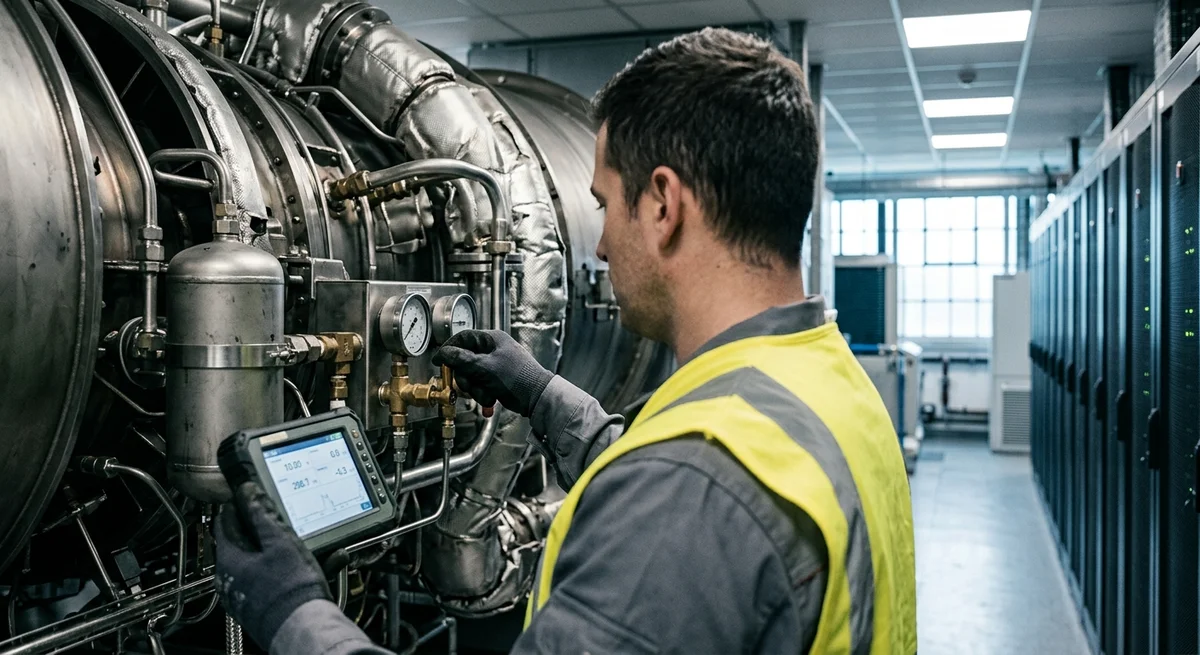
SpaceX is investing $2.8 billion in gas turbines for AI data centers. Elon Musk's company is moving aggressively into cloud computing and is looking for ways to supply its servers with cheap, reliable electricity.
Electricity as a weapon
SpaceX is buying gas turbines that will feed power directly to its AI data centers. That is an unusual choice. Most cloud providers (AWS, Google Cloud, Azure) rely on grid connections, hydroelectric plants, and renewables. SpaceX is taking a different route: running its own gas generators gives it full independence from the local power grid and maximum control over costs.
For data centers running under heavy load, this matters. Every hour of downtime caused by power outages costs millions of dollars, so a stable power supply is a necessity, not a luxury.
The Musk paradox
This creates a paradox. For decades, Musk has cast himself as a champion of clean energy: Tesla, SolarCity, and endless criticism of fossil fuels. But SpaceX is taking the pragmatic route: cheap, reliable power matters more than environmental credentials on paper.
Critics are already pointing fingers: data centers running on gas mean a carbon footprint and a conflict with climate goals. Gas turbines also need regular maintenance and fuel logistics, which adds cost and complexity. SpaceX will probably switch to renewables at some point, but for now the company is willing to pay a reputational price for performance.
Invading the cloud
SpaceX makes no secret of its ambitions: it wants to compete with AWS, Google Cloud, and Microsoft Azure. The cloud computing market is worth hundreds of billions of dollars today, and AI infrastructure is one of its fastest-growing segments. Every machine learning startup is hunting for compute, and the cloud giants are making astronomical profits from that demand.
- Cloud computing is a multibillion-dollar market
- AI infrastructure is growing 40%+ a year
- Musk believes AGI will require enormous computing power
- SpaceX already has experience operating at crisis scale
Musk has historically hated finishing second, so SpaceX is investing aggressively and expanding capacity methodically.
What it means
SpaceX is showing it is willing to take the blunt approach: not holy water and renewables, but gas, spending, and control. If SpaceX actually launches a competitive cloud service powered by gas turbines, it will set up an interesting industry showdown between maximum efficiency and the cloud giants' growing focus on sustainability.
- Nov 1, 2026Google's StreamVibe video agent beats other models by 10.7% on response timing and quality
- Nov 1, 2026OpenAI Rewrites GPT Behavior Rules: Five Values and a Chain of Command
- Nov 1, 2026Voice bots built on LLMs turn to Jev, a fast classifier, for decisions in 200–500 ms
- Nov 1, 2026Google admits AI Mode cuts search revenue, shares fall 15%
Key Questions Answered
What are the key details on Electricity as a weapon?
SpaceX is buying gas turbines that will feed power directly to its AI data centers. That is an unusual choice. Most cloud providers (AWS, Google Cloud, Azure) rely on grid connections, hydroelectric plants, and renewables. SpaceX is taking a different route: running its own gas generators gives it full independence from the local power grid and maximum control over costs. For data centers running under heavy load, this matters. Every hour of downtime caused by power outages costs millions of dollars, so a stable power supply is a necessity, not a luxury.
What are the key details on The Musk paradox?
This creates a paradox. For decades, Musk has cast himself as a champion of clean energy: Tesla, SolarCity, and endless criticism of fossil fuels. But SpaceX is taking the pragmatic route: cheap, reliable power matters more than environmental credentials on paper. Critics are already pointing fingers: data centers running on gas mean a carbon footprint and a conflict with climate goals. Gas turbines also need regular maintenance and fuel logistics, which adds cost and complexity. SpaceX will probably switch to renewables at some point, but for now the company is willing to
What are the key details on Invading the cloud?
SpaceX makes no secret of its ambitions: it wants to compete with AWS, Google Cloud, and Microsoft Azure. The cloud computing market is worth hundreds of billions of dollars today, and AI infrastructure is one of its fastest-growing segments. Every machine learning startup is hunting for compute, and the cloud giants are making astronomical profits from that demand. Cloud computing is a multibillion-dollar market AI infrastructure is growing 40%+ a year Musk believes AGI will require enormous computing power SpaceX already has experience operating at crisis scale Musk has h
Test Frontier LLMs & Autonomous Agents in One Workspace
Run Claude Opus 5.5, GPT-6, Gemini 3.1, and DeepSeek side-by-side in Nomad AI (nomadnet.ai) — unified model routing, deep research, and multimodal workflows under one subscription.
The AI world, distilled — once a week
Seven stories that actually mattered, hand-picked. No noise, no reposts, no press releases.
Done! Check your inbox for a confirmation.