Musk's xAI launched 50 gas turbines without oversight in Mississippi
Musk's xAI launched the Colossus 2 data center in Mississippi with about 50 gas turbines to power the supercomputer's computing capacity. The company is using mobile turbines as permanent power plants, violating state regulatory requirements and environmental standards. Local authorities and environmental groups filed a lawsuit against xAI over the lack of proper oversight and prior approvals.
AI-processed from TechCrunch; edited by Hamidun News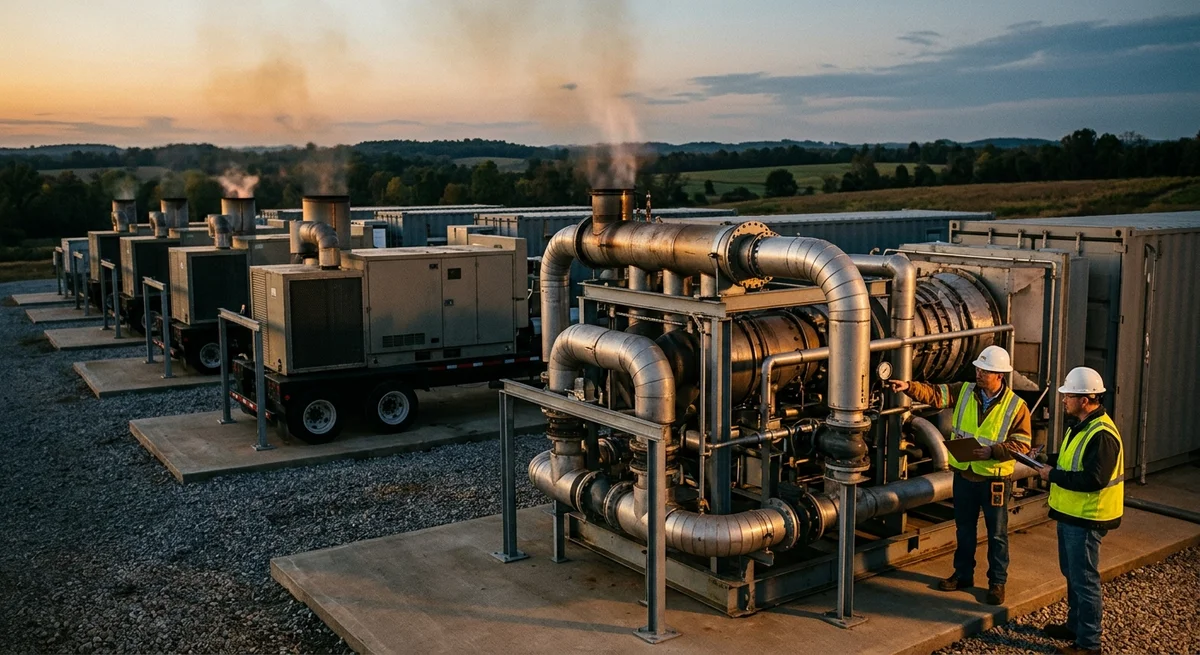
xAI's Colossus 2 data center in Mississippi operates on nearly 50 gas turbines that are not subject to proper regulatory oversight. This has led to a lawsuit by local environmental organizations and the state administration over violations of environmental protection and energy legislation standards.
What
Is Happening at Colossus 2 xAI is building one of the world's largest AI data centers for training powerful neural networks. To power massive GPU clusters, the company consumes enormous amounts of electricity — megawatts per hour. When choosing an energy source, xAI turned to mobile gas turbines, which are typically used for temporary energy needs, such as during emergencies or natural disasters.
However, xAI is deploying these turbines as permanent power station infrastructure without reclassifying them as stationary generators. Mobile units retain "temporary" status in documentation, though in reality they operate 24/7 as an integral part of the data center. This approach makes economic sense: mobile turbines are cheaper to purchase, require no complex installation, and allow rapid scaling of power capacity.
Musk and his team sought to maximize the speed of deploying computing resources to compete in the AI race. The result — nearly fifty gas turbines across Mississippi that operate but technically remain in "mobile" status and do not require traditional permits.
Why
This Is a Regulatory Problem Mississippi state regulators and federal environmental agencies are unhappy for several reasons, cited in the lawsuit: Environmental emissions: each gas turbine emits nitrogen oxides, carbon dioxide, and other harmful substances. By avoiding reclassification as stationary energy sources, xAI escaped stricter environmental inspections and emission restrictions. Regulatory evasion: mobile units require minimal permits and local approvals, whereas permanent power plants are subject to detailed environmental impact assessments. Local impact: 50 turbines represent a significant burden on Mississippi's infrastructure, air quality, and regional ecosystems. Lack of oversight: without proper registration, the company essentially operates outside the system of state control over emissions, noise standards, and safety protocols.
The
Lawsuit and Demands Local environmental organizations, backed by the state administration, are demanding that xAI either reclassify the turbines as permanent power stations, obtain all necessary permits, and undergo a full environmental assessment, or cease their use. The lawsuit states that the company violated both the federal Clean Air Act and Mississippi environmental protection laws. xAI has not yet published an official comment on the lawsuit. For Musk, this is the first serious regulatory conflict of this scale in Colossus history.
What
This Means The xAI case illustrates a fundamental tension in the AI industry: on one hand, companies need to scale data centers as quickly as possible; on the other, local regulatory requirements and environmental expectations have not disappeared. Engineering "hacks" like using mobile turbines as permanent energy sources inevitably attract government attention. Musk may spend months on reclassifications and approvals, which will slow the entire Colossus deployment project.
Need AI working inside your business — not just in your newsfeed?
I build production AI for companies — custom CRM, internal tools, autonomous agents, workflow automation. Owned by you, shaped to your process, no per-seat tax. Built by Zhemal Khamidun, CPO of AlpinaGPT (AI platform, 6,000+ users).
The AI world, distilled — once a week
Seven stories that actually mattered, hand-picked. No noise, no reposts, no press releases.
Done! Check your inbox for a confirmation.