SpaceX Will Invest $2.8 Billion in Gas Turbines for AI Data Centers
SpaceX is investing $2.8 billion in purchasing gas turbines to power its own AI data centers. This is part of the company's ambitions to become a serious competitor to cloud giants AWS and Google Cloud in the global cloud computing market. Despite growing criticism from environmentalists over carbon emissions, SpaceX is steadily increasing computational capacity for its AI infrastructure.
AI-processed from Wired; edited by Hamidun News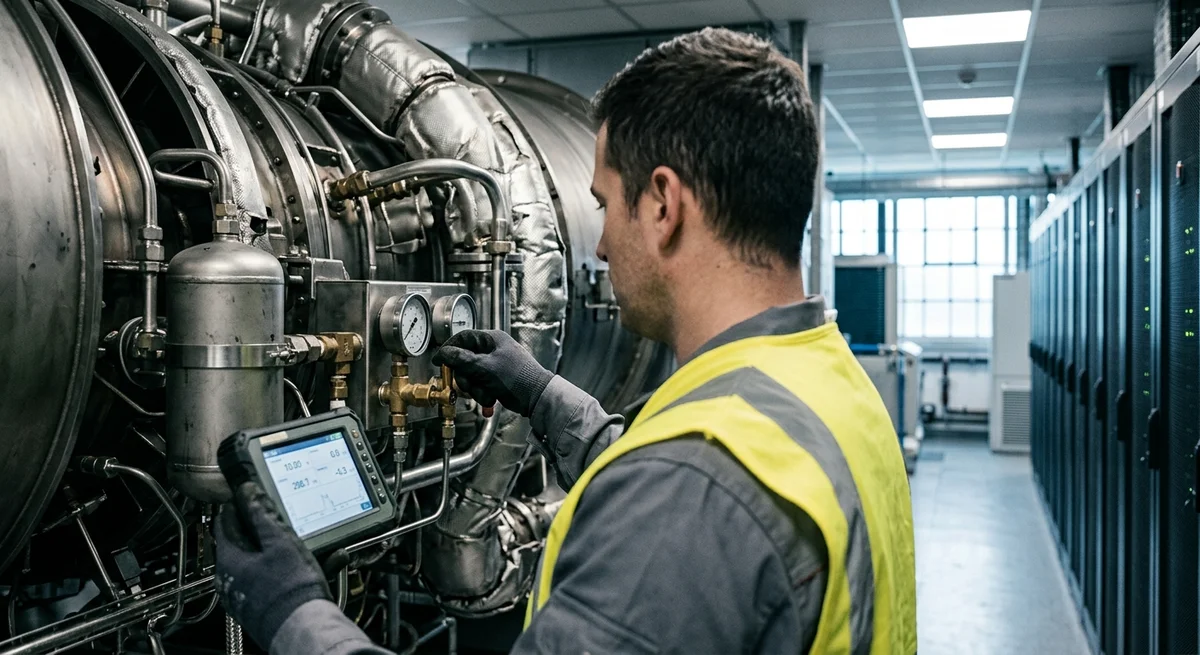
SpaceX is investing $2.8 billion in purchasing gas turbines for AI data centers. Elon Musk's company is actively entering the cloud computing market and seeking ways to provide its servers with cheap and reliable electricity.
Electricity as a Weapon
SpaceX is purchasing gas turbines that will directly power AI data centers. This is a non-trivial choice — most cloud companies (AWS, Google Cloud, Azure) rely on grid connections, hydroelectric plants, and renewable energy sources. SpaceX is taking a different path: its own gas generators mean complete independence from local power grids and maximum control over costs. For data centers operating under heavy loads, this is critical. Every hour of downtime due to outages costs millions of dollars, so reliable electricity supply is not a luxury but a necessity.
Musk's Paradox
A paradox emerges here. For decades, Musk has positioned himself as a champion of clean energy: Tesla, SolarCity, endless criticism of fossil fuels. But SpaceX is taking a pragmatic path: cheap and reliable energy is more important than declarative environmental friendliness. Critics are already pointing fingers: if data centers run on gas, it means a carbon footprint and a contradiction to climate goals. Moreover, gas turbines require regular maintenance and fuel logistics, which adds costs and complexity. Presumably, SpaceX will transition to renewable sources in the future, but for now the company is willing to pay a reputational price for performance.
Invading the Cloud
SpaceX doesn't hide its ambitions: to become a competitor to AWS, Google Cloud, and Microsoft Azure. The cloud computing market is valued at hundreds of billions of dollars today, and AI infrastructure is a rapidly growing segment. Every startup working in machine learning seeks computational power, and cloud giants reap astronomical profits from this.
- Cloud computing is a multi-billion dollar market
- AI infrastructure grows 40%+ annually
- Musk believes AGI will require colossal computational power
- SpaceX already has experience working at crisis scale
Musk historically doesn't like being second, so SpaceX invests aggressively and systematically expands its capabilities.
What Does This Mean
SpaceX is demonstrating a willingness to take a straightforward path: not idealism and renewable sources, but gas, costs, and control. If SpaceX truly launches a competitive cloud service based on gas turbines, this will be an interesting confrontation in the industry between maximum efficiency and the growing environmental consciousness of cloud giants.
- Oct 28, 2026Switzerland's Apertus 1.5 Gains Vision, Hearing and a 262K-Token Context Window
- Oct 28, 2026Goodfire: Agentic Analysis Decodes Neurons Once Written Off as Chaos
- Oct 28, 2026BigSleep LLM Agent Finds 45 V8 Vulnerabilities, Fuzzilli 37, With 25% Overlap
- Oct 28, 2026Gemma 26B fine-tuned on a 24 GB MacBook: offline assistant gets 703 of 766 right
Key Questions Answered
What are the key details on Electricity as a Weapon?
SpaceX is purchasing gas turbines that will directly power AI data centers. This is a non-trivial choice — most cloud companies (AWS, Google Cloud, Azure) rely on grid connections, hydroelectric plants, and renewable energy sources. SpaceX is taking a different path: its own gas generators mean complete independence from local power grids and maximum control over costs. For data centers operating under heavy loads, this is critical. Every hour of downtime due to outages costs millions of dollars, so reliable electricity supply is not a luxury but a necessity.
What are the key details on Musk's Paradox?
A paradox emerges here. For decades, Musk has positioned himself as a champion of clean energy: Tesla, SolarCity, endless criticism of fossil fuels. But SpaceX is taking a pragmatic path: cheap and reliable energy is more important than declarative environmental friendliness. Critics are already pointing fingers: if data centers run on gas, it means a carbon footprint and a contradiction to climate goals. Moreover, gas turbines require regular maintenance and fuel logistics, which adds costs and complexity. Presumably, SpaceX will transition to renewable sources in the futu
What are the key details on Invading the Cloud?
SpaceX doesn't hide its ambitions: to become a competitor to AWS, Google Cloud, and Microsoft Azure. The cloud computing market is valued at hundreds of billions of dollars today, and AI infrastructure is a rapidly growing segment. Every startup working in machine learning seeks computational power, and cloud giants reap astronomical profits from this. Cloud computing is a multi-billion dollar market AI infrastructure grows 40%+ annually Musk believes AGI will require colossal computational power SpaceX already has experience working at crisis scale Musk historically doesn'
Test Frontier LLMs & Autonomous Agents in One Workspace
Run Claude Opus 5.5, GPT-6, Gemini 3.1, and DeepSeek side-by-side in Nomad AI (nomadnet.ai) — unified model routing, deep research, and multimodal workflows under one subscription.
The AI world, distilled — once a week
Seven stories that actually mattered, hand-picked. No noise, no reposts, no press releases.
Done! Check your inbox for a confirmation.