What the jury will actually decide in Elon Musk's case against Sam Altman and OpenAI
Nine jurors in California are deciding whether OpenAI violated the terms of Elon Musk's donations and whether Microsoft helped steer the company away from its original mission. The defense says Musk's money was spent long before the disputed deals, that he knew about the commercial structure as early as 2018, and that he filed suit too late. At stake is the future of OpenAI's current model.
AI-processed from TechCrunch; edited by Hamidun News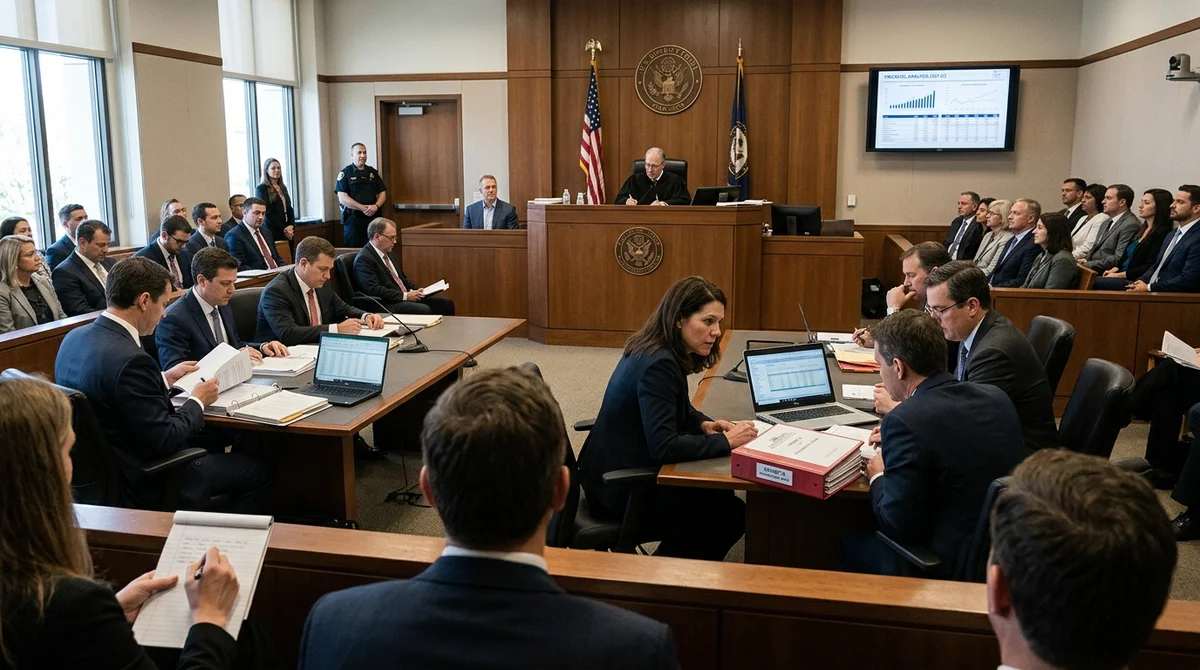
In California, nine jurors have retired to deliberate on Elon Musk's lawsuit against Sam Altman, Greg Brockman, OpenAI and Microsoft. But the dispute in court does not come down to the broad question of whether OpenAI betrayed the idea of safe AI. It turns on a handful of very specific legal points.
What the jury is deciding
TechCrunch reports that the jurors are considering three narrow claims. First: did OpenAI violate what is known as a charitable trust, meaning the special conditions under which Musk donated money to a nonprofit entity. Second: did the defendants use those donations in a way that ultimately enriched executives and investors through the commercial arm. Third: did Microsoft know about the restrictions Musk allegedly set, and did it play a significant role in any resulting harm.
This matters: the court is not passing general moral judgment on the whole history of OpenAI. It is examining the specific grounds of the lawsuit.
- violation of donation terms and charitable purpose
- unjust enrichment through OpenAI's commercial structure
- possible aiding of that violation by Microsoft
Musk's team argues that he backed a lab that was supposed to work in the public interest, not turn into a company where shareholders collect the main benefit. They single out Microsoft's $10 billion investment, which became known in 2022 and was closed in 2023. According to the plaintiffs, that deal finally showed OpenAI had abandoned its original mission. Musk's lawyers are also trying to prove that the nonprofit foundation ended up in the shadows, while the main value and power shifted to the for-profit arm.
How OpenAI responds
OpenAI has three lines of defense, and they are fairly down-to-earth too. The first is the statute of limitations: if the alleged harm occurred before August 5, 2021 for the first claim, before August 5, 2022 for the second, and before November 14, 2021 for the third, the corresponding claims by Musk fall away. The second is undue delay: the company says Musk waited too long and only sued in 2024. The third is the doctrine of unclean hands, meaning the plaintiff's own conduct may strip him of the right to such a claim.
The defense also attacks on the facts. According to OpenAI, all of Musk's donations were spent as intended long before the disputed deals, and a forensic accountant testified that the money had been used before the key date of August 5, 2021. The lawyers note that other donors have not alleged a breach of charitable purpose, and that Musk himself once supported the idea of a commercial structure through which researchers could be paid in equity. Altman separately argued that free access to ChatGPT also helps fulfill OpenAI's mission of spreading the benefits of AI.
A harsher argument also came up in the courtroom: Musk not only left OpenAI in 2018 but at the same time was building his own AI projects inside Tesla.
"Mr.
Musk left OpenAI for dead in 2018," said OpenAI's lead attorney Bill Savitt.
Why the stakes are high
Although the jury's questions are narrow, the consequences could be large. If Musk wins, OpenAI's current for-profit structure comes under threat, but that does not mean the company would be dismantled the day after the verdict. As TechCrunch notes, next week the court is due to separately consider which remedies are possible if the jury sides with the plaintiffs. In other words, liability is decided first, consequences afterward. This is crucial for OpenAI, because almost all of its operations have long been concentrated in the commercial arm.
Microsoft is a separate pressure point. Musk's team points to Satya Nadella's involvement in Altman's return after the 2023 crisis, and to a clause in the agreement that gave Microsoft a veto over major corporate decisions. Microsoft replies that it knew of no special conditions attached to Musk's donations and did not block OpenAI's decisions at all. But the fact that the trial centers not only on an old conflict between co-founders but also on the architecture of control over the market's leading AI player makes the case far broader than a personal feud.
What it means
This trial matters not because two tech billionaires are airing their grievances in public, but because the court is effectively testing the boundary between a nonprofit mission and commercial growth in AI. If Musk's arguments work, future labs and investors will have to spell out promises, control and the role of corporations like Microsoft far more precisely from the start.
- Nov 12, 2026Jensen Huang steps down as Nvidia CEO: company loses $1.4 trillion in two weeks
- Nov 12, 2026Oakland Union Wins Retraining Instead of AI Layoffs: 94.1% Vote for Strike
- Nov 12, 2026Eight Countries, OpenAI and Anthropic Promise an AI "Kill Switch" — but Set No Deadlines or Penalties
- Nov 12, 2026OpenAI and ModRetro Launch a $200 Console for Games Written in Codex
Key Questions Answered
What the jury is deciding?
TechCrunch reports that the jurors are considering three narrow claims. First: did OpenAI violate what is known as a charitable trust, meaning the special conditions under which Musk donated money to a nonprofit entity. Second: did the defendants use those donations in a way that ultimately enriched executives and investors through the commercial arm. Third: did Microsoft know about the restrictions Musk allegedly set, and did it play a significant role in any resulting harm.
How OpenAI responds?
OpenAI has three lines of defense, and they are fairly down-to-earth too. The first is the statute of limitations: if the alleged harm occurred before August 5, 2021 for the first claim, before August 5, 2022 for the second, and before November 14, 2021 for the third, the corresponding claims by Musk fall away. The second is undue delay: the company says Musk waited too long and only sued in 2024.
Why the stakes are high?
Although the jury's questions are narrow, the consequences could be large. If Musk wins, OpenAI's current for-profit structure comes under threat, but that does not mean the company would be dismantled the day after the verdict. As TechCrunch notes, next week the court is due to separately consider which remedies are possible if the jury sides with the plaintiffs. In other words, liability is decided first, consequences afterward.
Test Frontier LLMs & Autonomous Agents in One Workspace
Run Claude Opus 5.5, GPT-6, Gemini 3.1, and DeepSeek side-by-side in Nomad AI (nomadnet.ai) — unified model routing, deep research, and multimodal workflows under one subscription.
The AI world, distilled — once a week
Seven stories that actually mattered, hand-picked. No noise, no reposts, no press releases.
Done! Check your inbox for a confirmation.