OpenClaw turns China into the main testing ground for agentic AI, and regulators are alarmed
In a matter of weeks, China has turned OpenClaw into a mass experiment in agentic AI, from offices and meetups to cloud services and regional subsidies. Regulators have already begun restricting installation of the tool at banks and government bodies, because the agent needs overly broad access to data, devices and companies' internal systems. The speed of adoption has run straight into security concerns, and China is now trying to speed up the spread of agent tools while urgently drafting rules for their use.
AI-processed from Bloomberg Tech; edited by Hamidun News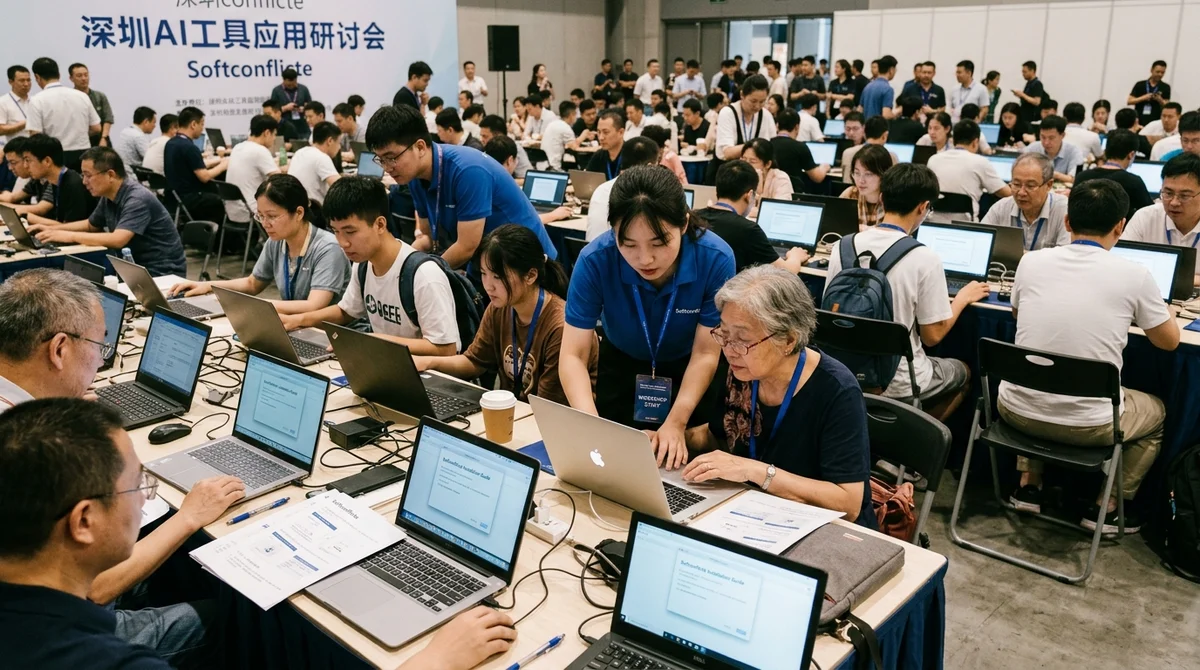
In a matter of weeks, China has turned OpenClaw from a niche open-source tool into a mass proving ground for agentic AI. While US companies are still looking for durable user demand for such systems, the Chinese market is already testing them at work, in the cloud and on everyday office tasks.
How the craze began
The frenzy spread far beyond developer circles. A manager at a large financial group in Shenzhen said that before Lunar New Year, staff were to be kept back for a week-long OpenClaw competition. After complaints the idea was shelved, but the pressure did not go away: proficiency with AI tools inside the company came to be tied directly to performance and even to job security. For the Chinese office market this is no longer a curious experiment but a new form of workplace race.
"With OpenClaw, everything has become insanely competitive."
On Chinese platforms the trend has picked up a popular name, "raising a lobster": configuring OpenClaw for your own tasks and building a personal or work agent out of it. Interest is not limited to engineers. Students, entrepreneurs, office workers and retirees have lined up to install it. At one Tencent event in Shenzhen, almost a thousand people showed up to install the agent on their laptops for free and immediately try scenarios for email, reports and information search.
Why the market sped up
Developed by Austrian engineer Peter Steinberger, OpenClaw arrived just as the Chinese market was ready for rapid deployment of agent services. This is no ordinary chatbot: the system can read incoming data, browse the web, run commands and carry a task through to action. For businesses it promises direct time savings, and for platforms it is a new layer of services on top of models, cloud and enterprise applications.
- Huawei, Tencent, Alibaba and other players have begun offering infrastructure and services around OpenClaw
- At least four local governments have launched subsidies for OpenClaw and other open-source projects
- Communities are holding mass installation sessions, meetups and hands-on workshops for beginners
- Large companies are rushing to release their own agent products and integrations
- Users apply these agents to reports, slides, code, posts and financial analysis
Investors see a chance for China to pull ahead specifically at the application layer. Even if the strongest foundation models are not built in the country, Chinese companies can quickly package them into mass-market products, promote them through their own ecosystems and scale almost instantly. Within a week the trend moved from a narrow community of tech enthusiasts into the mass market, where big players are already hurrying to release their own agent products and integrations. Against this backdrop, American companies have so far not shown comparable user enthusiasm.
Where the risks bite
But the speed of adoption almost immediately ran into security. In March, Chinese regulators warned government bodies, state-owned companies and the largest banks about the risks of installing OpenClaw on work computers. A number of organizations were instructed not to install such applications on office devices, or even on personal smartphones if they use the corporate network. For the financial sector this is especially sensitive: any external software with access to data, messages and internal services is seen as a potential hole.
The problem lies in the very architecture of agentic AI. To act in place of the user, OpenClaw requests broad permissions: access to files, the browser, correspondence, external services and sometimes the local system. A configuration error, an insecure plugin or a prompt injection on a web page can turn a convenient assistant into a source of leaks or wrong actions. So China is now simultaneously accelerating the spread of agent tools and trying to urgently build rules for their use, without the unconditional openness it showed toward earlier AI hits.
What this means
The OpenClaw story shows that the key question for the next phase of AI is no longer just model quality, but who first learns to embed agents safely into real work. For now, China has come closest to that mass experiment.
- Nov 1, 2026Local models lose to Opus and Codex: 0.21 on a MacBook versus 1.00 for Codex
- Nov 1, 2026Adobe's EditAgent judge picks a usable edit 81.3% of the time, versus 74.8% for EditScore
- Nov 1, 202616 models tested on 7 search tools: Exa averaged 10.5 out of 14, SearXNG about 3
- Nov 1, 2026Google's StreamVibe video agent beats other models by 10.7% on response timing and quality
Key Questions Answered
How the craze began?
The frenzy spread far beyond developer circles. A manager at a large financial group in Shenzhen said that before Lunar New Year, staff were to be kept back for a week-long OpenClaw competition. After complaints the idea was shelved, but the pressure did not go away: proficiency with AI tools inside the company came to be tied directly to performance and even to job security. For the Chinese office market this is no longer a curious experiment but a new form of workplace race. "With OpenClaw, everything has become insanely competitive." On Chinese platforms the trend has pi
Why the market sped up?
Developed by Austrian engineer Peter Steinberger, OpenClaw arrived just as the Chinese market was ready for rapid deployment of agent services. This is no ordinary chatbot: the system can read incoming data, browse the web, run commands and carry a task through to action. For businesses it promises direct time savings, and for platforms it is a new layer of services on top of models, cloud and enterprise applications. Huawei, Tencent, Alibaba and other players have begun offering infrastructure and services around OpenClaw At least four local governments have launched subsi
Where the risks bite?
But the speed of adoption almost immediately ran into security. In March, Chinese regulators warned government bodies, state-owned companies and the largest banks about the risks of installing OpenClaw on work computers. A number of organizations were instructed not to install such applications on office devices, or even on personal smartphones if they use the corporate network. For the financial sector this is especially sensitive: any external software with access to data, messages and internal services is seen as a potential hole. The problem lies in the very architectur
Build & Ship Production AI Agents Without Boilerplate Code
Start your free 72-hour trial at Hamidun Academy (academy.hamidun.com) — interactive lessons on Claude Code & Cursor, live Tech Radar, and production agent templates.
The AI world, distilled — once a week
Seven stories that actually mattered, hand-picked. No noise, no reposts, no press releases.
Done! Check your inbox for a confirmation.